Trump offers Ukraine Patriot missile production licence — SkimNews
Get the Geopolitics newsletter
Daily geopolitics — wars, elections, sanctions, the diplomatic moves that move markets. Free.
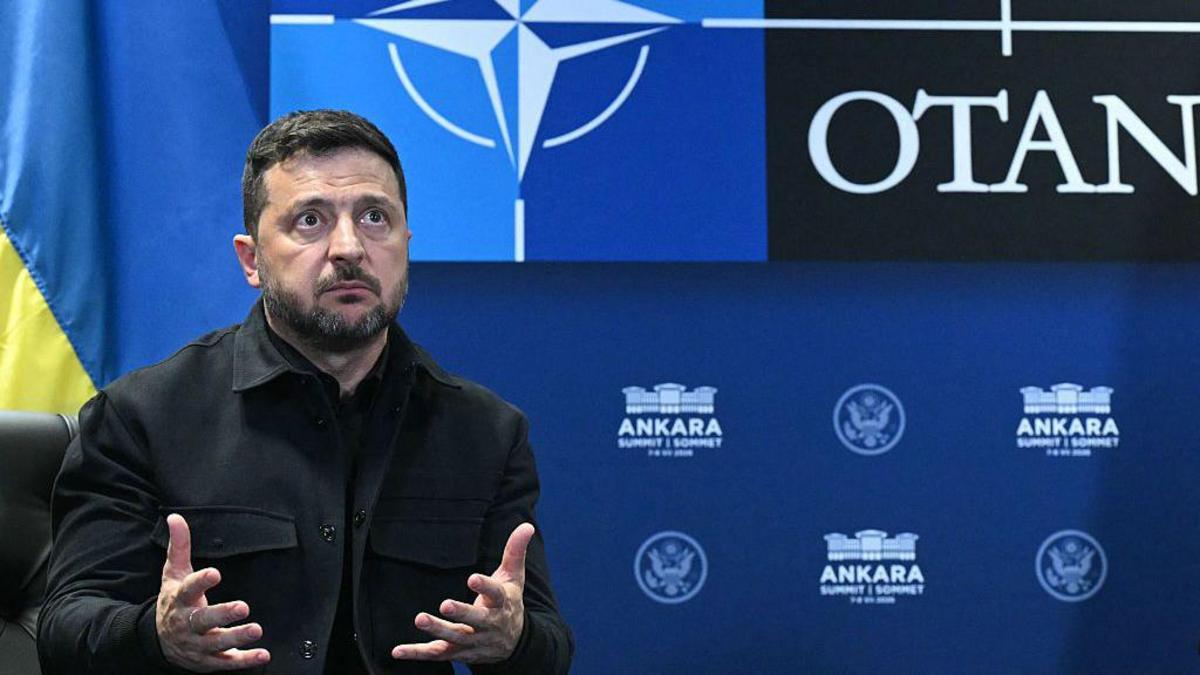
- Trump told Zelensky at Wednesday's NATO summit in Ankara he would give Ukraine the licence to produce Patriot missiles, saying 'I think they can produce them very quickly once we explain it,' though he conceded he had not yet informed Lockheed Martin and Raytheon of the decision.
- Patriot systems are among the world's most expensive air-defence assets at roughly $1bn (£740m) per battery, with only about 600 missiles produced annually; the US used more than half of its stockpile during its war with Iran earlier this year, according to the Center for Strategic and International Studies.
- A Sunday-night Russian barrage of 23 ballistic missiles hit Ukraine unchallenged because of a 'serious shortage' of interceptor missiles, killing more than 20 people and underscoring the urgency behind Kyiv's late-May request for licensed production.
- Ukrainian military expert Ivan Stupak told the BBC that 'Ukraine is not able to produce such kinds of advanced munition,' predicting the licensed production would instead be 'deployed to European soil' under US supervision and could take many months.
- Marco Rubio framed Ukraine's recent long-range strikes on Russian refineries as necessary to show Moscow 'how difficult it is to defend its airspace,' while Trump called the escalation one that 'can help lead to an end' of the war.
- Trump claimed Putin wants a deal to end the war and asked Zelensky if he'd travel to Moscow; Zelensky quipped, 'It's difficult — there are a lot of Ukrainian drones there,' alluding to Ukraine's deep strikes on the Russian capital.
Why it matters: The offer lands as Kyiv faces a critical interceptor shortage—none of 23 Russian ballistic missiles were intercepted on Sunday, killing 20+—yet each Patriot battery costs roughly $1bn and only 600 missiles are manufactured yearly worldwide, with US stockpiles already more than halved by its Iran war. Even if approved, production would likely be sited in Europe under supervision and stretch months, per the expert quoted.
Ask SkimNews


