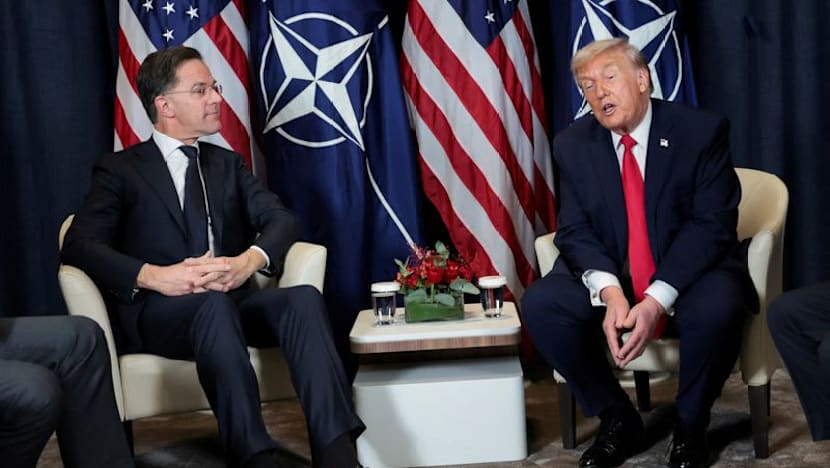
Trump meets NATO chief Rutte as Iran war strains alliance

Why it matters: The Iran war strains the 32-member NATO alliance, with Trump threatening withdrawal and European allies hesitant to join Strait of Hormuz missions.
- President Trump has threatened to withdraw from the 32-member transatlantic alliance and denounced European allies for insufficient support in the U.S.-Israeli bombing campaign in Iran, though a two-week ceasefire has been agreed upon.
- NATO chief Mark Rutte, known as a 'Trump whisperer,' is expected to advocate for restoring normal maritime trade and sway Trump away from public criticism of NATO, while also discussing increased defense spending and cooperation.
- European countries are unlikely to join mine-clearing or other missions in the Strait of Hormuz as long as hostilities continue, despite Trump's call for them to break Iran's chokehold, according to two European diplomats.
- The conflict over Iran has exacerbated existing transatlantic anxieties concerning Ukraine, Greenland, and military spending, despite private reassurances from senior U.S. officials about the administration's commitment to NATO.
- Oana Lungescu of the Royal United Services Institute describes this as a 'dangerous point' for the transatlantic alliance, while a NATO official notes Rutte will seek to increase defense-industry co-operation and discuss the wars in Iran and Ukraine.
President Trump's meeting with NATO chief Mark Rutte comes amid escalating tensions over the Iran war, which has pushed the U.S. alliance with European members to a crisis point, with Trump threatening withdrawal and criticizing inadequate support for the U.S.-Israeli bombing campaign in Iran. While a two-week ceasefire has been agreed upon, European nations are hesitant to join Strait of Hormuz missions, despite Trump's calls, highlighting a dangerous rift within the transatlantic alliance.