India hits 190 warheads as rivals exploit gray zone — SkimNews

Get the Geopolitics newsletter
Daily geopolitics — wars, elections, sanctions, the diplomatic moves that move markets. Free.
- India expanded its nuclear arsenal to 190 warheads by January 2026, up from 180 in 2025, according to the Stockholm International Peace Research Institute (SIPRI).
- India is maturing a full nuclear triad — aircraft, land-based missiles, and a single submarine conducting occasional deterrence patrols — and recently deployed MIRV warheads on the Agni-V intermediate-range ballistic missile.
- Rose Gottemoeller argued in Foreign Policy (June 2026) that nuclear retaliation failed to halt the Russia-Ukraine War, Iran-Israel War, or Operation Sindoor, with massed cheap drones rendering strategic bombers, ICBMs, and SSBNs largely ineffective.
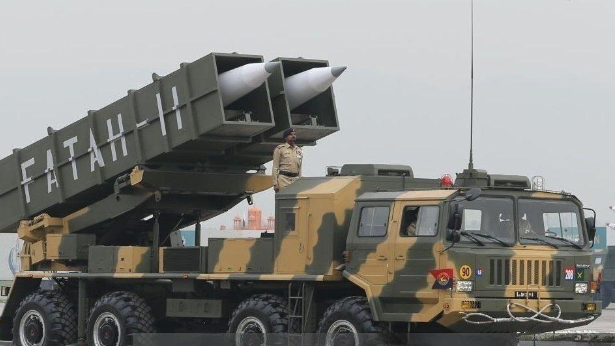
- Pakistan has fused gray-zone warfare with its nuclear posture to shield proxy conflicts and deter India's conventional superiority, per Ashok Shivane (CLAWS, March 2026); India discounts those threats because Islamabad lacks a credible sea-based second-strike, writes Siddhant Kishore (Bulletin of the Atomic Scientists).
- Pakistan's nuclear deterrent held during the May 2025 border escalation with India but left openings for conventional exchanges, information warfare, and coercive signaling, according to Rabia Akhtar (IFRI, June 2026); Faisal and co-authors (War on Rocks, May 2026) say Pakistan is now integrating AI, electronic warfare, and precision strikes for multi-domain escalation control.
- China grew its nuclear stockpile to 620 warheads (from 600), trailing the US's 1,770 deployed, per SIPRI, and Mark Schneider (NIPP) projects China could reach US parity within 4–5 years; Richa Sharma (USI) warns China's MIRV, SSBN, and counter-space advances could embolden strikes against India's retaliatory forces.
- The next phase of Indian deterrence will hinge less on warhead totals and more on calibrated escalation control — punishing sub-threshold aggression, denying faits accomplis, and keeping every rung of conflict below the nuclear line.
Why it matters: India's growth to 190 warheads buys strategic survival but doesn't defuse Pakistan's gray-zone coercion backed by nuclear signaling or China's MIRV and counter-space advances aimed at India's retaliatory forces. The real test becomes calibrated escalation across hybrid and conventional pressure — short of the nuclear line.
Ask SkimNews