Agrivoltaics Can Save US Farmers In More Ways Than One
Why it matters: Wind erosion costs the US agricultural sector over $9 billion annually, impacting soil health and crop yields.
- Agrivoltaics offers farmers new revenue opportunities, water conservation, improved soil health, and a cooling microclimate, with wind protection now also a focus.
- Cornell University researchers found that wind causes substantial damage to US farms, with estimated costs surpassing $9 billion annually due to soil and crop destruction.
- Traditional windbreaks can reduce soil loss by up to 20% and increase wheat yields by 5–25%, but face barriers like land-use tradeoffs and conflicts with farming practices, which agrivoltaic arrays may overcome.
- The study, "Agrivoltaics wind shelter benefits with single-axis tracking solar panels," published in Agricultural and Forest Meteorology, emphasizes the need for more in-depth research into how solar panels impact airflow and provide wind protection.
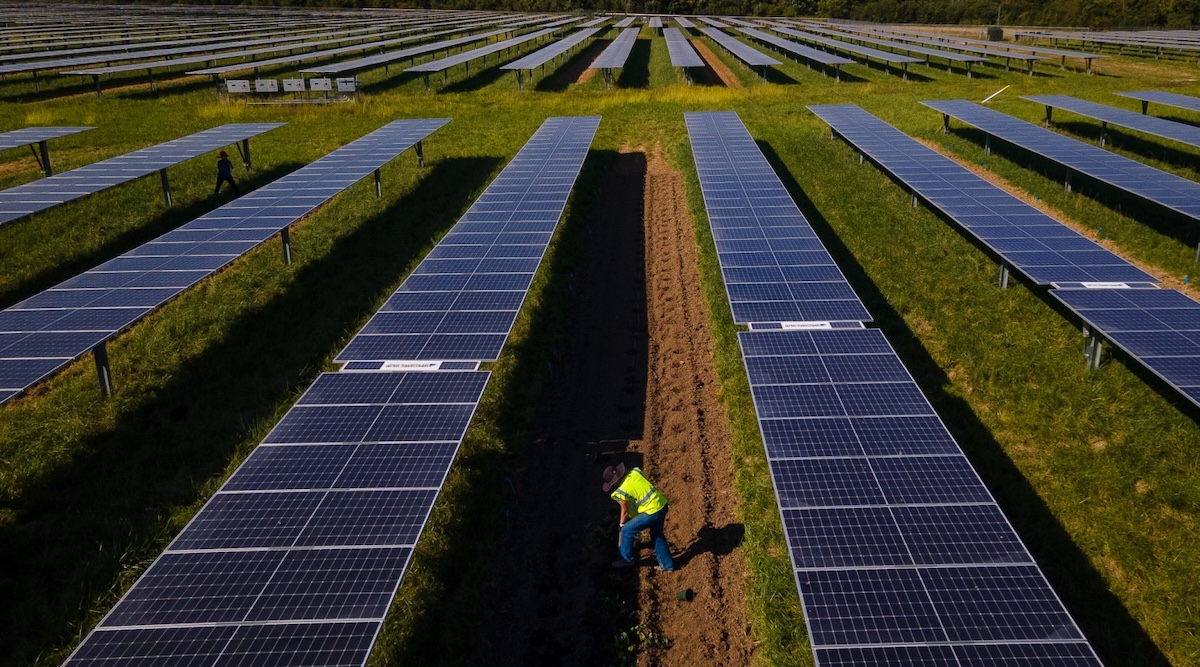
Agrivoltaics, the practice of co-locating solar energy generation with agriculture, is emerging as a multifaceted solution for US farmers, offering not only new revenue streams and water conservation but also significant wind protection benefits. A Cornell University study highlights that wind erosion costs the US agricultural sector over $9 billion annually, a problem agrivoltaics may help mitigate by acting as effective windbreaks.