China Scholars: U.S. Credibility Fell After Iran War

Get the Geopolitics newsletter
Daily geopolitics — wars, elections, sanctions, the diplomatic moves that move markets. Free.
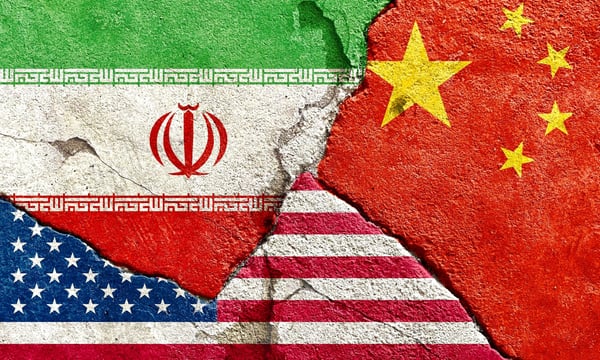
- Yan Xuetong told Tsinghua's World Peace Forum (July 3-4, 2026) that the Iran war has led more nations to view China as more trustworthy than the U.S., with traditional West Asian allies now questioning American security guarantees on both resolve and capability
- Wu Xinbo said the renaming of Indo-Pacific Command back to Pacific Command signals that using India to contain China "has proven ineffective," with India's status in U.S. regional strategy having "noticeably declined"
- Jia Qingguo invoked Thucydides' trap but argued China, the rising power, is "relatively satisfied" with the existing international order and supports the UN and multilateralism, making a forceful challenge unlikely
- Jia Qingguo said Beijing seeks to preserve older institutions while shifting their values, moving away from what he called the Western emphasis on human rights over sovereignty
- Yan Xuetong predicted the world will "fracture into three categories" — AI standard-setters, innovators, and consumers — within a decade, with the classification becoming "universally recognised" within 12 months
- Trump's reference to a U.S.-China "G2" during his recent China visit reinforced Chinese scholars' view of a shift from unipolarity to bipolarity, though it did not receive official Beijing endorsement
Why it matters: Chinese state-linked scholars framing U.S. alliances as weakening and the global order as tilting toward U.S.-China bipolarity gives Beijing a strategic narrative to back its multilateral diplomacy. Yan's proposed three-tier AI classification — standard-setters, innovators, consumers — positions the U.S. and China as the two nations that will define the next governance battleground, with the framework potentially comparable to the World Bank's income tiers within a decade.
Ask SkimNews