Ukrainian Drones Knock Out Moscow Refinery's Two Core Units — SkimNews
Get the Energy newsletter
Daily energy & climate — solar, EVs, oil, the policy fights and tech bets shaping the transition. Free.
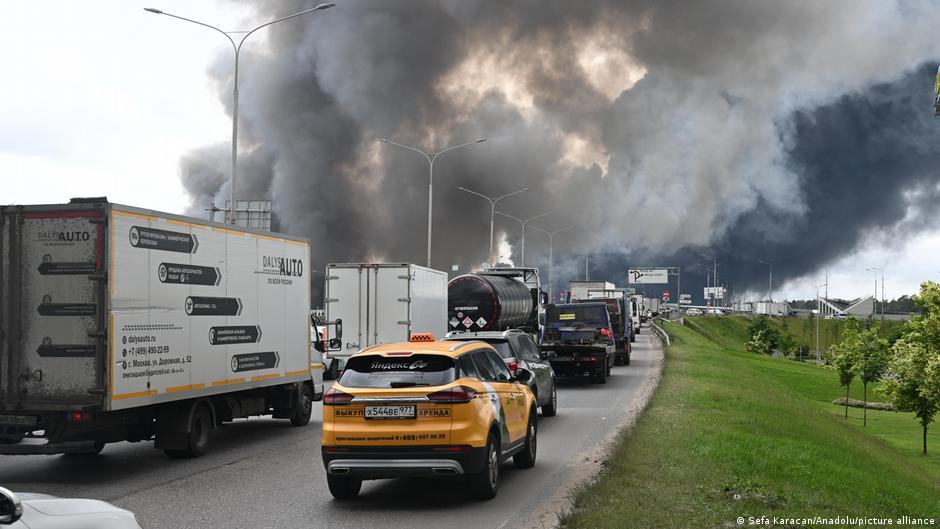
- Ukrainian drones struck Gazprom Neft's Moscow oil refinery on June 16 and June 18, 2026, knocking out both of its primary atmospheric vacuum distillation units (AVTs) and setting fuel storage tanks on fire, with smoke blanketing surrounding residential neighborhoods.
- The June 18 attack involved what Russia's Defense Ministry called a 'record' — nearly 1,000 drones shot down — a claim the source labels 'not credible'; instead, video captured numerous misses by Russian interceptor missiles, with no footage showing a drone definitively brought down by any other weapon.
- Russia's air defense lacks an integrated UAV detection system — no border-wide network combining intelligence, low-altitude radar, and acoustic sensors — and has no automated system for sharing targeting data between sensors and intercept weapons, leaving it reliant on point defense of individual facilities that mass attacks can overwhelm.
- Ukraine's refinery campaign has driven Russian gasoline output down 13% year-on-year as of late May (per Bloomberg cited by Meduza), close to the threshold the source identifies as a fuel shortage, and the Moscow plant had previously been among the least-hit because of its layered air defense zone.
- The June 18 strike introduced the Sichen UAV — which shares its aerodynamic configuration with Russia's own Geran drone — alongside the usual FP-1 and Liutyi long-range drones, and set a record for the number of strike runs captured on video, reflecting both the scale of the attack and that it unfolded in daylight over a densely populated area.
- One of the two damaged AVT units had a primary processing capacity of six million tons of oil per year; the June 18 hit landed on the second unit plus other facilities and pipelines, and the refinery likely halted processing entirely for at least several days pending repairs.
- Drones from the June 18 strike also came down on the nearby Sadovod market, apartment buildings, and construction sites — a detail the source suggests may indicate Ukraine compiled its flight mission from outdated digital maps rather than fresh satellite imagery.
Why it matters: The Moscow refinery had previously been among the least-hit Russian plants thanks to its layered air defenses; with both its AVT units now knocked out, roughly 6 million tons of annual processing capacity is offline, and with Russian gasoline output already down 13% year-on-year and no integrated drone defense in sight, sustained Ukrainian strikes of this scale push Moscow closer to a fuel shortage while publicly demonstrating the Kremlin's air defense gap.
Ask SkimNews