Bitcoin Holds $63,800 While Iran Strikes Slam Oil, Gold

Get the Finance newsletter
Daily finance — markets, central banks, M&A, the prints that move money. Free.
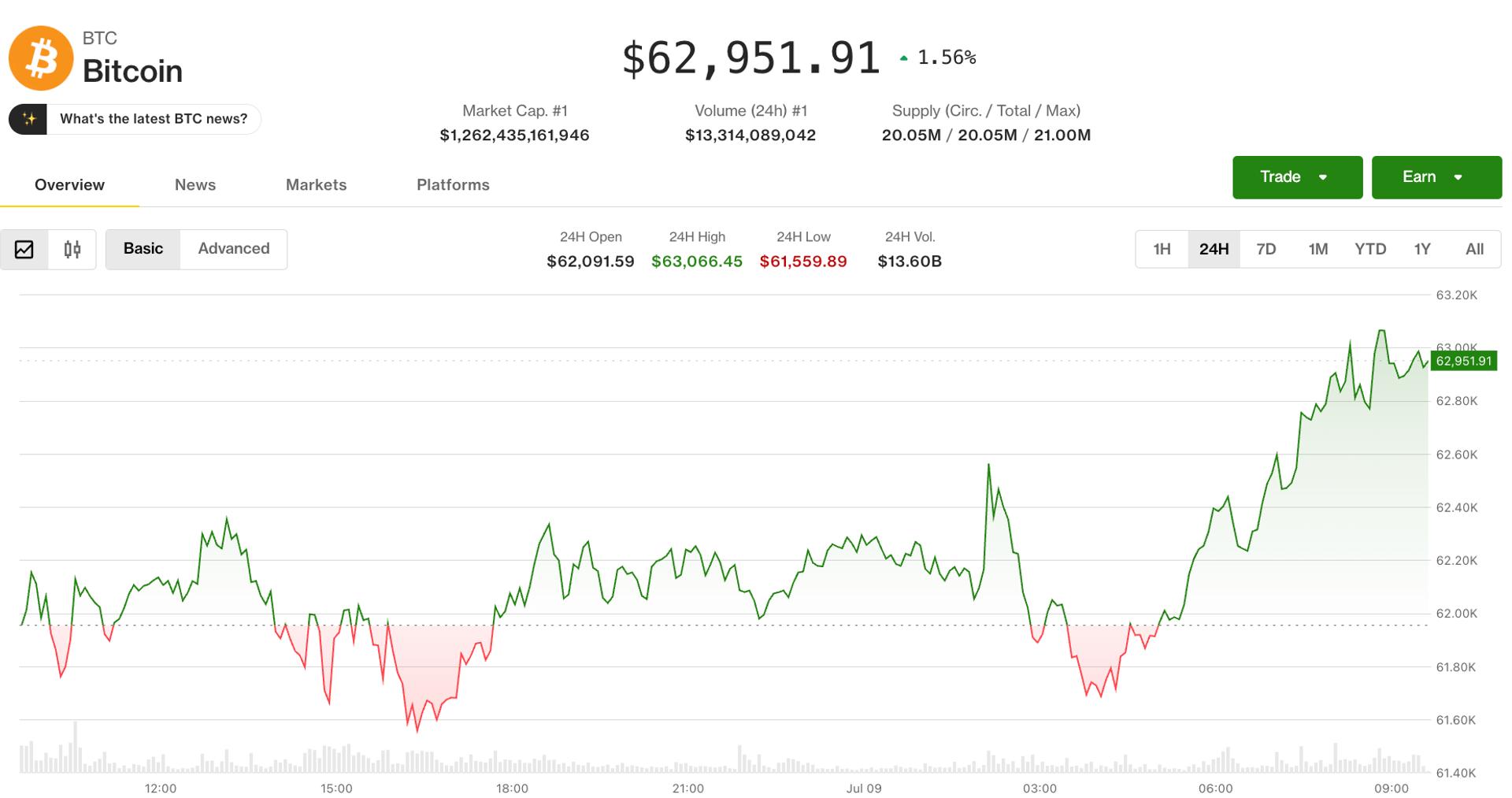
- Bitcoin held near $63,800 on Monday, down just 0.3% over 24 hours and up 2% on the week, as gold slid as much as 1.6% to near $4,050/oz and Brent crude jumped 4% above $79/barrel on the Iran strikes.
- U.S. Central Command confirmed a fourth round of strikes on Iran in a week, in response to an attack on a container ship, while the U.S. denied Iran's claim that the Strait of Hormuz — through which roughly a fifth of the world's seaborne oil passes — would close.
- Treasuries sold off across the curve, pushing the two-year yield to its highest since February 2025, and the MSCI Asia Pacific equities gauge dropped 1.6% as markets repriced for a higher-for-longer Fed path.
- Bitcoin's flat tape marks a structural shift, with the source noting it "once sold off fast on a single Hormuz headline" but now takes its direction from dollar liquidity and the chip-driven equity cycle rather than Middle East escalation.
- SK Hynix shares plunged 12% in Seoul after the chipmaker's 13% surge on its Friday U.S. debut, dragging the Kospi down 7% — a reversal of the chip trade that had lifted bitcoin on Friday and that bitcoin's muted Monday failed to follow.
- CEX trading volumes rose for the first time in five months in June, with spot climbing 15.3% to $1.11T and RWA perpetual volumes surging to a record $311B.
Why it matters: Bitcoin's flat tape through four rounds of strikes, a broad traditional-asset selloff, and a hawkish Fed repricing is a break from past behavior — the source notes it "once sold off fast on a single Hormuz headline." For allocators who used crypto as a geopolitical hedge, that correlation has effectively gone to zero on the very event that should have stressed it most, leaving bitcoin trading instead as a chip-cycle proxy.