South Korea, Japan vow denuclearisation of Korean
Get the Geopolitics newsletter
Daily geopolitics — wars, elections, sanctions, the diplomatic moves that move markets. Free.
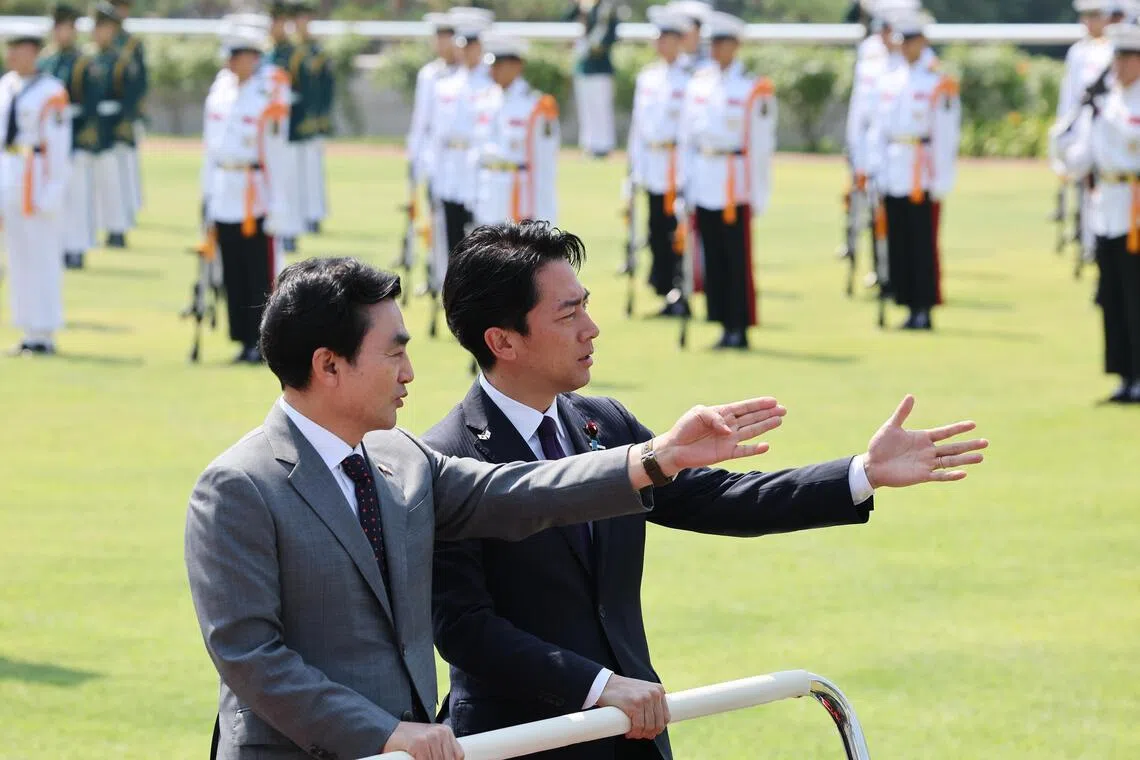
- South Korean Defence Minister Ahn Gyu-back and Japanese counterpart Shinjiro Koizumi met in Seoul on June 28, reaffirming their commitment to the complete denuclearisation of the Korean peninsula and the establishment of lasting peace, per Seoul's Defence Ministry.
- The two ministers agreed to deepen bilateral defence cooperation and continue trilateral coordination with the United States, all three being security allies of Washington despite historical tensions over Japan's early 20th-century colonial rule of Korea.
- Weeks before the meeting, the two countries held their first joint maritime search-and-rescue exercise in nine years, a move widely viewed as another step toward closer military ties.
- Kim Jong Un vowed earlier in June to strengthen North Korea's defence capabilities, equip its navy with nuclear weapons, build larger warships, and press ahead with missile testing, claiming regional military modernisation was pushing the area "to the brink of a nuclear war."
- North Korea has repeatedly declared itself an "irreversible" nuclear state since the 2019 Hanoi summit between Kim and US President Donald Trump collapsed over the scope of denuclearisation and sanctions relief.
Why it matters: The meeting reflects deepening Seoul-Tokyo defence coordination despite colonial-era animosity, with both US allies restating their trilateral framework just as Kim Jong Un accelerates nuclear expansion — including naval nuclearisation and continued missile testing — after the 2019 Hanoi framework collapsed without a denuclearisation deal. The pledge carries rhetorical weight, but North Korea's self-declared "irreversible" nuclear status since 2019 underscores the diplomatic gap between Seoul-Tokyo's stated goal and Pyongyang's stated trajectory.

