Red or Blue? How party ID codes our positions on foreign policy
Why it matters: Deepening partisan divides on foreign policy threaten U.S. global leadership and consistent international strategy.
- The Chicago Council on Global Affairs highlights a problematic, decades-long trend of widening partisan divides in U.S. foreign policy public opinion, with partisanship now a primary determinant of support for initiatives.
- Dina Smeltz, Managing Director at the Chicago Council, notes that the polarization previously seen in domestic policy has extended to foreign policy, despite some enduring bipartisan agreements on the U.S. role in world affairs.
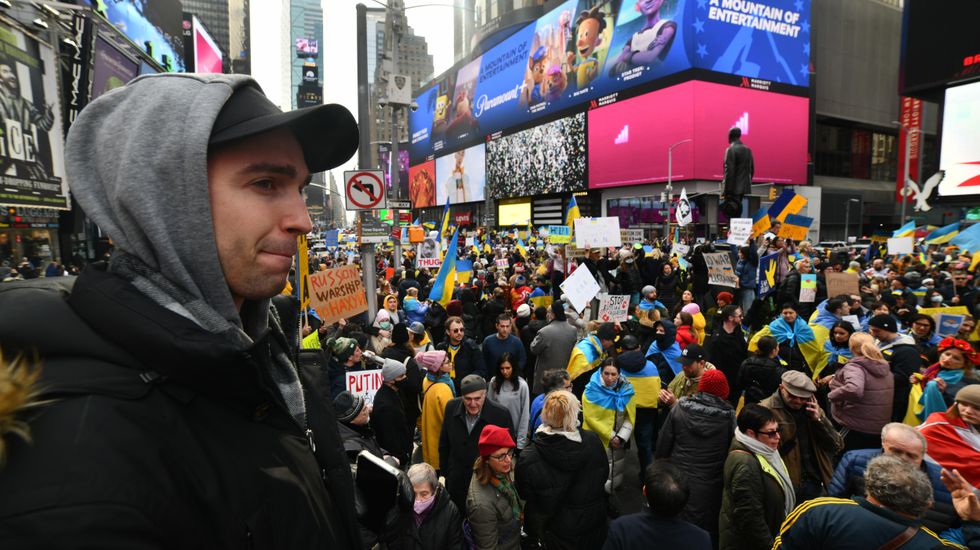
- Partisan opinions on the Russia-Ukraine war have diverged significantly, with a 47-point difference in support for military aid between Democrats and Republicans by March 2025, a notable decrease in Republican support since 2023.
- The Israel-Gaza conflict reveals stark partisan differences, with Republicans rating Israel significantly more favorably than Democrats, and a substantial gap in support for Palestinian statehood between the two parties.
American foreign policy opinions are increasingly polarized along party lines, a trend that has intensified over decades, according to the Chicago Council on Global Affairs. While bipartisan agreement still exists on broad principles like active U.S. global engagement and alliances, deep divisions emerge when implementing these strategies, particularly concerning conflicts like the Russia-Ukraine war and the Israel-Gaza conflict.