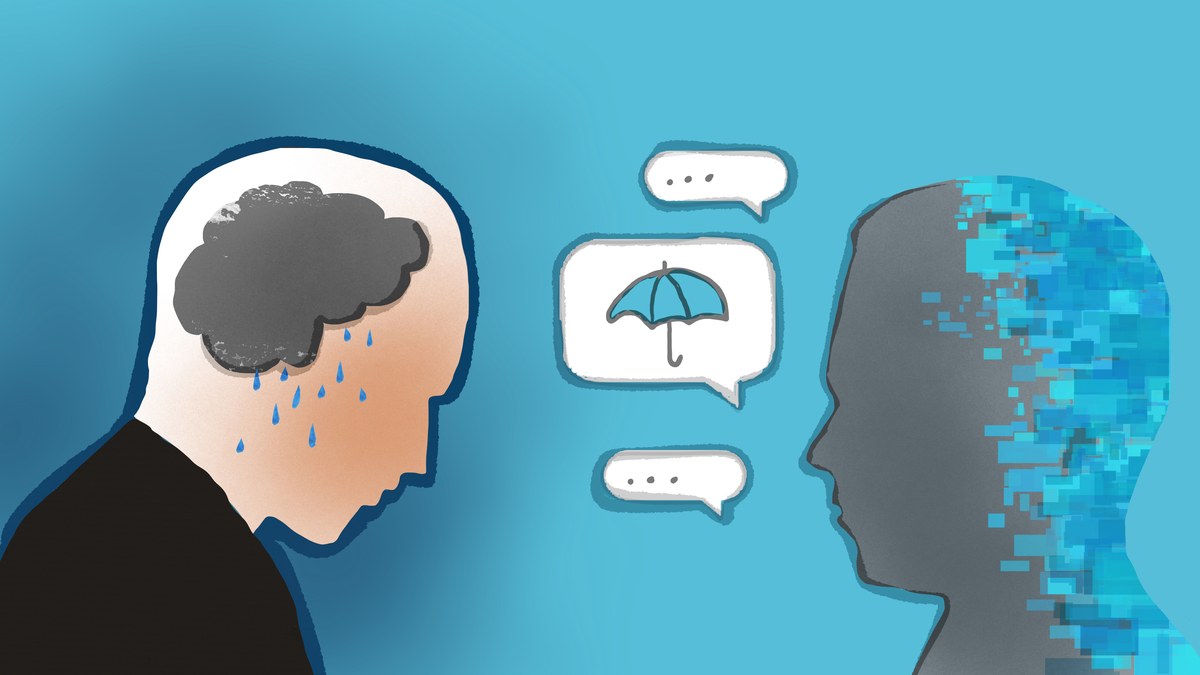
AI chatbots aren’t therapists. But can they finally get men to open up?
The 30-Second Skim
- What happened: AI chatbots are emerging as a lower-stigma, always-available way for men to discuss emotions, but researchers caution that promising results from specialized therapy systems do not establish the same benefit for general-purpose commercial chatbots.
- Key facts & numbers: Pew Research Center found that 8% of men use chatbots for emotional support, 4% for companionship and 9% say chatbot use improved their happiness. Men account for up to 80% of suicide deaths and are nearly half as likely as women to receive mental health treatment; barriers include stigma, work conflicts and fear of being a burden. Therabot users showed significant symptom reductions and high utilization in a 2025 randomized trial of about 100 participants versus 100 waitlisted controls, though the study’s methods and participant selection drew criticism.
- What happens next: The wrinkle: Therabot’s trial showed gains, but its custom build and training effort limit how far results transfer to regular chatbots.
- Pew Research Center found that 8% of men use chatbots for emotional support, 4% for companionship and 9% say chatbot use improved their happiness.
- Men account for up to 80% of suicide deaths and are nearly half as likely as women to receive mental health treatment; barriers include stigma, work conflicts and fear of being a burden.
- Therabot users showed significant symptom reductions and high utilization in a 2025 randomized trial of about 100 participants versus 100 waitlisted controls, though the study’s methods and participant selection drew criticism.
- Nick Jacobson said Therabot was expertly fine-tuned using hundreds of thousands of human hours, so its trial results should not be generalized to generative AI as a whole.
Why It Matters
For men reluctant to seek care, chatbots already offer a lower-friction entry point: Pew found 8% use them for emotional support and 9% reported improved happiness. The evidence boundary matters because commercial platforms cannot treat Therabot’s purpose-built trial results as proof for general chatbots; it took hundreds of thousands of development hours.
Sources Cited
Related Coverage
- Survey: the chatbot gender adoption gap among US adults has closed since 2024, though men are more likely to use them daily; ChatGPT has identical use rates (Pew Research Center)TechMeme
- AI Chatbots Don't Reduce Loneliness, UBC Study FindsNew Scientist
- Study: AI Chatbots Validate Users 49% More Than HumansTechCrunch
- Chatbots less likely to push suicide, still enable harmGoogle News Technology
Ask SkimNews