AMD Shows 256-Core Zen 6 EPYC Venice CPU at Advancing AI
The 30-Second Skim
- What happened: AMD publicly showcased its flagship 256-core EPYC Venice server CPU at its Advancing AI 2026 event in San Francisco, marking the first HPC chip to enter volume production on TSMC's 2nm process node and positioning the chip as a CPU-centric answer to agentic AI workloads.
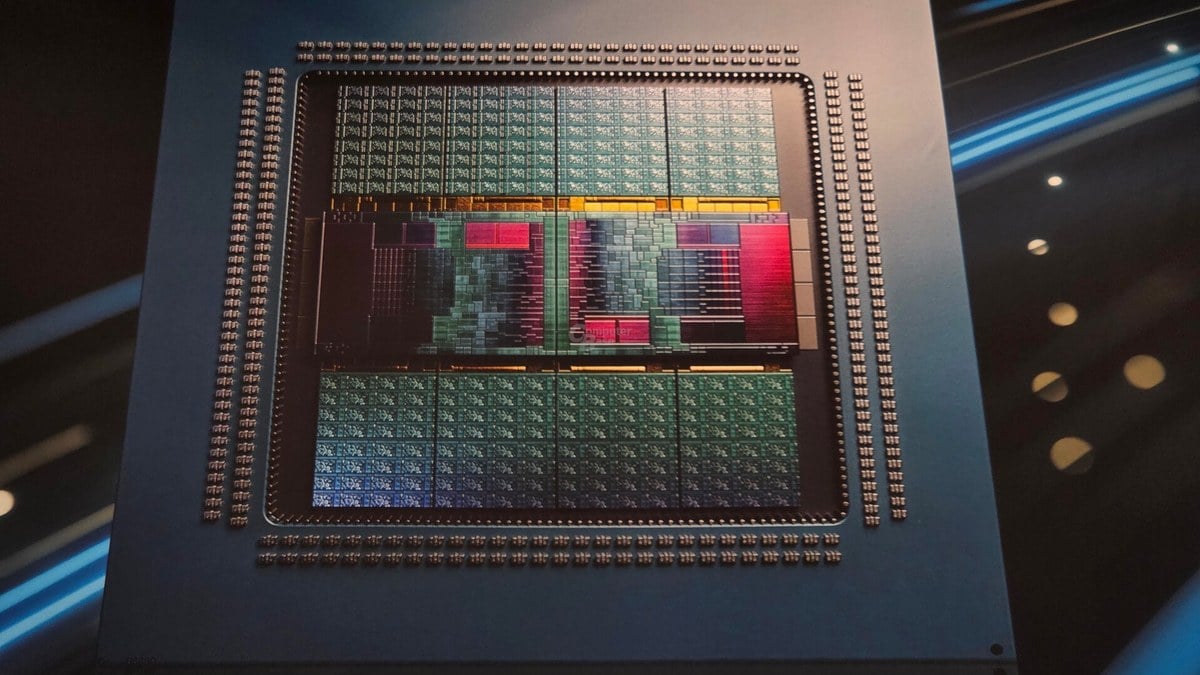
- Key facts & numbers: AMD showcased its 6th-gen EPYC Venice CPU at the Advancing AI 2026 event in San Francisco's Moscone Center West, with the flagship pictured on a banner featuring 256 Zen 6 cores and 512 threads spread across eight CCDs (32 cores each) and two large I/O dies. EPYC Venice is the first HPC product to enter volume production on TSMC's 2nm process, which moves from FinFET to nanosheet (GAA) transistors and promises 10–15% higher performance at iso-power, 25–30% lower power at iso-performance, and up to 15% higher transistor density. AMD claimed its Zen 6 EPYC Venice chips deliver over 70% performance and efficiency improvement along with a >30% increase in thread density, with the chip supporting PCIe 6.0, UCIe, DDR5, and up to 16 memory channels on the new SP7 platform.
- What happens next: Skim past the 'pictured on a banner' framing — the real story is AMD claiming the first volume 2nm HPC chip and openly pitching EPYC as the CPU half of Helios vs. NVIDIA's Vera.
- AMD showcased its 6th-gen EPYC Venice CPU at the Advancing AI 2026 event in San Francisco's Moscone Center West, with the flagship pictured on a banner featuring 256 Zen 6 cores and 512 threads spread across eight CCDs (32 cores each) and two large I/O dies.
- EPYC Venice is the first HPC product to enter volume production on TSMC's 2nm process, which moves from FinFET to nanosheet (GAA) transistors and promises 10–15% higher performance at iso-power, 25–30% lower power at iso-performance, and up to 15% higher transistor density.
- AMD claimed its Zen 6 EPYC Venice chips deliver over 70% performance and efficiency improvement along with a >30% increase in thread density, with the chip supporting PCIe 6.0, UCIe, DDR5, and up to 16 memory channels on the new SP7 platform.
- EPYC Venice is positioned against NVIDIA's Vera Arm-based CPUs inside Vera Rubin NVL72 racks, with early AMD benchmarks claiming Venice extends a lead over Vera that Turin already held in agentic AI workloads.
Why It Matters
By claiming a first-to-volume 2nm HPC chip and a 256-core flagship purpose-built for agentic AI, AMD is reframing the data-center AI race as CPU-versus-CPU inside GPU-heavy racks — directly challenging NVIDIA's Vera CPUs that anchor its Vera Rubin systems. If Venice's claimed >70% performance-and-efficiency gain holds, hyperscalers now have a credible x86 alternative for the orchestration and inference tiers where agentic workloads live, not just for GPU adjuncts.
Sources Cited
Related Coverage
- AMD EPYC 9996 Benchmarks Show Unparalleled Performance With 256 Zen 6C Cores Review - PhoronixGoogle News Technology
- AMD Zen 6 Gives Intel a Tough Gaming MatchupGoogle News Technology
- AMD plans to ship Helios, its first rack-scale AI system to rival Nvidia, later in 2026 to Microsoft, Meta, OpenAI, and others; Helios costs an estimated $5M+ (Katie Tarasov/CNBC)TechMeme
- MediaTek Dimensity 9600 Pro: TSMC 2nm, 51% AI LeapGoogle News Technology
Ask SkimNews