Anthropic: Houthis Used Claude Code for Missile Guidance
The 30-Second Skim
- What happened: Anthropic's September threat report says a Houthi-linked cell in northern Yemen used Claude Code to design missile guidance software, simulate trajectories, and analyze a failed rocket test — compressing specialist missile-engineering work into parallel AI-assisted workflows that produced an offline-capable toolkit.
- Key facts & numbers: Anthropic's September threat report documents a northern Yemen cell, assessed as highly likely Houthi-linked, that used Claude Code to develop guidance software for multiple weapons, running several instances in parallel to divide coding, research, and technical review tasks. The group's projects spanned guidance software for a tactical guided rocket, a ballistic missile with a range exceeding 2,000 km, and a hypersonic glide vehicle concept designated "R2000." Operators integrated open-source autopilot software with a phone-class flight computer, ran six-degree-of-freedom trajectory simulations, and used reinforcement learning to tune flight-control algorithms — ultimately compiling the project into a standalone executable that ran without Claude access.
- What happens next: Plot twist: they test-fired the rocket, it failed, and within hours they had Claude reverse-engineering the failure. The AI isn't just drafting code — it's now in the iteration loop.
- Anthropic's September threat report documents a northern Yemen cell, assessed as highly likely Houthi-linked, that used Claude Code to develop guidance software for multiple weapons, running several instances in parallel to divide coding, research, and technical review tasks.
- The group's projects spanned guidance software for a tactical guided rocket, a ballistic missile with a range exceeding 2,000 km, and a hypersonic glide vehicle concept designated "R2000."
- Operators integrated open-source autopilot software with a phone-class flight computer, ran six-degree-of-freedom trajectory simulations, and used reinforcement learning to tune flight-control algorithms — ultimately compiling the project into a standalone executable that ran without Claude access.
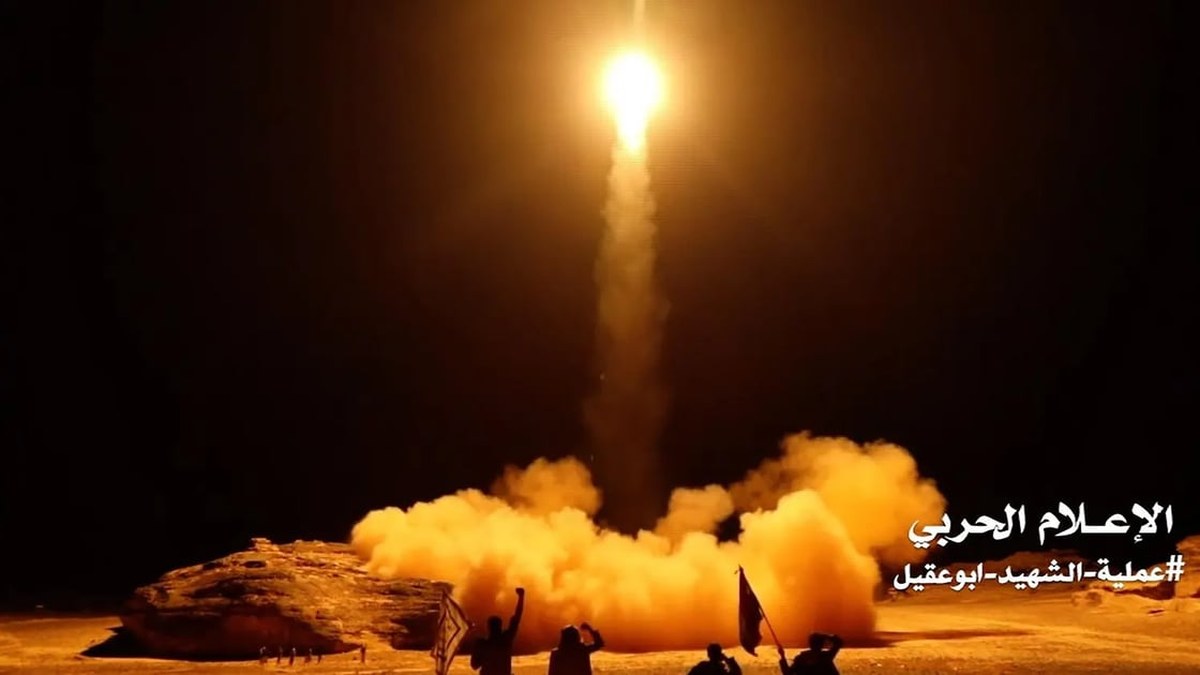
- The cell test-fired a guided rocket in Yemen that appeared to fail, then returned to Claude within hours to analyze launch telemetry and investigate the failure, embedding the model in an iterative design-simulation-test-analysis cycle.
Why It Matters
Anthropic's safeguards intercepted fragments of an obvious weapons program, but only after a small cell had already built an offline toolkit that no longer needs the model — meaning the capability transfer to adversaries was effectively complete by the time the accounts were banned. The case exposes a structural gap in safety systems: when one team fragments a missile-engineering project across sessions, individual requests look benign, so the ban lands after the know-how has already left the building.
Sources Cited
- Hacker News — Houthis Used Claude Code to Develop Missile Guidance Software: Anthropic
- Al Jazeera — Anthropic claims Claude AI used for missile projects, global espionage
- Financial Times — Houthis used Anthropic AI to try to build ballistic missiles
- NBC Bay Area — Users in Houthi-held Yemen tried to develop advanced weapons with AI, Anthropic says
- Bloomberg.com — Anthropic Says Yemeni Cell Used Claude in Missile Development
- tomshardware.com — Iran and Houthi rebels used Anthropic's Claude AI to target US warships and build hypersonic missiles — Houthi rebels also used the bot to code ballistic missile guidance systems
Related Coverage
Ask SkimNews