Anthropic rewrote its Claude API in Rust with AI
The 30-Second Skim3 points
- What happenedPlatform engineering leader Katelyn Lesse detailed Anthropic’s roughly five-month rewrite of the Messages API from Python to Rust, validated by shadowing production traffic. The episode also shows Claude taking on code-review classification, alert triage and onboarding, while humans retain planning and system ownership.
- Key facts & numbersEngineers closely reviewed only about 20% of generated Rust, relying on response parity with the Python API as a test harness. Anthropic’s teams remain five to eight people, own their systems and staff on-call, even as agents take on more review and triage.
- What happens nextAnthropic is still testing coding-agent interviews, while its API on-call agent only categorizes incoming alerts; the stated long-term goal is for Claude to handle actual incidents without waking a human.
Why It Matters
For Claude users, the migration puts authentication, tokenization, billing, safety checks and GPU access on the token-serving path. Rust targeted the Python monolith’s CPU overhead, while response parity offered a correctness baseline without inspecting every generated line.
The counterweight is continuity: Anthropic still plans across Inference, Research, Safety and App teams, uses Claude to calibrate human reviews, and keeps five-to-eight-person teams responsible for systems and on-call. AI changes execution, not accountability. The source’s automation emphasis can obscure that shift from writing code to governing systems.
How Outlets Are Framing It
- The Pragmatic Engineer: The episode foregrounds Anthropic’s five-month Rust migration, automated review paths and Claude’s growing operational role as a practical AI-engineering case study.
- Consensus within supplied coverage: No other outlet titles were provided, so cross-outlet convergence cannot be verified; the source consistently links AI assistance with verification.
- Overlooked organizational lens: The episode’s automation emphasis can obscure unchanged planning, coordination exceeding implementation and five-to-eight-person teams that still own systems and on-call.
Background & Timeline
Sources Cited
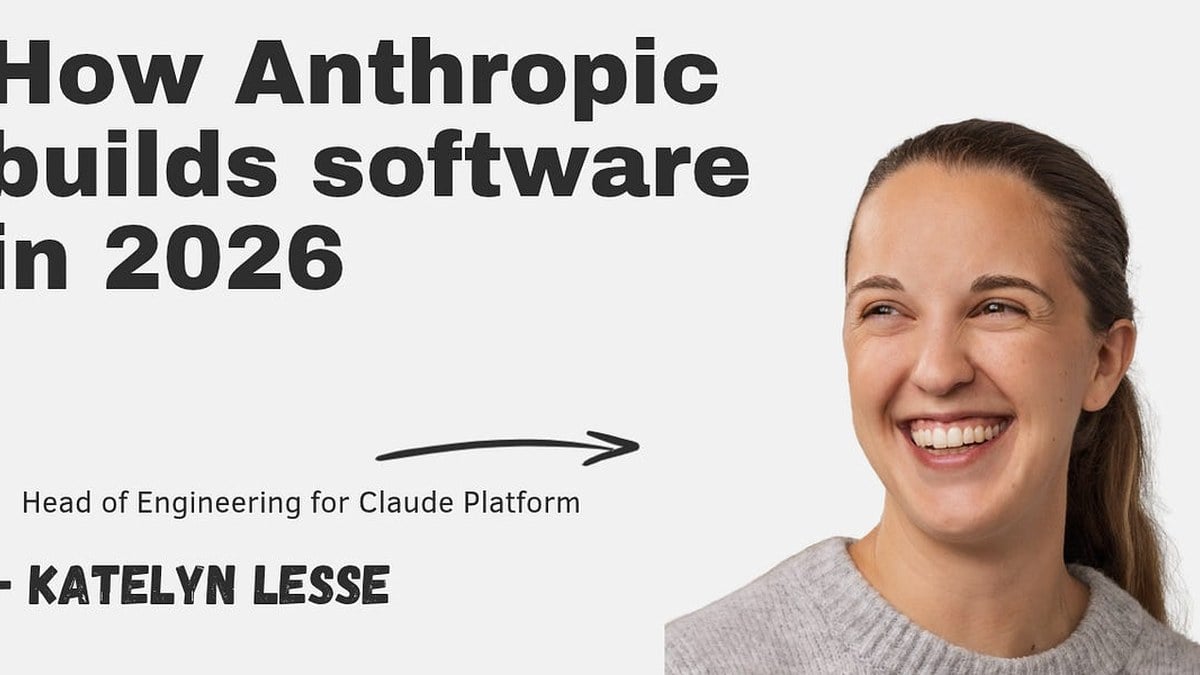
- The Pragmatic EngineerHow Anthropic builds software in 2026 with Katelyn Lesse
Related Coverage
Ask SkimNews