Apple Launches AI Health Study with OpenEvidence
The 30-Second Skim
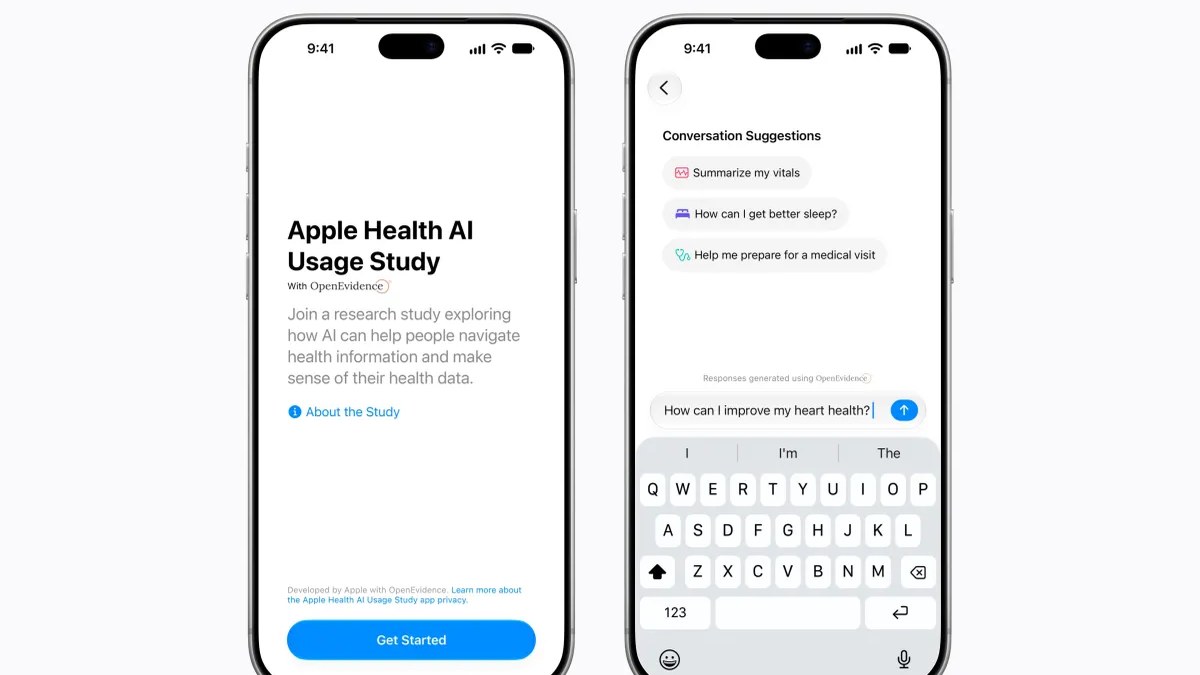
- What happened: Apple has launched a new research app to study how people interact with AI for health, partnering with OpenEvidence to deliver clinically grounded responses while collecting user feedback and anonymized health data.
- Key facts & numbers: Apple launched a new study app for U.S. users on iPhone 15 or later with iOS 26 or later, aiming to enroll up to 200,000 participants over 21 to assess how AI can support everyday health inquiries. Apple is partnering with healthcare AI company OpenEvidence to power the app’s responses, which are grounded in clinical sources like The New England Journal of Medicine and JAMA. OpenEvidence deletes user query and response data within 24 hours, and Apple emphasizes that no data will be used to train AI models, with anonymized data stored in a secure third-party cloud.
- What happens next: While others rush AI into health, Apple is hitting pause to study it—200K users, clinical sources only, data gone in 24 hours. This isn’t a product launch; it’s a research play.
- Apple launched a new study app for U.S. users on iPhone 15 or later with iOS 26 or later, aiming to enroll up to 200,000 participants over 21 to assess how AI can support everyday health inquiries.
- Apple is partnering with healthcare AI company OpenEvidence to power the app’s responses, which are grounded in clinical sources like The New England Journal of Medicine and JAMA.
- OpenEvidence deletes user query and response data within 24 hours, and Apple emphasizes that no data will be used to train AI models, with anonymized data stored in a secure third-party cloud.
- Apple users can ask health questions and receive simplified, evidence-based answers, rate responses, and provide feedback, with options to share HealthKit data for more personalized insights.
Why It Matters
Apple is delaying consumer AI health rollouts in favor of a large-scale, controlled study—unlike OpenAI or Anthropic—which could shape how tightly regulated health AI is developed. With 200,000 potential participants and strict data handling, this positions Apple to influence clinical AI standards while avoiding premature deployment risks.
Sources Cited
Related Coverage
Ask SkimNews