Besxar is building an orbital semiconductor factory, one SpaceX rocket at a time
The 30-Second Skim
- What happened: Besxar, founded by ex-OpenAI engineer Ashley Pilipiszyn, is building an orbital semiconductor factory aboard SpaceX Falcon 9 boosters, using space's vacuum to skip the clean-room infrastructure Earth fabs require. Early tests confirmed exposed wafer samples were cleaner than terrestrial equivalents.
- Key facts & numbers: Besxar is prototyping an orbital semiconductor factory across roughly a dozen SpaceX Falcon 9 flights, exploiting the vacuum of space instead of the pressurized clean rooms that the company says make Earth-based fabs "hugely insane infrastructure projects." Founder Ashley Pilipiszyn, a former OpenAI staffer, has raised nearly $14 million for the effort, including a $9 million seed round led by Dauntless Ventures and Overture VC. The startup's first two "fabships" flew on a July Starlink mission, and the exposed wafer samples came back with less particulate contamination than non-flown terrestrial wafers — despite a flight data system malfunction in one canister that the company is still investigating.
- What happens next: Pitch: 'Don't do it on Earth where you're fighting physics.' First test wafers came back cleaner than terrestrial ones — and Besxar hasn't even started deposition yet.
- Besxar is prototyping an orbital semiconductor factory across roughly a dozen SpaceX Falcon 9 flights, exploiting the vacuum of space instead of the pressurized clean rooms that the company says make Earth-based fabs "hugely insane infrastructure projects."
- Founder Ashley Pilipiszyn, a former OpenAI staffer, has raised nearly $14 million for the effort, including a $9 million seed round led by Dauntless Ventures and Overture VC.
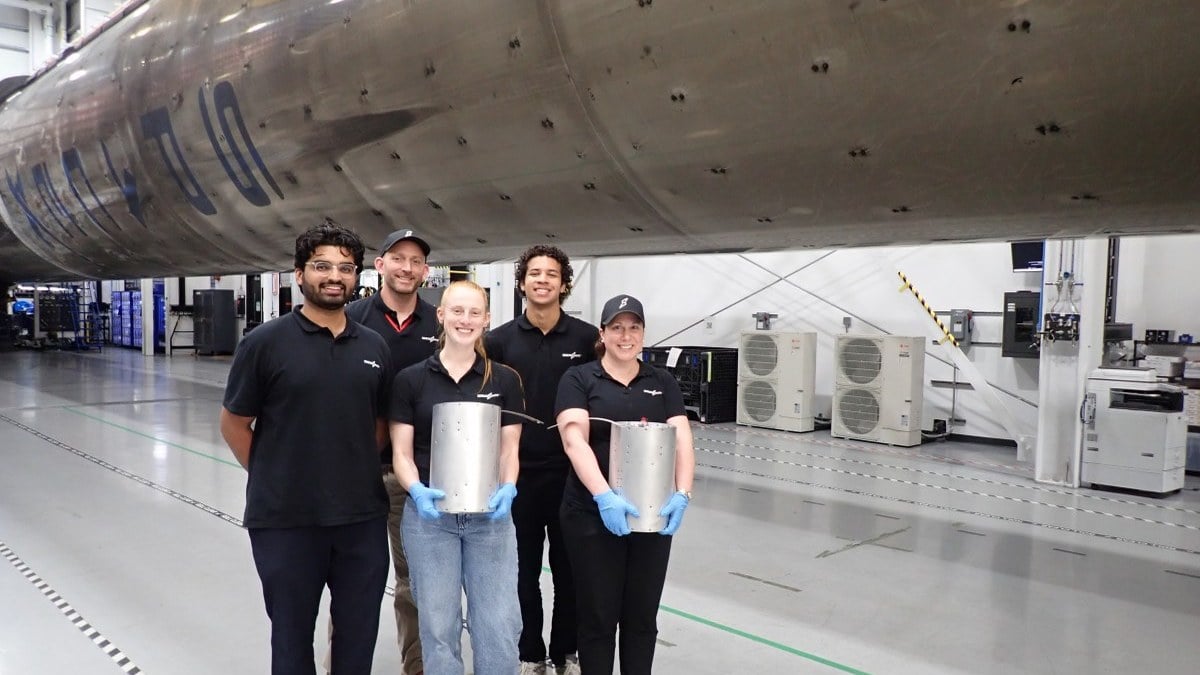
- The startup's first two "fabships" flew on a July Starlink mission, and the exposed wafer samples came back with less particulate contamination than non-flown terrestrial wafers — despite a flight data system malfunction in one canister that the company is still investigating.
- Besxar plans to iterate over the next two years, scaling from heating wafers to depositing one material, then two, and so on, with the ultimate goal of flying larger fabs aboard SpaceX's still-in-development Starship.
Why It Matters
By manufacturing in space, Besxar sidesteps the pressurized clean rooms that founder Pilipiszyn calls "hugely insane infrastructure projects" on Earth. Qualification samples could supply wafers for the power-regulating chips used in data centers, robots, and EVs — but scaling past hundreds of wafers per fab requires SpaceX's Starship or rival next-generation rockets to drive launch costs down.
Sources Cited
Related Coverage
Ask SkimNews