Cockroach Labs CTO: AI ends manual code review
The 30-Second Skim
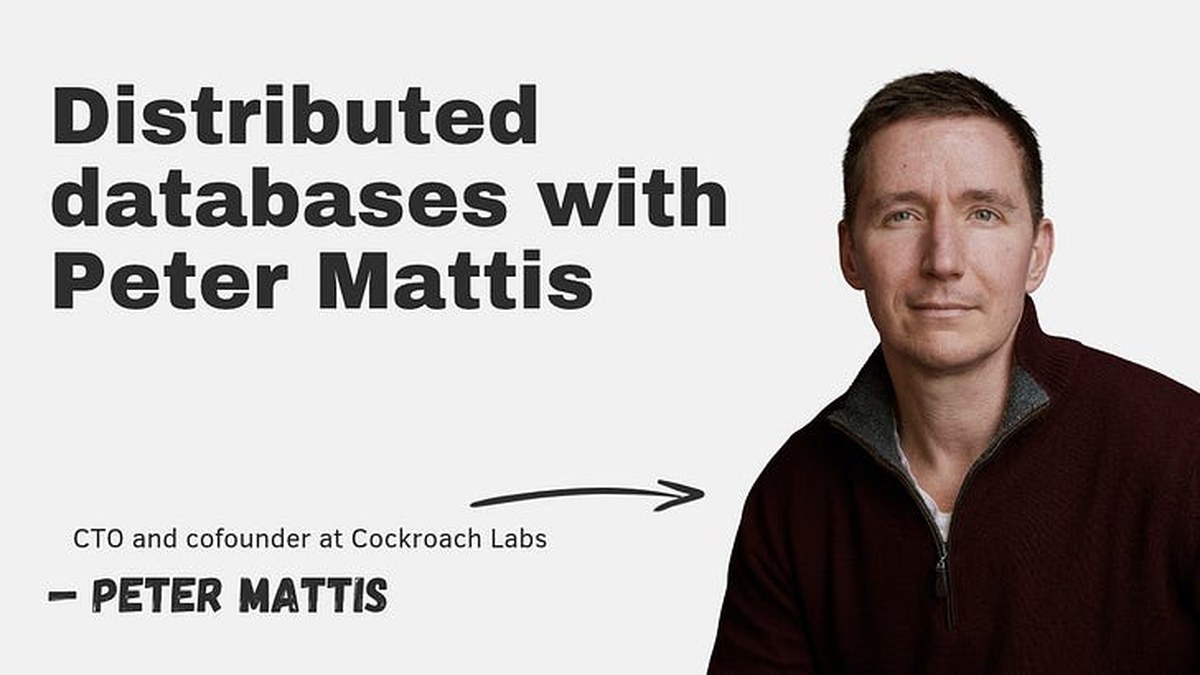
- What happened: Peter Mattis, co-founder and CTO of Cockroach Labs and original GIMP creator, joins The Pragmatic Engineer podcast to trace his path from open source to Google to distributed databases, and predicts AI agents will soon make manual code review obsolete.
- Key facts & numbers: Peter Mattis, co-founder and CTO of Cockroach Labs and original GIMP creator with Spencer Kimball, initially turned down Sergey Brin's offer to join Google because of the hour-long commute from San Francisco to Mountain View Colossus, Google's successor to the Google File System, cut file storage overhead by 33% while increasing redundancy, pioneering Reed–Solomon erasure coding instead of keeping three full replicas CockroachDB requires at least three replicas for consensus by default (up to five for some system tables), and its design was shaped by Colossus's append-only architecture — which is why it uses the Pebble LSM engine Peter open-sourced in 2019, not B-trees
- What happens next: A CTO shipping ~100K LOC/year pre-AI says he's now MORE productive — and Cockroach Labs' CFO just built their own apps. Code review is next to die.
- Peter Mattis, co-founder and CTO of Cockroach Labs and original GIMP creator with Spencer Kimball, initially turned down Sergey Brin's offer to join Google because of the hour-long commute from San Francisco to Mountain View
- Colossus, Google's successor to the Google File System, cut file storage overhead by 33% while increasing redundancy, pioneering Reed–Solomon erasure coding instead of keeping three full replicas
- CockroachDB requires at least three replicas for consensus by default (up to five for some system tables), and its design was shaped by Colossus's append-only architecture — which is why it uses the Pebble LSM engine Peter open-sourced in 2019, not B-trees
- Peter Mattis, a former C++ readability reviewer at Google, predicts AI agents will end manual code review 'in the same way we don't look at assembly anymore,' with reviewers giving 'less and less scrutiny' over time
Why It Matters
Peter's prediction that code review goes the way of assembly review is structural: if AI handles scrutiny, the bottleneck shifts from writing it to surrounding-applying it. The 1,000-apps-by-non-engineers figure suggests domain experts inside tech firms are now shipping software independently of engineering — a redistribution of where productivity gains land, not just an acceleration of them.
Sources Cited
- The Pragmatic Engineer — Distributed databases with Peter Mattis
Related Coverage
Ask SkimNews