F-22 Now Commands Drone Wingmen — Wargames Expose Flaws
The 30-Second Skim
- What happened: US Air Force F-22 pilots successfully commanded an autonomous drone wingman from the cockpit for the first time, marking tangible progress in the Collaborative Combat Aircraft program even as war games and AI-brittleness critiques question whether unmanned wingmen can realistically offset China's air-defense edge.
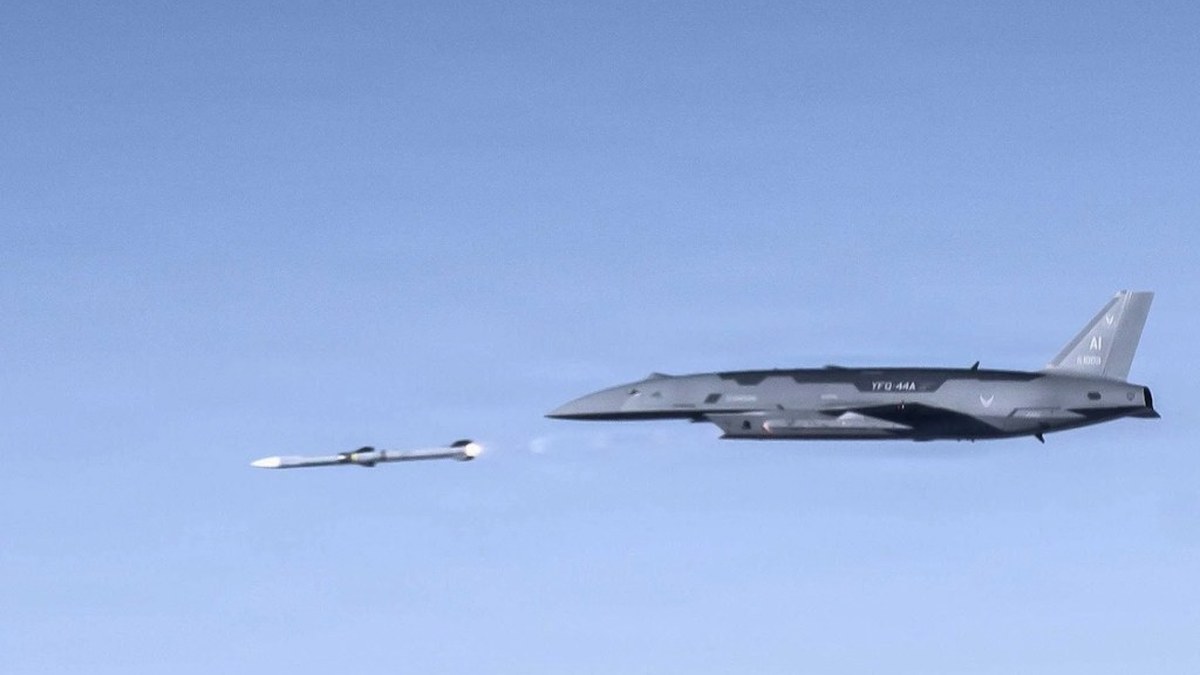
- Key facts & numbers: US Air Force F-22 Raptor pilot controlled an YFQ-44A Fury drone from the cockpit for the first time at Edwards Air Force Base, with the drone's onboard autonomy translating tactical directives into simulated combat maneuvers in real time. The CCA program aims to field at least 500 Increment 1 autonomous wingmen by 2032 to expand combat mass against China's air defenses, though the Air Force fighter fleet has slipped to 1,098 combat-coded jets in 2026 — below Congress's 1,145 statutory minimum. Bryan Clark of the Hudson Institute said recent war games with senior Navy leaders at the Naval War College revealed "severe operational flaws" in manned-unmanned teaming, warning that uncrewed drones are more detectable than stealth fighters like the F-35 and could draw hostile fire toward human pilots.
- What happens next: The breakthrough headline hides the real story: war gamers say drones are MORE detectable than stealth jets, meaning the cheap wingmen could just be expensive decoys that draw fire at pilots.
- US Air Force F-22 Raptor pilot controlled an YFQ-44A Fury drone from the cockpit for the first time at Edwards Air Force Base, with the drone's onboard autonomy translating tactical directives into simulated combat maneuvers in real time.
- The CCA program aims to field at least 500 Increment 1 autonomous wingmen by 2032 to expand combat mass against China's air defenses, though the Air Force fighter fleet has slipped to 1,098 combat-coded jets in 2026 — below Congress's 1,145 statutory minimum.
- Bryan Clark of the Hudson Institute said recent war games with senior Navy leaders at the Naval War College revealed "severe operational flaws" in manned-unmanned teaming, warning that uncrewed drones are more detectable than stealth fighters like the F-35 and could draw hostile fire toward human pilots.
- S. Tucker Browne and co-authors in the Aether journal argued combat AI suffers from perception failures, cannot generalize beyond peacetime training data, and remains dangerously brittle against rudimentary adversarial deception.
Why It Matters
Pentagon planners are betting drone economics against a 27-year-old fleet gap (1,098 vs. 1,145 minimum jets) — but Naval War College games and AI-brittleness critiques warn the cheap-mass advantage dissolves if drones need near-F-35 stealth and sensors to survive China's kill chains.
Sources Cited
Related Coverage
Ask SkimNews