Phishing Kit Spoofs AI Ad Portals to Steal Credentials
The 30-Second Skim
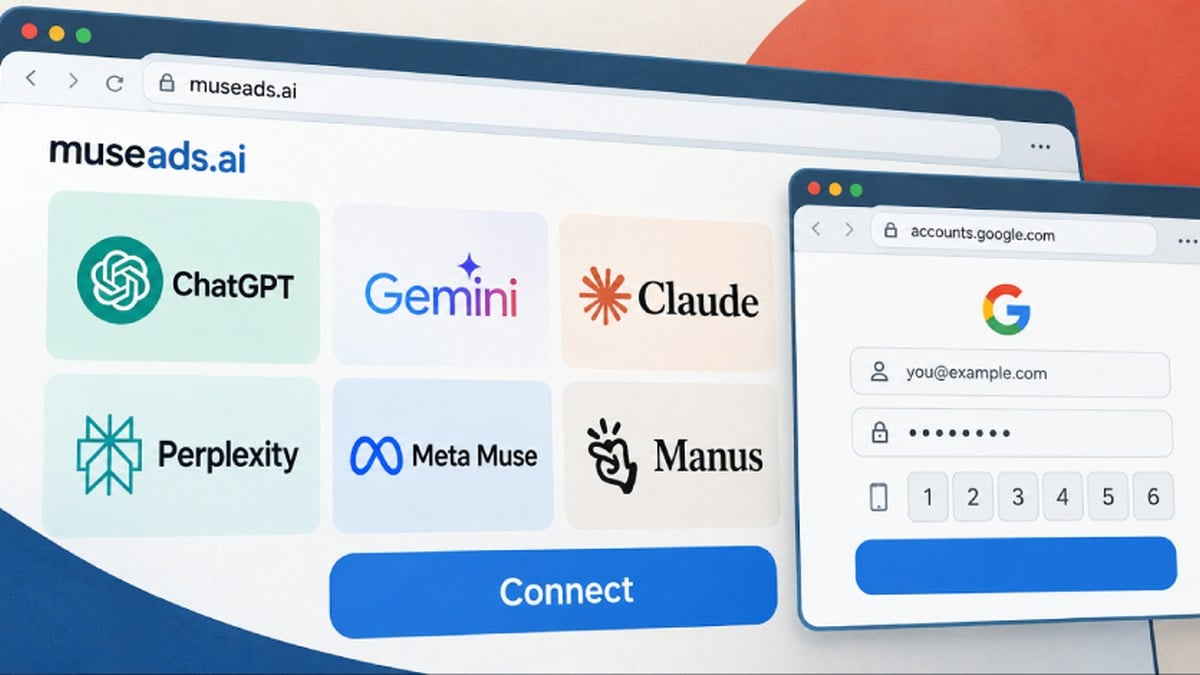
- What happened: Cybersecurity firm Island has detailed a human-operated phishing platform that spoofs advertising portals for ChatGPT, Gemini, Claude, Perplexity, Meta Muse, and Manus, using fake login windows to harvest credentials and MFA codes in real time from ad-industry targets.
- Key facts & numbers: Island researchers Oleg Zaytsev and Ofek Ronen disclosed a phishing kit impersonating ad-management portals for ChatGPT, Gemini, Claude, Perplexity, Meta Muse, and Manus, each with its own brand pitch and sign-in flow built around a single "Connect" call to action. The platform uses a browser-in-the-browser (BitB) overlay to display trusted URLs like accounts.google.com or Okta tenants while actually running on the attacker's domain, fingerprinting devices and relaying data to an "/api/send/ip" endpoint over Socket.IO. Operators steer victims through authentication in real time via Socket.IO events ("operator-command" and "telegram-command"), selecting MFA challenges such as SMS (/2fa), authenticator (/authApp), Google prompts (/googlePrompt), or Okta push (/oktaApprove) and even rejecting bad codes with /wrong2fa.
- What happens next: The kit doesn't just grab passwords — the operator watches your screen and picks your MFA prompt live. 'Connect' button has never felt scarier.
- Island researchers Oleg Zaytsev and Ofek Ronen disclosed a phishing kit impersonating ad-management portals for ChatGPT, Gemini, Claude, Perplexity, Meta Muse, and Manus, each with its own brand pitch and sign-in flow built around a single "Connect" call to action.
- The platform uses a browser-in-the-browser (BitB) overlay to display trusted URLs like accounts.google.com or Okta tenants while actually running on the attacker's domain, fingerprinting devices and relaying data to an "/api/send/ip" endpoint over Socket.IO.
- Operators steer victims through authentication in real time via Socket.IO events ("operator-command" and "telegram-command"), selecting MFA challenges such as SMS (/2fa), authenticator (/authApp), Google prompts (/googlePrompt), or Okta push (/oktaApprove) and even rejecting bad codes with /wrong2fa.
- The site museads.ai appeared on September 16, 2026 — roughly a week after Meta's Muse launch — and targeted Google, Meta, TikTok, and Okta credentials from media buyers and manager-account administrators likely chosen so attackers can monetize clean ad accounts.
Why It Matters
Account recovery for stolen ad manager accounts typically takes weeks or months while ads keep running, meaning a single compromised login at an agency can cascade into client budgets — and the attackers are betting on AI-brand trust and real-time MFA manipulation to make those compromises stick.
Sources Cited
- The Hacker News — Fake ChatGPT, Gemini, and Claude Ad Portals Capture Credentials and MFA Codes
- TechRadar — ChatGPT, Gemini, and Claude imitated in fake ads that steal credentials and MFA codes
- NeoTeo — Fake AI ad phishing: how operators steer sign-ins
- news.lavx.hu — Fake AI ad portals steal credentials and MFA codes through browser-in-the-browser traps
- The Atlantic — The Myspace Dilemma Facing ChatGPT
Related Coverage
Ask SkimNews