AI Collapses Attacker Skill Gap as 'Vibe Hacking' Emerges
The 30-Second Skim
- What happened: Generative AI is collapsing the skill gap between novice and skilled cyberattackers, compressing weeks of exploit research into minutes of AI-assisted work and forcing defenders toward continuous control validation. BreachLock frames the shift as 'vibe hacking.'
- Key facts & numbers: Generative AI is collapsing the traditional attacker sophistication ranking — from nation-state actors down to "script kiddies" — by letting less experienced attackers close knowledge gaps through AI-assisted research, code generation, troubleshooting, and technique adaptation. LLMs are cutting the cost of offensive security knowledge the way cloud cut infrastructure costs and open-source cut application development costs, compressing what once took weeks of vulnerability research into minutes of AI-assisted documentation summarization, exploit explanation, and prototype code generation. The emerging attacker pattern of iterating with an AI assistant — refining payloads, debugging code, and adapting techniques to a specific environment — mirrors developer "vibe coding" and is being labeled "vibe hacking."
- What happens next: The piece is BreachLock using a buzzy "vibe hacking" frame to upsell continuous validation services — the argument is sound but the receipt is a sales pitch.
- Generative AI is collapsing the traditional attacker sophistication ranking — from nation-state actors down to "script kiddies" — by letting less experienced attackers close knowledge gaps through AI-assisted research, code generation, troubleshooting, and technique adaptation.
- LLMs are cutting the cost of offensive security knowledge the way cloud cut infrastructure costs and open-source cut application development costs, compressing what once took weeks of vulnerability research into minutes of AI-assisted documentation summarization, exploit explanation, and prototype code generation.
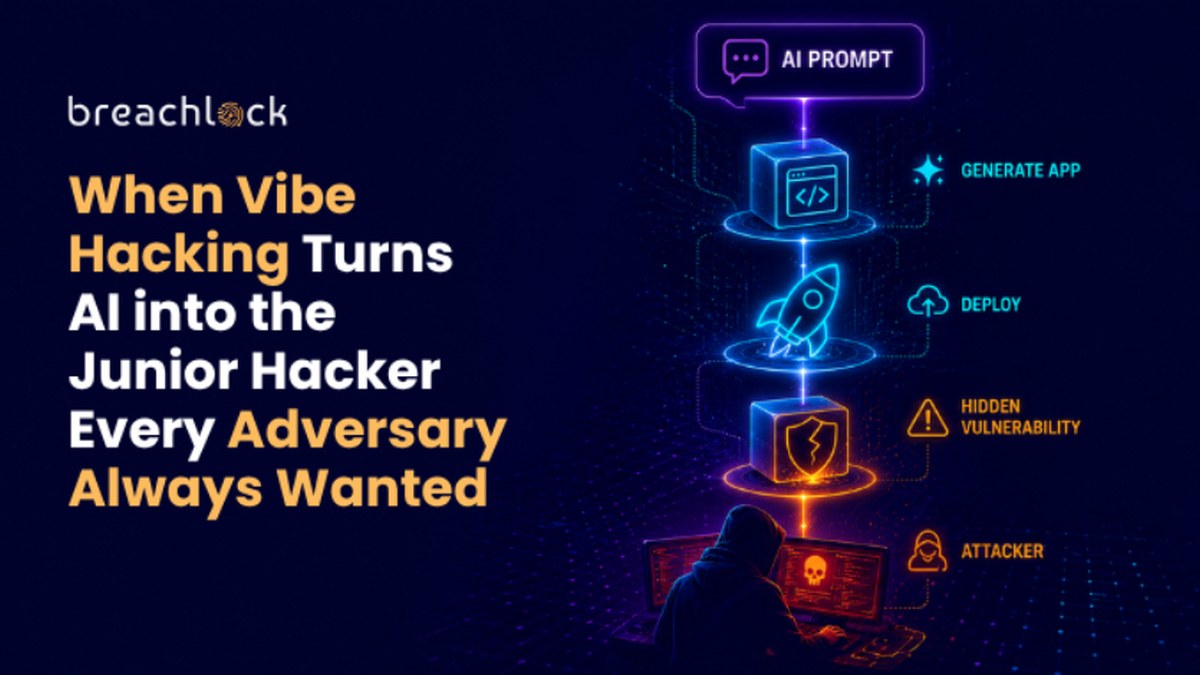
- The emerging attacker pattern of iterating with an AI assistant — refining payloads, debugging code, and adapting techniques to a specific environment — mirrors developer "vibe coding" and is being labeled "vibe hacking."
- BreachLock argues periodic penetration testing and vulnerability scanning are insufficient on their own, and that defenders need Continuous Threat Exposure Management — implemented through Adversarial Exposure Validation and Penetration Testing as a Service (PTaaS) — to test the same paths AI-assisted attackers would try on the same timeline.
Why It Matters
Vendors selling continuous validation are recasting AI as both the threat accelerant and the rationale for ongoing offensive-security spend. Enterprises that built defenses around attacker scarcity now face broader, faster exploit-adaptation cycles — making the source's core operational consequence that point-in-time penetration testing no longer matches the AI-compressed disclosure-to-exploit timeline.
Sources Cited
Related Coverage
Ask SkimNews