Google Launches Gemini Spark Personal AI Assistant
The 30-Second Skim
- What happened: Google is doubling down on hyper‑personalized AI, unveiling Gemini Spark and expanding its Personal Intelligence suite to tap into emails, photos, and browsing history. As OpenAI trims its product line and Anthropic’s new model stalls, Google’s strategy hinges on users opting in to share more data, promising convenience at the cost of privacy.
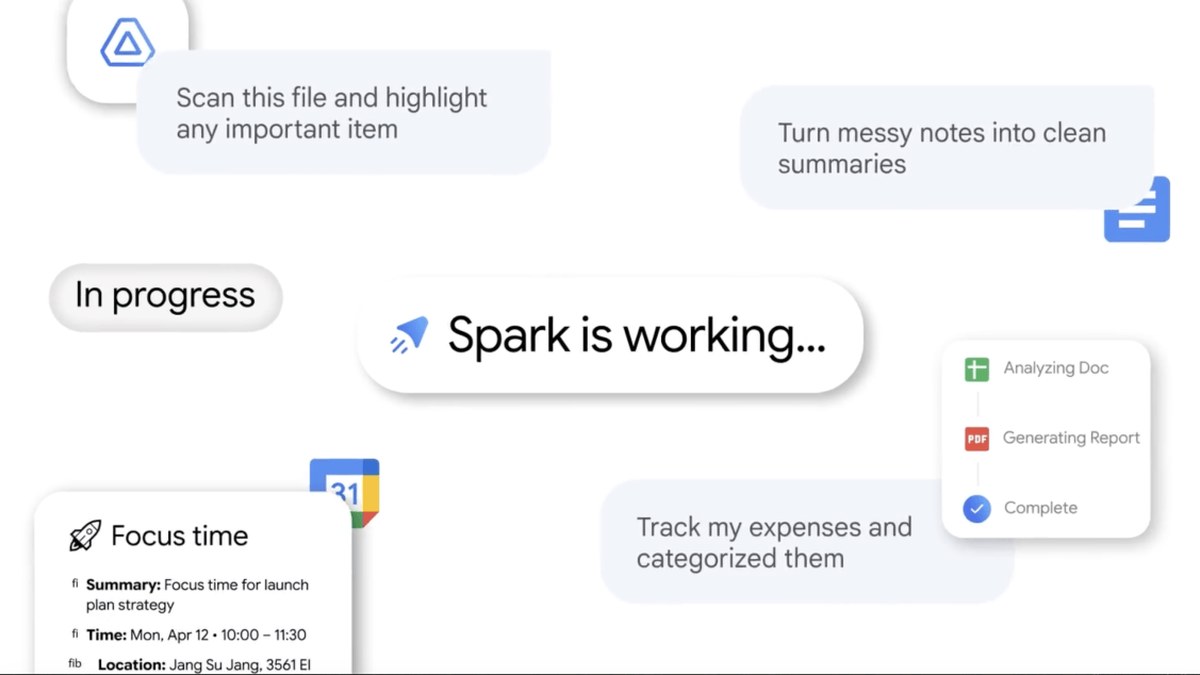
- Key facts & numbers: Google announced Gemini Spark at I/O 2026, an always‑on AI agent that can organize events, generate to‑do lists, and draft email replies by accessing personal data across Google services. Daily Brief is rolling out to Google AI Plus, Pro, and Ultra subscribers, scanning Gmail and Calendar to provide a daily rundown of upcoming events and updates. Personal Intelligence, introduced in January, lets Gemini reason across Gmail, Photos, Search, and YouTube history without prompting, and is used daily by millions for personalized recommendations and decision‑making.
- What happens next: Google’s new Gemini Spark will literally read your inbox, calendar, and even credit‑card statements to auto‑do stuff — convenient, but your privacy is on the line.
- Google announced Gemini Spark at I/O 2026, an always‑on AI agent that can organize events, generate to‑do lists, and draft email replies by accessing personal data across Google services.
- Daily Brief is rolling out to Google AI Plus, Pro, and Ultra subscribers, scanning Gmail and Calendar to provide a daily rundown of upcoming events and updates.
- Personal Intelligence, introduced in January, lets Gemini reason across Gmail, Photos, Search, and YouTube history without prompting, and is used daily by millions for personalized recommendations and decision‑making.
- Google’s Gemini Deep Research feature can pull information from a user’s Drive, chats, and emails to produce reports, reflecting deeper integration of personal data into AI outputs.
Why It Matters
Google’s users — millions who opt in — gain a seamless AI assistant that can automate tasks, but must surrender more personal data, potentially boosting Google’s ad‑targeting revenue by leveraging deeper insights into user behavior.
Background & Timeline
- Editor context: Google's AI strategy is a bet that users will prioritize the utility of hyper-personalized AI over privacy concerns, especially as competitors face their own product challenges.
Sources Cited
Related Coverage
Ask SkimNews