Google Uses Gemini to Predict Flash Floods in 150 Countries
The 30-Second Skim
- What happened: Google used its Gemini AI to mine 5 million news articles about past floods, creating a training dataset that powers flash flood forecasts now available for 150 countries on its Flood Hub platform.
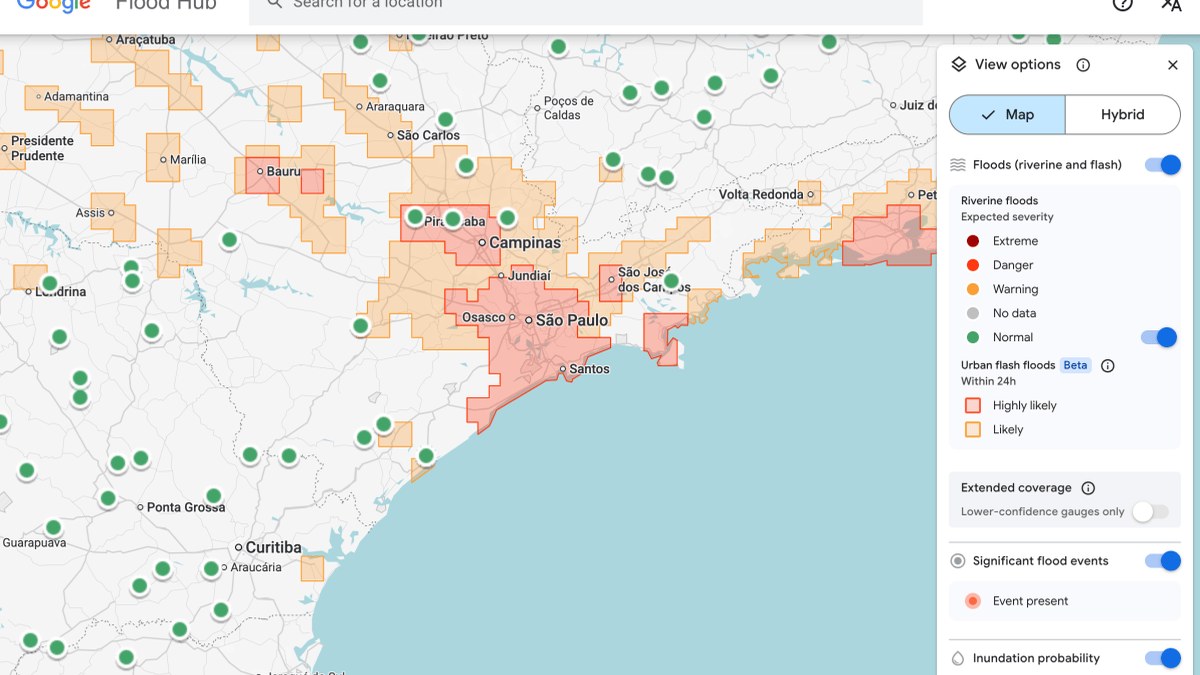
- Key facts & numbers: Google researchers used Gemini to sort through 5 million news articles, identifying 2.6 million flood reports and converting them into a geo-tagged time series called "Groundsource" — the first time the company has used language models for this kind of work, per Google Research product manager Gila Loike. Groundsource was used to train a Long Short-Term Memory (LSTM) neural network that ingests global weather forecasts and generates the probability of flash flooding in a given area. Flood Hub now displays flash flood risk for urban areas in 150 countries, with Google sharing its data with emergency response agencies worldwide.
- What happens next: Google's Gemini mined 5M news articles to build flood warnings for 150 countries, including places with no radar coverage.
- Google researchers used Gemini to sort through 5 million news articles, identifying 2.6 million flood reports and converting them into a geo-tagged time series called "Groundsource" — the first time the company has used language models for this kind of work, per Google Research product manager Gila Loike.
- Groundsource was used to train a Long Short-Term Memory (LSTM) neural network that ingests global weather forecasts and generates the probability of flash flooding in a given area.
- Flood Hub now displays flash flood risk for urban areas in 150 countries, with Google sharing its data with emergency response agencies worldwide.
- António José Beleza, an emergency response official at the Southern African Development Community, said the forecasting model helped his organization respond to floods more quickly during a trial with Google.
Why It Matters
Flash floods kill more than 5,000 people annually, and the countries most affected often lack the weather-sensing infrastructure that powers existing U.S. alert systems. Google is now filling that gap with an active forecasting tool in 150 countries, though its 20-square-kilometer resolution is far coarser than the National Weather Service's radar-based system.
Sources Cited
Related Coverage
Ask SkimNews