U.S. Army Research Built China's Unitree Robot Dogs
The 30-Second Skim
- What happened: China's Unitree Robotics built its dominant, low-cost robot dogs using breakthroughs from openly published U.S. Army-funded research — a case study in how America's open-innovation model is being outmanufactured by Beijing's state-directed scale.
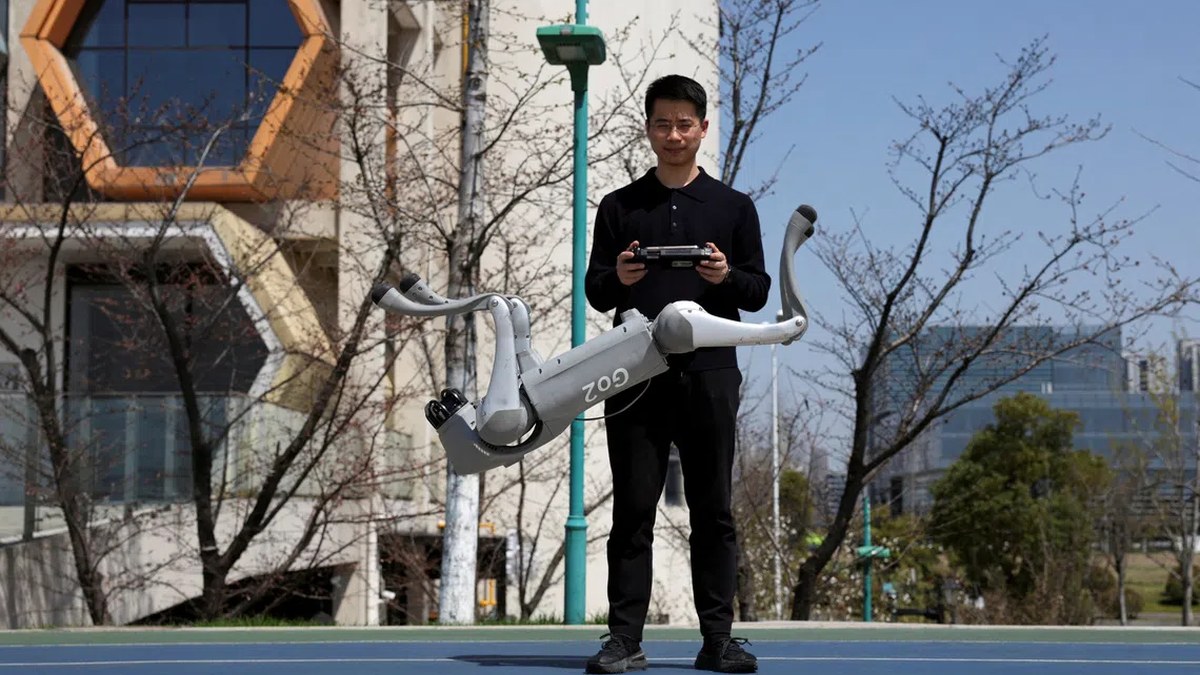
- Key facts & numbers: Unitree Robotics built its $1,600 Go2 robot dog (launched 2023) on breakthroughs from a U.S. Army-funded program — its Go series dimensions are "to the millimeter" nearly identical to MIT's Mini Cheetah, per researchers involved in the original work. DEVCOM Army Research Laboratory funded the Robotics Collaborative Technology Alliance from 2010 to 2020, a consortium of UPenn, MIT, Boston Dynamics, NASA JPL, and General Dynamics Land Systems; its findings were published openly, allowing Unitree founder Wang Xingxing to build directly on them in his 2016 thesis. Unitree sold 18,000 quadrupeds and more than 5,500 humanoids last year and is valued at roughly $9 billion ahead of its Shanghai IPO, while no U.S. company has mass-produced comparable robots and Ghost Robotics — which commercialized the original U.S. research — operates at much smaller scale.
- What happens next: The Pentagon is now scrambling to ban the exact robots U.S. taxpayer money helped design. Researchers aren't even mad at Unitree — they're mad at us for not building the factory.
- Unitree Robotics built its $1,600 Go2 robot dog (launched 2023) on breakthroughs from a U.S. Army-funded program — its Go series dimensions are "to the millimeter" nearly identical to MIT's Mini Cheetah, per researchers involved in the original work.
- DEVCOM Army Research Laboratory funded the Robotics Collaborative Technology Alliance from 2010 to 2020, a consortium of UPenn, MIT, Boston Dynamics, NASA JPL, and General Dynamics Land Systems; its findings were published openly, allowing Unitree founder Wang Xingxing to build directly on them in his 2016 thesis.
- Unitree sold 18,000 quadrupeds and more than 5,500 humanoids last year and is valued at roughly $9 billion ahead of its Shanghai IPO, while no U.S. company has mass-produced comparable robots and Ghost Robotics — which commercialized the original U.S. research — operates at much smaller scale.
- The Pentagon added Unitree to a list of Chinese military companies in June, and the FCC banned imports of foreign-made humanoid and quadruped robots including Unitree's in July; China has threatened retaliation and Unitree declined to comment.
Why It Matters
The episode exposes a structural gap the U.S. hasn't closed: it funds the research and publishes it openly, but can't mass-produce the result — while Unitree shipped 18,000 quadrupeds last year and is now valued at $9 billion. The FCC ban and Pentagon designation buy time but don't build the capital, supplier clusters, and industrial base that researchers say are needed to actually compete with China's coordinated national strategy.
Sources Cited
- Straits Times Asia — How U.S. military funding propelled China’s robot dogs
Related Coverage
- Unitree Surges 600% in Shanghai Stock DebutGoogle News Business
- Chinese Robot Developer Unitree Soars 460% On Blockbuster IPO - Investor's Business DailyGoogle News Business
- Unitree Robotics Prices Shanghai IPO at $22/ShareTechMeme
- China built robots that can do backflips – but can they make money?CNBC
Ask SkimNews