Independent EHT reanalysis confirms M87* ring
The 30-Second Skim
- What happened: An independent reanalysis of Event Horizon Telescope data reproduced M87*’s iconic ring, resolving methodological doubts and strengthening evidence that general relativity accurately describes light near a black hole’s event horizon.
- Key facts & numbers: Event Horizon Telescope released its first image of black hole M87 in 2019, showing a ring structure predicted by general relativity and drawing intense attention from the astrophysics community. Nithyanandan Thyagarajan of CSIRO in Australia and colleagues built a new data pipeline that grouped EHT telescopes in triplets rather than the standard pairs, preserving shape information while cancelling atmospheric and telescope errors. Nithyanandan Thyagarajan trained a machine-learning algorithm on non-black-hole images to minimise bias from the team’s expectations about what M87 should look like.
- What happens next: Most reanalyses agreed on the ring; the buried wrinkle is that sparse coverage and algorithm choices made M87* data unusually interpretive.
- Event Horizon Telescope released its first image of black hole M87* in 2019, showing a ring structure predicted by general relativity and drawing intense attention from the astrophysics community.
- Nithyanandan Thyagarajan of CSIRO in Australia and colleagues built a new data pipeline that grouped EHT telescopes in triplets rather than the standard pairs, preserving shape information while cancelling atmospheric and telescope errors.
- Nithyanandan Thyagarajan trained a machine-learning algorithm on non-black-hole images to minimise bias from the team’s expectations about what M87* should look like.
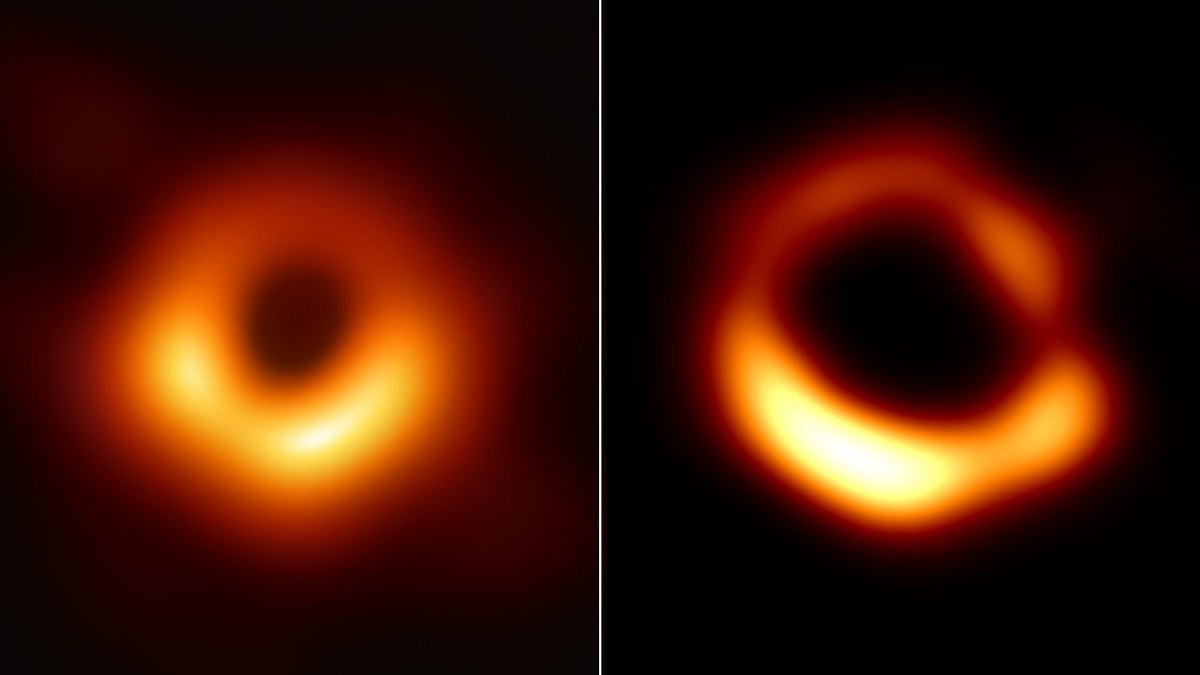
- The new analysis produced an M87* image nearly identical to the 2019 EHT result, providing key confirmation that general relativity describes spacetime around a black hole accurately.
Why It Matters
For the EHT team and physicists testing general relativity, the 2019 M87* result now has independent support from a different analysis pipeline, while the lone 2022 no-ring finding no longer stands unchallenged. By addressing gaps from a handful of telescopes and bias in machine-learning reconstruction, the new result is less dependent on processing choices.
Sources Cited
Related Coverage
Ask SkimNews