OpenAI Designed Jalapeño Chip Using Its Own LLMs
The 30-Second Skim
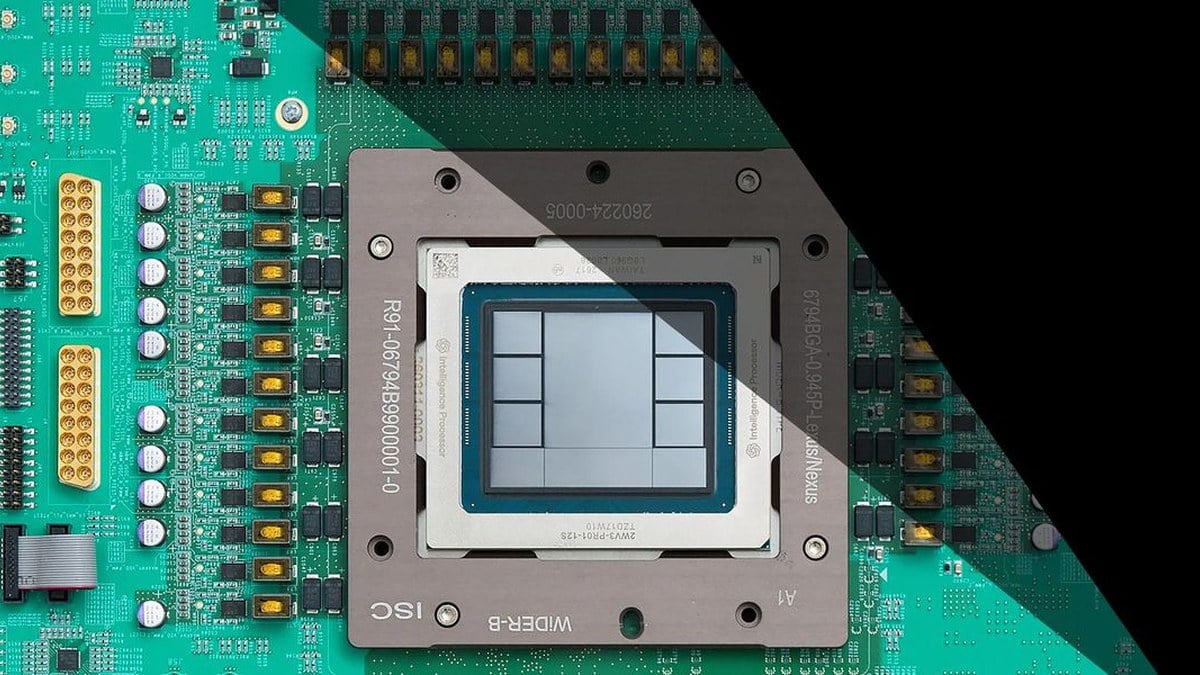
- What happened: OpenAI unveiled Jalapeño, its first custom AI accelerator chip, revealing that its own large language models drove a 20-month concept-to-silicon timeline while benchmarks claim up to 3.6x lower end-to-end latency than Nvidia's GB300.
- Key facts & numbers: OpenAI unveiled Jalapeño on 25 August — its debut AI accelerator delivering 13.4 petaflops of 4-bit compute with 232 GB of advanced memory linked at 15.4 TB/s, with company benchmarks claiming up to 3.6x lower end-to-end latency than Nvidia's GB300 at lower power. The Jalapeño timeline spanned under 20 months from first architecture concept to first silicon, with only 9 months separating first RTL from tape-out, executed by a team averaging fewer than 100 people — Broadcom handled physical design from the gates onward while OpenAI led system design. OpenAI's LLMs drove gains through high-level synthesis tools like XLS (originally developed at Google), and on DeepSeek's multi-head latent attention kernel benchmark, software optimization performance climbed from 0.31% to 88.94% of theoretical ceiling in roughly 40 hours after first silicon returned in May.
- What happens next: Not the petaflops—the flex is a 40-hour software benchmark climb from 0.31% to 88.94% of theoretical ceiling. AI-designed chips vs Nvidia, in 20 months.
- OpenAI unveiled Jalapeño on 25 August — its debut AI accelerator delivering 13.4 petaflops of 4-bit compute with 232 GB of advanced memory linked at 15.4 TB/s, with company benchmarks claiming up to 3.6x lower end-to-end latency than Nvidia's GB300 at lower power.
- The Jalapeño timeline spanned under 20 months from first architecture concept to first silicon, with only 9 months separating first RTL from tape-out, executed by a team averaging fewer than 100 people — Broadcom handled physical design from the gates onward while OpenAI led system design.
- OpenAI's LLMs drove gains through high-level synthesis tools like XLS (originally developed at Google), and on DeepSeek's multi-head latent attention kernel benchmark, software optimization performance climbed from 0.31% to 88.94% of theoretical ceiling in roughly 40 hours after first silicon returned in May.
- The project started with assistance from OpenAI's o3 model and by completion ran on precursors to GPT-6 Astra — a model that, unlike o3, can work directly in Verilog without needing XLS's translation layer and is close to operating proprietary design tools on its own.
Why It Matters
Jalapeño's claimed 3.6x latency edge over Nvidia's GB300 — if validated in production inference — puts established accelerator vendors on notice that custom AI-designed silicon has arrived. The 20-month concept-to-silicon timeline, executed with roughly 100 designers and Broadcom's physical-design help, demonstrates a compression of custom-chip schedules the entire semiconductor industry is now watching.
Sources Cited
- Hacker News — How OpenAI Used Its Own LLMs to Design Its Jalapeño Chip
Related Coverage
Ask SkimNews