OpenAI Shutters Atlas Browser, Pushes Features Into Chrome
The 30-Second Skim
- What happened: OpenAI is shutting down Atlas, the AI browser it launched in October, and redistributing its agentic features into a Chrome extension and the ChatGPT desktop app — betting an AI layer across existing surfaces beats owning a standalone browser.
- Key facts & numbers: OpenAI is sunsetting Atlas, the AI-powered browser it launched in October with ChatGPT at its core, and folding its browser-like agent capabilities into places users already work The shutdown follows applications CEO Fidji Simo's directive to cut "side quests" — the same push that ended OpenAI's AI video-generation tool Sora OpenAI is launching a ChatGPT extension on Chrome that reads page context, lets users ask questions, summarize content, or kick off longer tasks — a direct competitor to Google's Gemini Side Panel
- What happens next: Atlas lasted less than a year. The real play was always Chrome — OpenAI's just planting its AI sidekick inside Google's own house.
- OpenAI is sunsetting Atlas, the AI-powered browser it launched in October with ChatGPT at its core, and folding its browser-like agent capabilities into places users already work
- The shutdown follows applications CEO Fidji Simo's directive to cut "side quests" — the same push that ended OpenAI's AI video-generation tool Sora
- OpenAI is launching a ChatGPT extension on Chrome that reads page context, lets users ask questions, summarize content, or kick off longer tasks — a direct competitor to Google's Gemini Side Panel
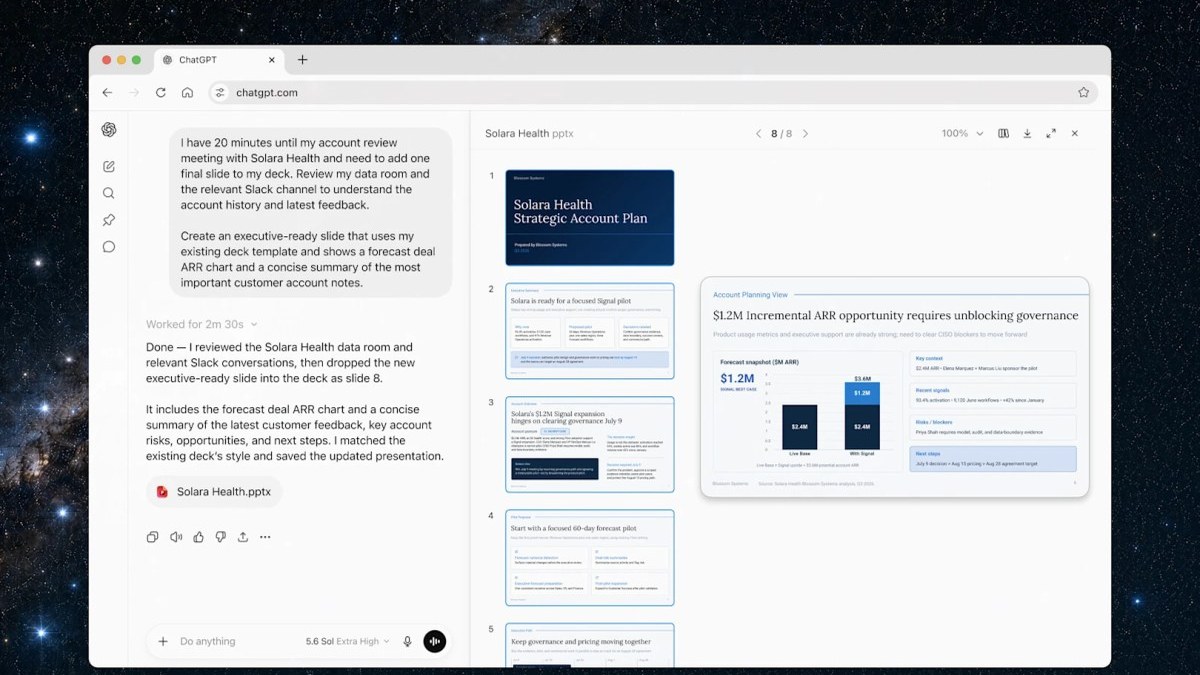
- The ChatGPT desktop app is getting a more robust built-in browser that lets users visit sites, log into accounts, download files, and interact with web pages without leaving the app
Why It Matters
OpenAI's shift concedes that owning the browser isn't the winning move — it's now challenging Google's Gemini Side Panel from inside Chrome itself. Chrome users gain ChatGPT's agentic features without switching browsers, while OpenAI keeps its AI surface in front of users across desktop, browser, and cloud — turning ChatGPT into the workspace rather than the destination.
Sources Cited
Related Coverage
Ask SkimNews