Filings: OpenAI Used 'Sketchy Russian Website' for Training Books
The 30-Second Skim
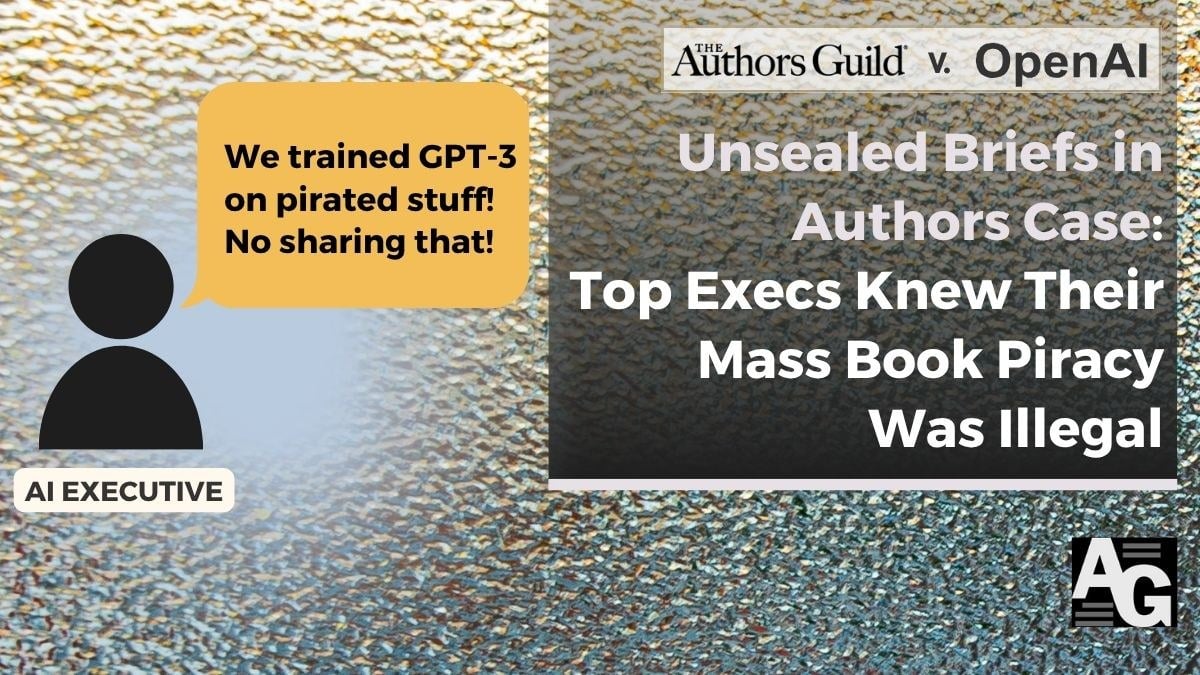
- What happened: Unsealed court filings in the Authors Guild's lawsuit against OpenAI and Microsoft reveal that company executives knowingly used copyrighted books to train AI models — including material sourced from a 'sketchy Russian website' — while releasing products they knew 'will make people unemployed.'
- Key facts & numbers: Unsealed court documents in Authors Guild v. OpenAI, released September 18, 2026, allege that OpenAI and Microsoft executives and employees 'intentionally broke the law' by training AI on copyrighted books. OpenAI sourced training material from a 'sketchy Russian website' and released products it knew 'will make people unemployed,' according to Class Plaintiffs' filings (Docket 1982 and 1987). The brief warns that 'OpenAI's GPT models pose an existential threat to those who write and publish books,' documenting a 'mass piracy scheme' pursued 'even in the face of clear evidence' of harm to American culture.
- What happens next: Skipping the trial entirely — plaintiffs want a judge to rule OpenAI infringed as a matter of law. The 'sketchy Russian website' detail seals it.
- Unsealed court documents in Authors Guild v. OpenAI, released September 18, 2026, allege that OpenAI and Microsoft executives and employees 'intentionally broke the law' by training AI on copyrighted books.
- OpenAI sourced training material from a 'sketchy Russian website' and released products it knew 'will make people unemployed,' according to Class Plaintiffs' filings (Docket 1982 and 1987).
- The brief warns that 'OpenAI's GPT models pose an existential threat to those who write and publish books,' documenting a 'mass piracy scheme' pursued 'even in the face of clear evidence' of harm to American culture.
- Named plaintiffs include The Authors Guild, John Grisham, George R.R. Martin, Jodi Picoult, David Baldacci, Michael Connelly, Jonathan Franzen, and nine other bestselling authors.
Why It Matters
The plaintiffs' filings put defendants' 'guilty knowledge' and intentional misconduct at the center of the case ahead of a partial summary judgment hearing in early 2027 — backed by bestselling authors including Grisham, Martin, and Picoult — escalating the copyright fight from a routine infringement dispute into one centered on alleged willful piracy by OpenAI and Microsoft executives.
Sources Cited
- Hacker News — Unsealed Briefs in Authors’ Case v. Microsoft/OpenAI
Related Coverage
- Microsoft Called AI Scraping 'Largest Theft of Labor'TechCrunch
- NYT court filing: ChatGPT's head wrote that publishers face an "existential threat" from AI, and a Microsoft director called AI training "an astonishing theft" (Financial Times)TechMeme
- OpenAI and Microsoft knew they were starting a ‘doom loop’ for the webThe Verge AI
- Seattle Times, Newsday Sue OpenAI and MicrosoftTechCrunch
Ask SkimNews