PlanWright: Control Plane for AI Coding Agents
The 30-Second Skim7 points
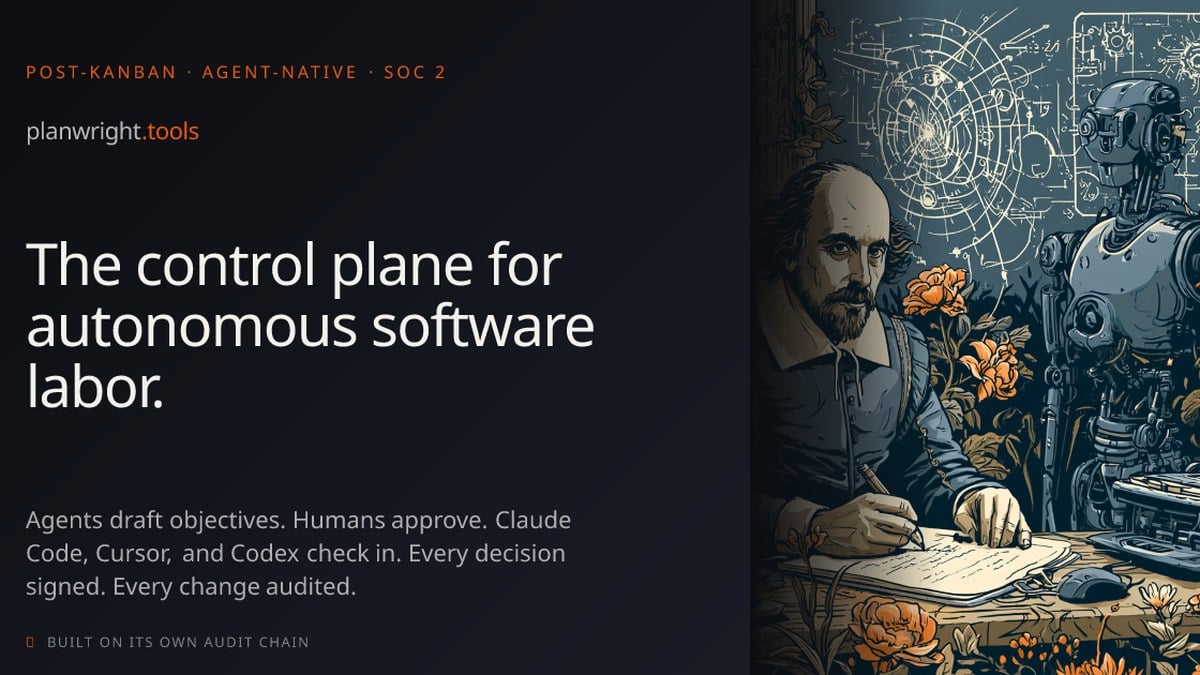
- What happenedPlanWright launches as a control plane that takes the human-paced parts of an AI coding pipeline — planning and acceptance — and routes them through an MCP server with a hash-chained audit trail aimed at SOC 2 reviewers.
- Key facts & numbersPlanWright runs inside Claude Desktop and Claude Cowork, synthesizing raw inputs like transcripts, decks, email, and Slack into structured objectives that carry machine-checkable acceptance criteria. The product "inverts" planning and acceptance — the agent drafts objectives while humans approve intent, and the system auto-clears mechanical acceptance criteria while routing only judgment-bound items for human sign-off. Every lane transition from objective creation through final merge produces an ECDSA P-256-signed, hash-chained audit record, independently verifiable on a public trust page the source describes as "SOC 2 evidence that writes itself."
- What happens nextThe interesting move isn't 'AI plans your tickets' — it's that the audit chain is the actual product. Compliance is finally catching up to agent coding.
- PlanWright runs inside Claude Desktop and Claude Cowork, synthesizing raw inputs like transcripts, decks, email, and Slack into structured objectives that carry machine-checkable acceptance criteria.
- The product "inverts" planning and acceptance — the agent drafts objectives while humans approve intent, and the system auto-clears mechanical acceptance criteria while routing only judgment-bound items for human sign-off.
- Every lane transition from objective creation through final merge produces an ECDSA P-256-signed, hash-chained audit record, independently verifiable on a public trust page the source describes as "SOC 2 evidence that writes itself."
- Setup is a single command —
claude mcp add planwright --transport http https://mcp.planwright.tools/mcp— with GitHub login handled in-browser and no tokens or config files to hand-edit, per the product page.
Why It Matters
If SOC 2 auditors start demanding tamper-evident trails for AI-generated merges, engineering teams that can't produce signed evidence per change could see shipping blocked rather than slowed — and PlanWright is betting that the audit log, not the agent runtime, is the actual moat. The pitch hits two underboted stakeholder pain points at once: developer velocity capped by acceptance review and compliance officers who today get nothing auditable from an agent's PR.
Sources Cited
Related Coverage
Ask SkimNews
The day’s news in one short email, every morning.
Free. One email a day. Unsubscribe in one click.