Ring’s Indoor Drone Camera Is Back—and Now Powered by AI
The 30-Second Skim
- What happened: Ring's new indoor drone dispatches itself to investigate motion alerts, with the AI running on Ring's cloud servers rather than onboard — a design shift forced by the battery and computing demands of the original concept.
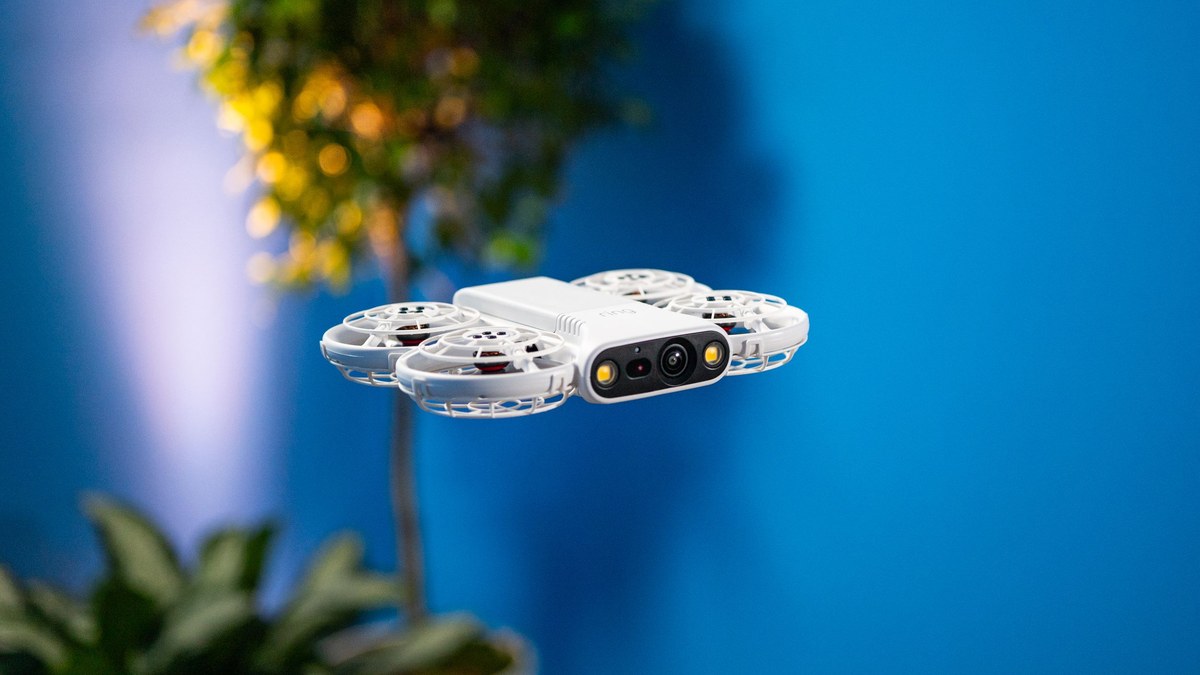
- Key facts & numbers: Ring announced the $250 Drone Cam and the $1,000 Rover Cam under a new Ring Robotics brand, with the Rover Cam shipping first on December 16 and the Drone Cam on January 27, 2027. Ring Drone Cam moves its intelligence to Ring's servers, where a custom "AI Pilot" agent directs flights, leaving only enough onboard capability to land if it loses internet connectivity — a shift Siminoff said followed edge cases that made the 2020 Always Home Cam heavier, more power-hungry and harder to fly. Ring Drone Cam weighs 165 grams, flies five to eight minutes per charge and cannot be manually controlled, flying custom routes and patrol schedules on Wi-Fi and the Alexa Home Map; it stays indoors and, below the 250-gram FAA registration threshold, needs no federal registration and is assembled in Texas.
- What happens next: Ring briefly holds decryption keys, so the drone's loud propeller does the privacy work. And Rover Cam is Astro's guts, rebuilt.
- Ring announced the $250 Drone Cam and the $1,000 Rover Cam under a new Ring Robotics brand, with the Rover Cam shipping first on December 16 and the Drone Cam on January 27, 2027.
- Ring Drone Cam moves its intelligence to Ring's servers, where a custom "AI Pilot" agent directs flights, leaving only enough onboard capability to land if it loses internet connectivity — a shift Siminoff said followed edge cases that made the 2020 Always Home Cam heavier, more power-hungry and harder to fly.
- Ring Drone Cam weighs 165 grams, flies five to eight minutes per charge and cannot be manually controlled, flying custom routes and patrol schedules on Wi-Fi and the Alexa Home Map; it stays indoors and, below the 250-gram FAA registration threshold, needs no federal registration and is assembled in Texas.
- TAKE (Throw Away the Key Encryption) encrypts video in transit and rotates keys every few minutes, but Ring temporarily holds the key to run cloud AI features before deleting its copy — less foolproof than true end-to-end encryption — while every Ring account requires two-factor authentication.
Why It Matters
Ring moved the Drone Cam's intelligence to the cloud to fix weight, battery and flight problems, but the trade-off is Ring temporarily holding decryption keys to run cloud AI — a window the company says falls short of true end-to-end encryption. For households paying $250 for a camera that flies indoors, that gap is the target of EFF's criticism.
Sources Cited
Related Coverage
Ask SkimNews