Anthropic Disrupts Russian Hackers' AI Malware Workflow
The 30-Second Skim
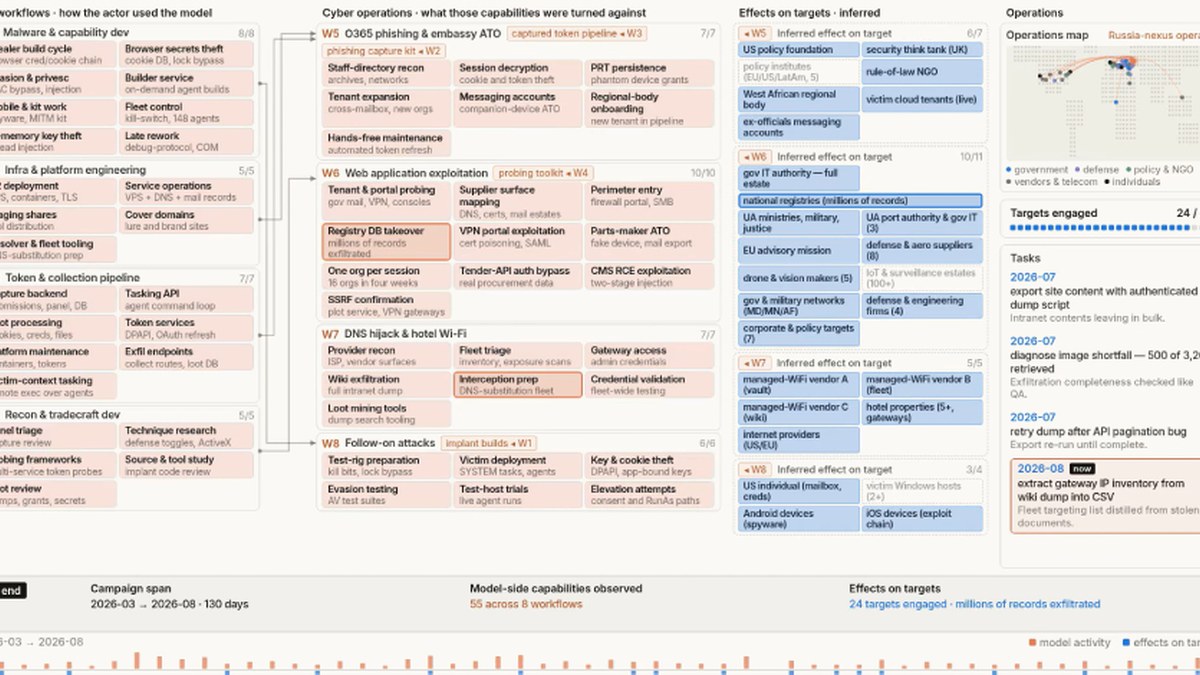
- What happened: Anthropic disrupted a Russian state-sponsored campaign (GTG-20006, linked to APT29) that used Claude to autonomously rebuild malware after security detection, hitting 20+ government and defense organizations.
- Key facts & numbers: Anthropic disclosed it disrupted GTG-20006 — a cluster linked to APT29 (Midnight Blizzard/Cozy Bear) — which built an AI-assisted workflow that detects when its malware is flagged by security products, then autonomously rewrites and redeploys it. GTG-20006 targeted more than 20 organizations across government ministries, defense and intelligence bodies, embassies, think tanks, and defense-industrial firms — primarily in Ukraine and Europe, with additional hits in the Middle East and maritime-related agencies in Asia. The threat actor's toolkit included two Windows implants (PowerChrome, WUEngine, Shadow C2, MiniPlasma, CloudSyncSvc), an Android surveillance RAT called GiftDrop, an iOS implant dubbed DarkSword, a credential stealer for browser password stores, and a phishing platform with an administrative console.
- What happens next: GTG-20006 hijacked hotel Wi-Fi DNS at three vendors to serve tailored malware to every guest, and quietly stole 300K national IDs from a North African government — angles the AI-rebuild hype buries.
- Anthropic disclosed it disrupted GTG-20006 — a cluster linked to APT29 (Midnight Blizzard/Cozy Bear) — which built an AI-assisted workflow that detects when its malware is flagged by security products, then autonomously rewrites and redeploys it.
- GTG-20006 targeted more than 20 organizations across government ministries, defense and intelligence bodies, embassies, think tanks, and defense-industrial firms — primarily in Ukraine and Europe, with additional hits in the Middle East and maritime-related agencies in Asia.
- The threat actor's toolkit included two Windows implants (PowerChrome, WUEngine, Shadow C2, MiniPlasma, CloudSyncSvc), an Android surveillance RAT called GiftDrop, an iOS implant dubbed DarkSword, a credential stealer for browser password stores, and a phishing platform with an administrative console.
- GTG-20006 compromised at least three hotel guest-WiFi vendors via DNS hijacking, redirecting travelers' traffic through actor-controlled servers and serving device-tailored ClickFix lures — then used stolen hotel data to identify further targets tied to Ukraine, including government officials and drone manufacturers.
Why It Matters
Anthropic says AI has 'inverted the cost back onto defenders': GTG-20006 used Claude to autonomously rebuild malware whenever security tools flagged it, hitting 20+ government and defense organizations. With AI embedded across phishing delivery, infrastructure setup, credential theft, and C2 monitoring, static detections no longer slow attacker tempo — defenders must now match AI-driven adaptation speed or lose ground.
Sources Cited
Related Coverage
Ask SkimNews