Tesla launches FSD v15, targets its biggest weaknesses, from signs to potholes
The 30-Second Skim
- What happened: Tesla has begun the FSD v15 rollout, a major autonomy-software release whose polished interface and striking safety claims still leave real-world performance unproven because Tesla has not published key disengagement data.
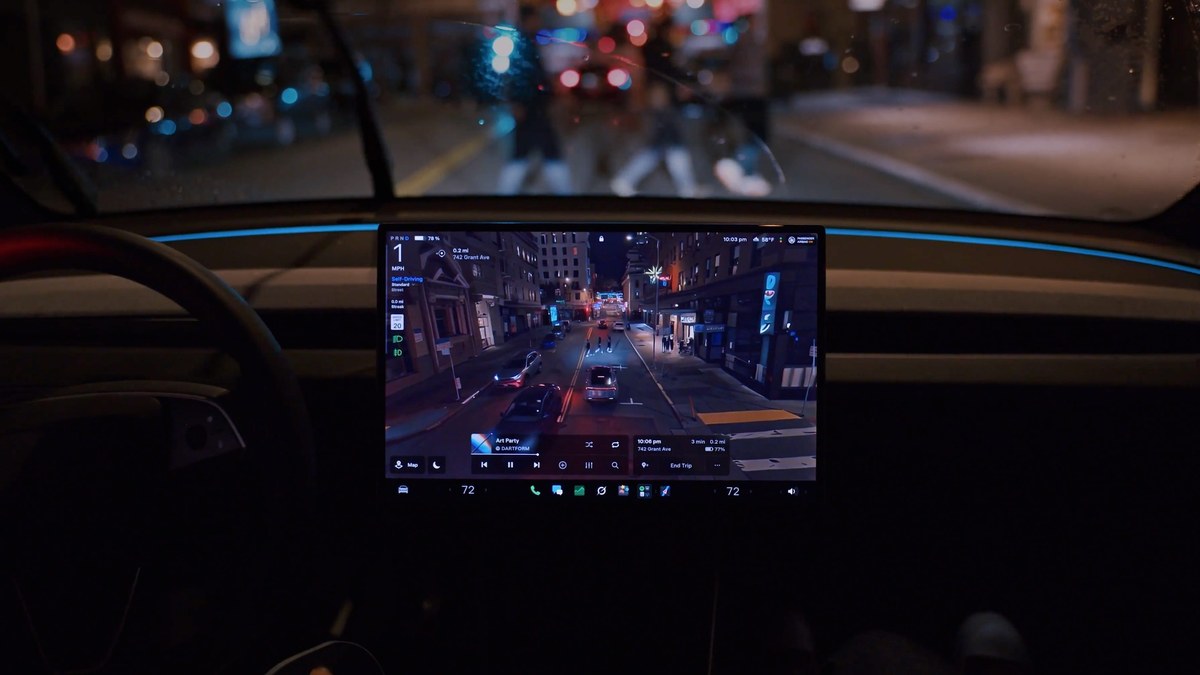
- Key facts & numbers: Tesla began rolling out FSD v15, which upgrades every part of its end-to-end driving network, but did not say which vehicles receive it first; Tesla previously told investors its AI4 computer is enough to run the release. FSD v15 adds detection for road signs, small animals, road debris, chains, potholes, road details and deep standing water, plus tailored speed handling for school zones, speed limits, driver profiles and inclement weather. Reality View showed a far more detailed street scene in Tesla’s demo, merging separate model signals into one end-to-end visualization that uses less compute and is designed to let drivers see and control what FSD plans to do.
- What happens next: Reality View is the showpiece; the real test is whether FSD stops misreading signs, plowing through potholes and mishandling school-zone speeds.
- Tesla began rolling out FSD v15, which upgrades every part of its end-to-end driving network, but did not say which vehicles receive it first; Tesla previously told investors its AI4 computer is enough to run the release.
- FSD v15 adds detection for road signs, small animals, road debris, chains, potholes, road details and deep standing water, plus tailored speed handling for school zones, speed limits, driver profiles and inclement weather.
- Reality View showed a far more detailed street scene in Tesla’s demo, merging separate model signals into one end-to-end visualization that uses less compute and is designed to let drivers see and control what FSD plans to do.
- Tesla says FSD v15’s upgraded vision encoder improves the critical intervention rate by 25x, but the release notes disclose only the multiplier—not the underlying intervention or disengagement rate.
Why It Matters
Tesla’s robotaxi ambitions hinge on FSD reducing human intervention: a rough calculation puts v15 near 50,000 miles between critical interventions, beyond the roughly 10,000-mile benchmark for limited unsupervised service. Withheld baseline data and looser driver monitoring leave regulators and drivers without the figures needed to check Tesla’s underlying claim.
Sources Cited
Related Coverage
Ask SkimNews