Tesla Optimus Hits Hundreds Weekly, Zero Useful Work
The 30-Second Skim
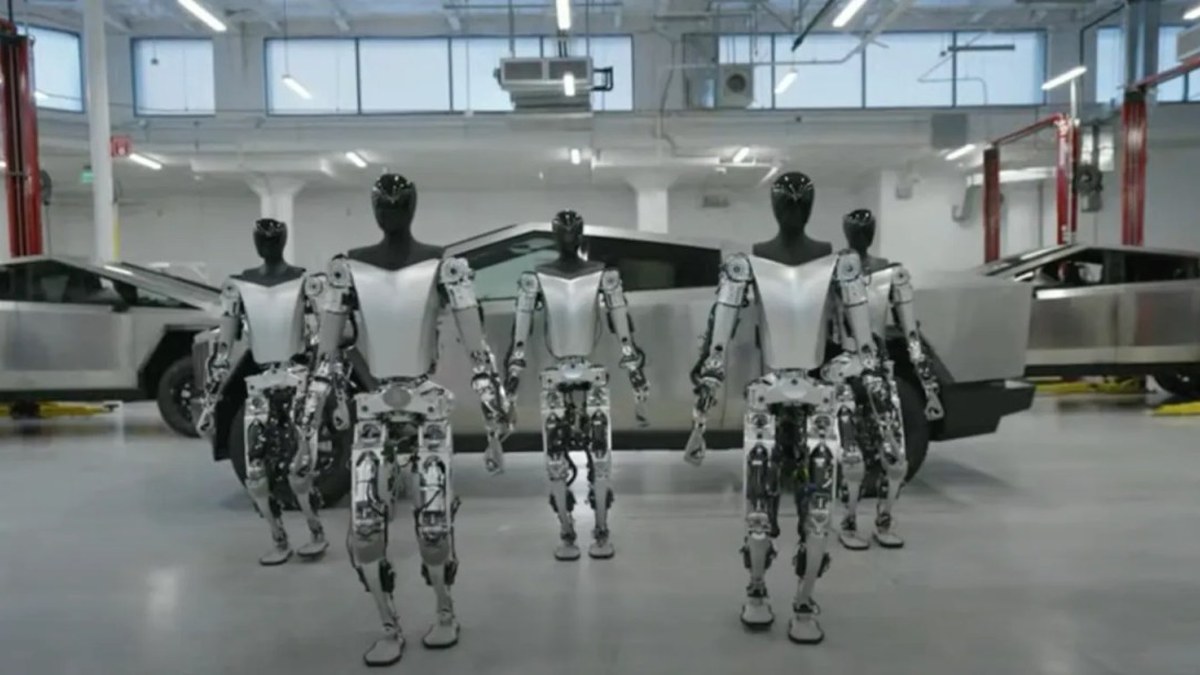
- What happened: Tesla has scaled Optimus production to several hundred units per week at Fremont — roughly 10x its Q2 rate — but the robots still can't generalize to new tasks and none are doing useful work inside Tesla's facilities.
- Key facts & numbers: Tesla is building several hundred Optimus humanoid robots per week at Fremont — roughly 10x its Q2 output — on a line converted from Model S/X production, with a year-end target of 1,000+ weekly. Optimus's AI still can't reliably generalize — the robot needs several days to learn basic tasks and behaves unpredictably outside trained scenarios, three people familiar with the system said. Optimus's hand and forearm contain over 100 screws assembled manually, with fixtures failing to align tight-tolerance parts; touch sensors have reliability issues that Tesla plans to address with a replaceable "sensing glove" next year.
- What happens next: Tesla killed the Model S and X to build Optimus robots that can't do useful work yet. V3 reveal promised by mid-2026? Still hasn't happened.
- Tesla is building several hundred Optimus humanoid robots per week at Fremont — roughly 10x its Q2 output — on a line converted from Model S/X production, with a year-end target of 1,000+ weekly.
- Optimus's AI still can't reliably generalize — the robot needs several days to learn basic tasks and behaves unpredictably outside trained scenarios, three people familiar with the system said.
- Optimus's hand and forearm contain over 100 screws assembled manually, with fixtures failing to align tight-tolerance parts; touch sensors have reliability issues that Tesla plans to address with a replaceable "sensing glove" next year.
- The Optimus training pipeline spans 500,000 hours of data with a year-end doubling target, after Tesla moved self-driving data annotators onto the robot program and opened training hubs in Colorado, Arizona, and Florida.
Why It Matters
Tesla has bet its Model S/X line on a robot whose AI can't generalize and whose hands still need 100+ manual screws — the same hardware-first playbook that took nearly a decade to deliver supervised FSD. XPeng is now running an automated competitor line.
Sources Cited
Related Coverage
Ask SkimNews