Agentic AI to Power 40% of Enterprise Apps by 2026
The 30-Second Skim
- What happened: Enterprises across startups, education, and healthcare are moving from isolated generative AI pilots to agentic AI systems that orchestrate workflows, prompting a focus on cloud-native architecture, governance, and security.
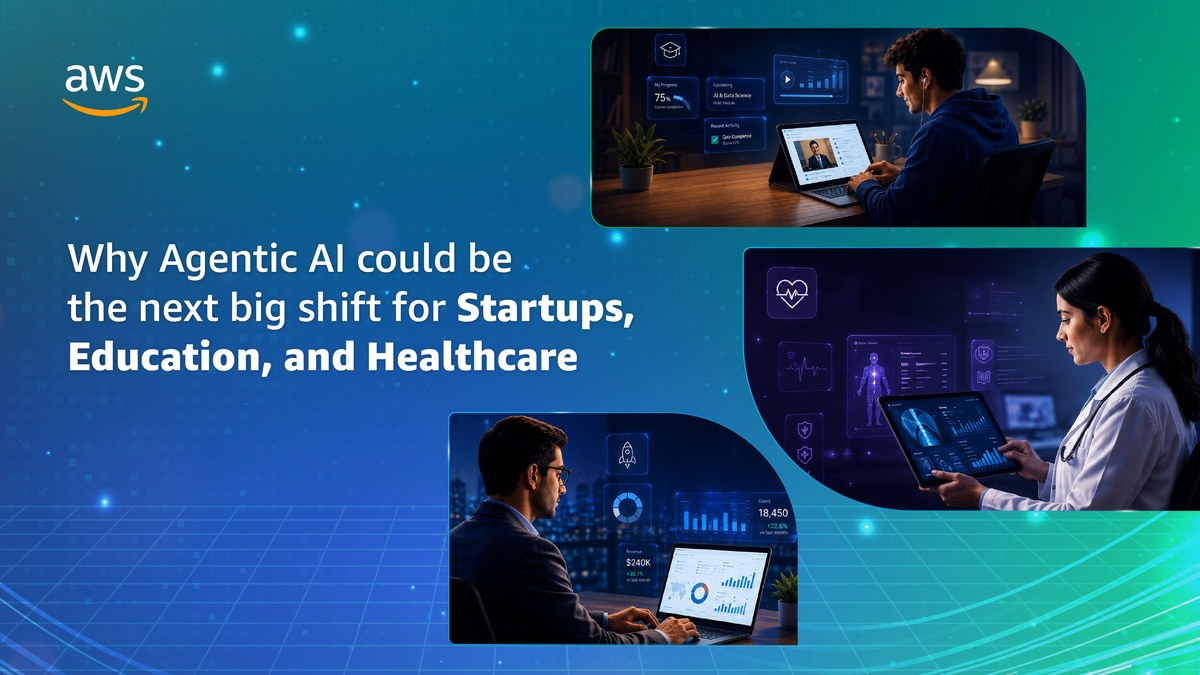
- Key facts & numbers: Industry estimates: by 2026, nearly 40% of enterprise applications are expected to incorporate task‑specific AI agents. Startups: are using GenAI to build AI‑first experiences that scale without proportional cost increases, deploying AI‑driven customer interfaces across chat, voice, and WhatsApp. Education platforms: are leveraging AI to generate curriculum‑aligned content, assessments, AI tutors, and multilingual experiences, with agentic AI adapting to individual learning patterns and reducing content‑creation time.
- What happens next: Everyone's buzzing about AI agents flooding enterprises, but this piece flags that the real risk is the security blind spot many ignore.
- Industry estimates: by 2026, nearly 40% of enterprise applications are expected to incorporate task‑specific AI agents.
- Startups: are using GenAI to build AI‑first experiences that scale without proportional cost increases, deploying AI‑driven customer interfaces across chat, voice, and WhatsApp.
- Education platforms: are leveraging AI to generate curriculum‑aligned content, assessments, AI tutors, and multilingual experiences, with agentic AI adapting to individual learning patterns and reducing content‑creation time.
- Healthcare organizations: are adopting GenAI for clinical documentation, data processing, intelligent assistants, and automating administrative workflows, improving efficiency and decision‑making.
Why It Matters
Startups, schools, and hospitals that embed agentic AI into their core processes can cut costs, accelerate decision‑making, and scale services, while firms that treat AI as a siloed pilot lose competitive advantage, face higher operational expenses, and risk security gaps.
Background & Timeline
- Editor context: The increasing autonomy of agentic AI, while promising for diverse applications, simultaneously expands the attack surface for cyber threats, as current security paradigms struggle to monitor and control self-directed systems.
Sources Cited
Related Coverage
Ask SkimNews