A first among major nations, India is industrializing with solar
The 30-Second Skim
- What happened: India is racing ahead with an unprecedented solar build‑out, aiming to power its industrial expansion with clean energy. The Khavda solar park will become the world’s largest, delivering 30 GW by 2029, while the country’s overall solar capacity is set to double again by 2030, positioning India as the first major nation to industrialize primarily on sunshine.
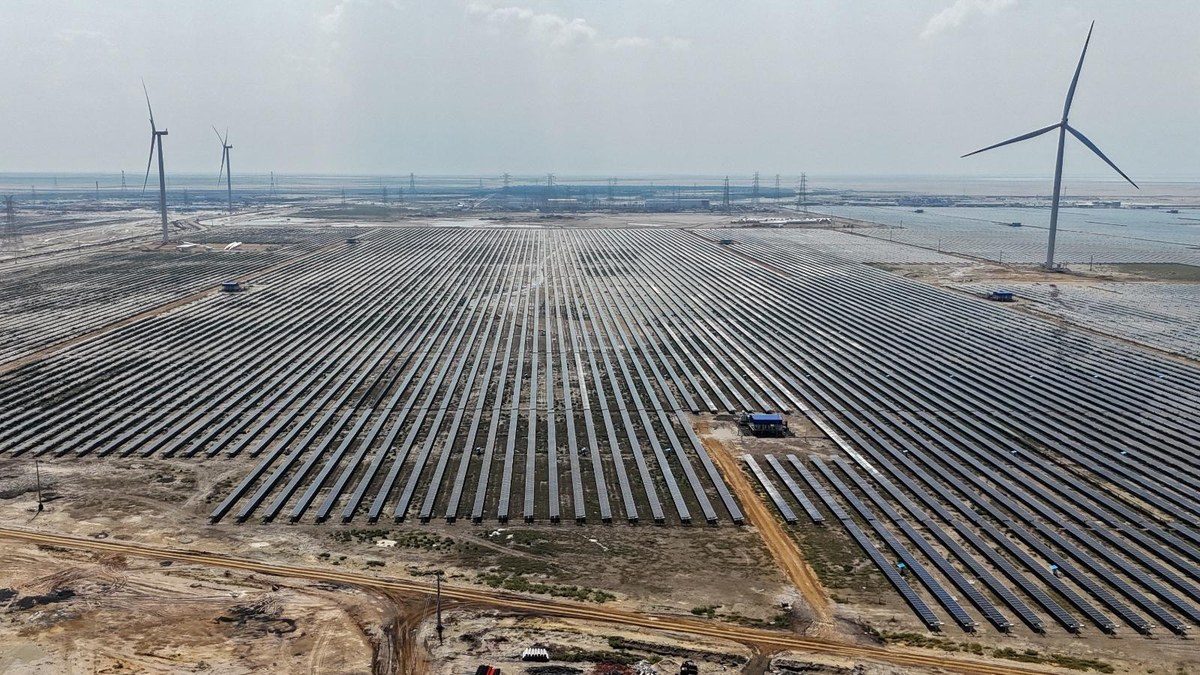
- Key facts & numbers: Khavda solar park will span 280 square miles of the Rann of Kutch, host 60 million panels and deliver 30 GW of power by 2029, enough to supply Austria. India’s solar capacity grew 40 % annually, surpassing 150 GW in March, and is projected to double again by 2030. India is poised to become the first major nation to industrialize primarily with solar, contrasting with China’s coal‑based growth, according to energy strategist Kingsmill Bond.
- What happens next: India’s massive solar farm will finally let the country power its factories with sunshine instead of coal – a game‑changer for the region.
- Khavda solar park will span 280 square miles of the Rann of Kutch, host 60 million panels and deliver 30 GW of power by 2029, enough to supply Austria.
- India’s solar capacity grew 40 % annually, surpassing 150 GW in March, and is projected to double again by 2030.
- India is poised to become the first major nation to industrialize primarily with solar, contrasting with China’s coal‑based growth, according to energy strategist Kingsmill Bond.
- International Energy Agency estimates that solar will meet roughly half of India’s electricity demand growth through 2030, with another 25 % supplied by wind, hydro and nuclear.
Why It Matters
India’s manufacturers gain cheap, reliable power, cutting reliance on coal and reducing carbon emissions; the 30 GW Khavda park will slash fuel costs for industry, while coal miners face reduced demand.
Sources Cited
Related Coverage
Ask SkimNews