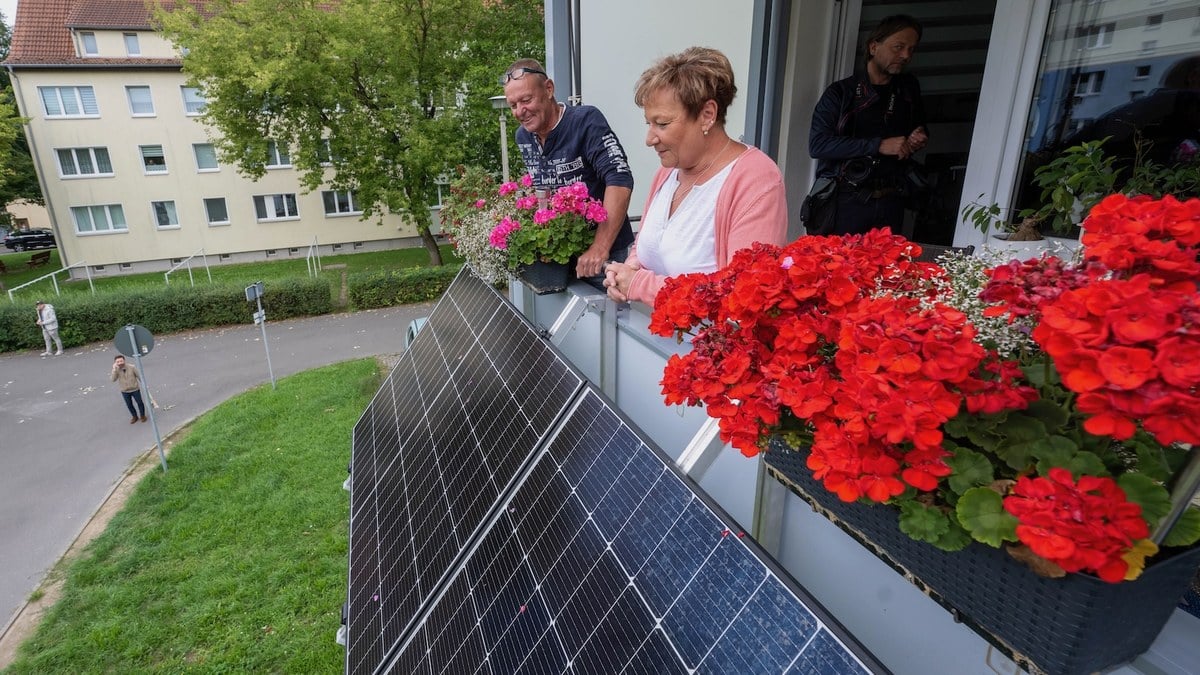
California legalizes balcony solar systems
The 30-Second Skim7 points
- What happenedCalifornia Governor Gavin Newsom signed legislation legalizing plug-in 'balcony solar' systems for residents, joining Utah and Maine in eliminating the requirement to negotiate interconnection agreements with utilities.
- Key facts & numbersGovernor Gavin Newsom signed legislation on Wednesday making California the latest state to legalize plug-in 'balcony solar,' joining Utah and Maine in allowing residents to generate electricity from smaller, outlet-connected arrays. State Senator Scott Wiener, the bill's author, said the law eliminates the biggest barrier to plug-in solar — the requirement to negotiate an interconnection agreement with PG&E or other utilities before installing a system. A basic balcony solar setup costs a few hundred dollars, with energy savings typically paying back the investment in around four years, faster in states with higher electricity prices.
- What happens nextThe catch on balcony solar was never the tech — it was paperwork. California just killed the PG&E negotiation requirement. Renters finally get in on solar.
- Governor Gavin Newsom signed legislation on Wednesday making California the latest state to legalize plug-in 'balcony solar,' joining Utah and Maine in allowing residents to generate electricity from smaller, outlet-connected arrays.
- State Senator Scott Wiener, the bill's author, said the law eliminates the biggest barrier to plug-in solar — the requirement to negotiate an interconnection agreement with PG&E or other utilities before installing a system.
- A basic balcony solar setup costs a few hundred dollars, with energy savings typically paying back the investment in around four years, faster in states with higher electricity prices.
- Unlike traditional rooftop solar, plug-in solar reduces the amount of electricity drawn from the grid rather than feeding excess power back, helping ease congestion during peak demand like heat-wave AC use.
Why It Matters
California's law removes the biggest bureaucratic barrier to plug-in solar — utility interconnection agreements — for a technology that costs a few hundred dollars and pays for itself in roughly four years. It opens rooftop-solar-style savings to renters and apartment dwellers, and Project Drawdown's Smith expects other states to follow California's lead.
Sources Cited
Related Coverage
Ask SkimNews
The day’s news in one short email, every morning.
Free. One email a day. Unsubscribe in one click.