Egyptian Farmers Test Crops Under Solar Panels
The 30-Second Skim
- What happened: Egyptian farmers are piloting agrivoltaics — growing crops under solar panels — to fight water scarcity and heat stress while generating clean electricity, with early results showing watermelon thriving under the shade.
- Key facts & numbers: Egyptian farmers are piloting agrivoltaics across two projects, covering fields with solar panels to generate electricity and shade crops that reduce water evaporation and heat stress amid rising temperatures and water shortages. Gofran Chowdhury, head of innovation at renewable energy company 3E, said "there is no perfect guideline" as partners experiment with arrangements like a checkerboard layout that lets more sunlight through than a traditional solar farm. Maged El-Said, founder of Habiba Community, installed panels in May at a regenerative farm in South Sinai and said watermelon is an early promising candidate, growing well "for the first time."
- What happens next: Watermelon in the Sinai, cucumbers the size of baseball bats in Colorado — agrivoltaics is turning farmland into a power plant without killing the harvest.
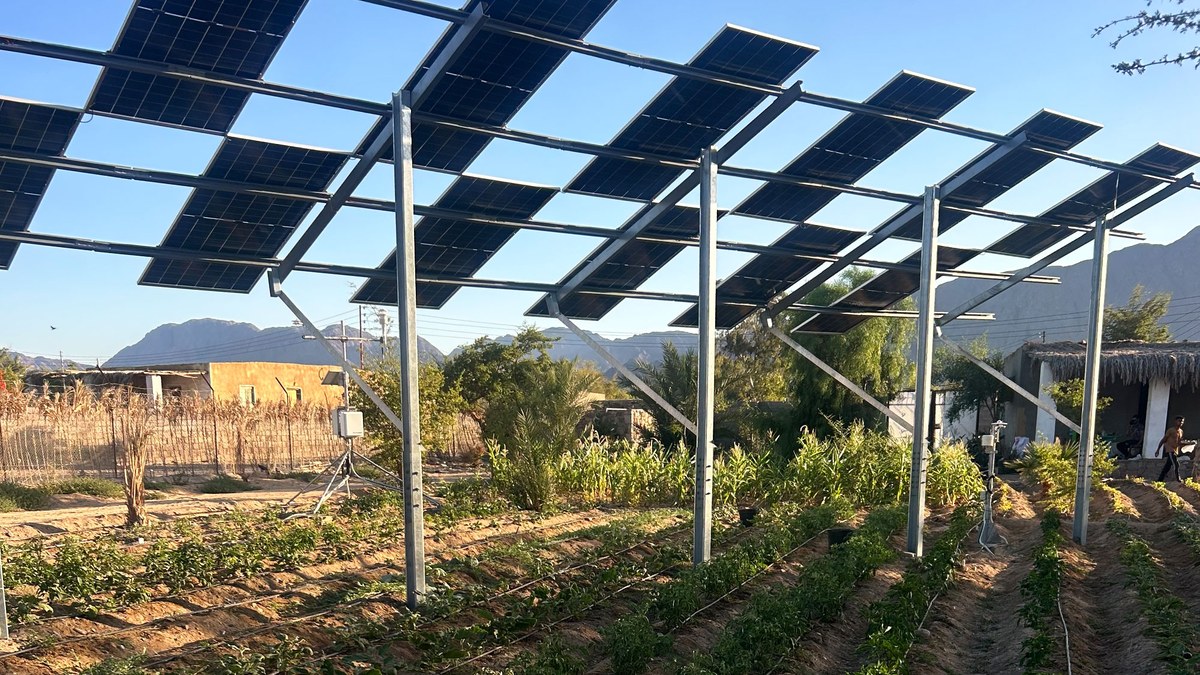
- Egyptian farmers are piloting agrivoltaics across two projects, covering fields with solar panels to generate electricity and shade crops that reduce water evaporation and heat stress amid rising temperatures and water shortages.
- Gofran Chowdhury, head of innovation at renewable energy company 3E, said "there is no perfect guideline" as partners experiment with arrangements like a checkerboard layout that lets more sunlight through than a traditional solar farm.
- Maged El-Said, founder of Habiba Community, installed panels in May at a regenerative farm in South Sinai and said watermelon is an early promising candidate, growing well "for the first time."
- Colorado researchers growing crops under rooftop panels found the shade cuts water use to roughly a third of what unshaded plants require, and reported cucumbers growing to the size of baseball bats.
Why It Matters
Egypt's staple crops face mounting pressure from water shortages and rising temperatures, and the pilots test whether dual-use farmland — producing both food and power under the same panels — can stabilize yields while opening a new revenue stream for farmers in arid regions. If watermelon and other crops continue to thrive under the shade while using less water, the model offers a replicable template for drought-stressed farming communities worldwide.
Sources Cited
Related Coverage
Ask SkimNews