First Agrivoltaic Cranberry Harvests in Massachusetts
The 30-Second Skim
- What happened: DEI and Greenbacker Renewables announced the first-ever agrivoltaic cranberry harvests from two Massachusetts bogs, where solar leasing revenue revived long-idle farmland while elevated panels let farming machinery operate beneath them.
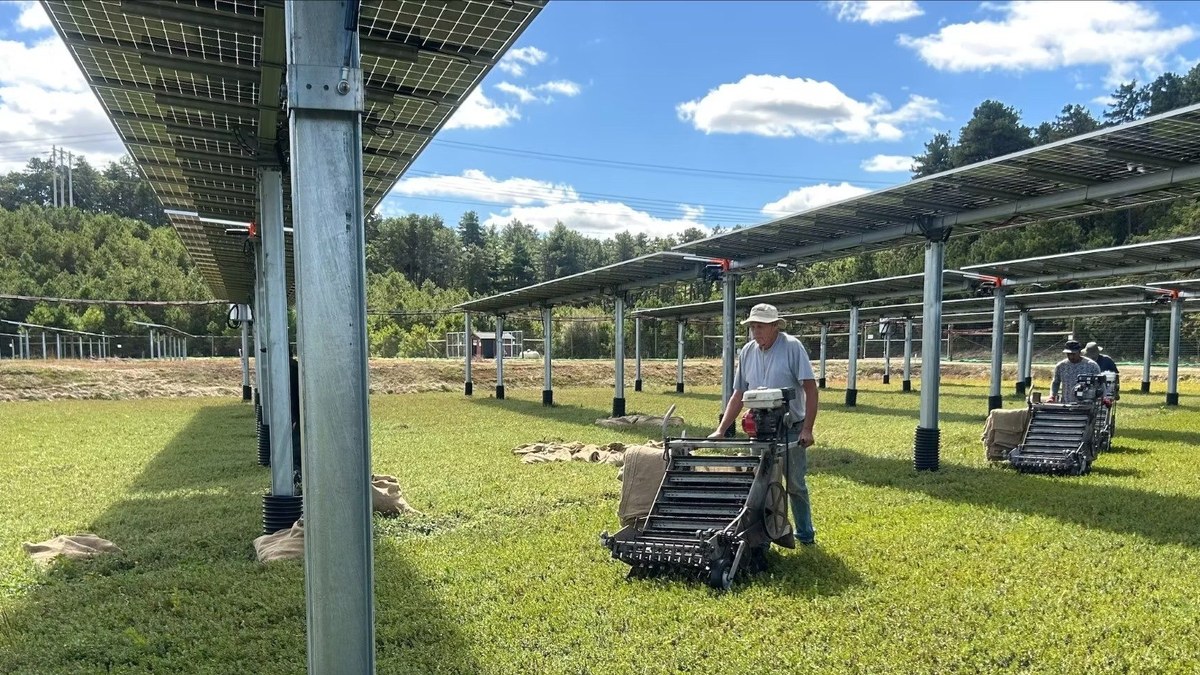
- Key facts & numbers: DEI built the Black Cat project in Plymouth and the Ring Road project in Kingston — two Massachusetts cranberry bogs that had stopped making financial sense to farm — combining cranberry cultivation, community solar, and battery storage, with solar land-lease income making it viable to restart farming on the long-idle bogs. The construction required panels raised 10 feet above the ground with more than 18 feet of clear space between rows to accommodate farm machinery and let sunlight reach the vines; crews also swapped black protective mats (which absorbed too much heat) for white ones. The timeline stretched to roughly eight months — about twice a comparable conventional solar project — because the soft, peaty soil and established cranberry vines couldn't tolerate heavy equipment rolling through.
- What happens next: Eight months to install solar without crushing the vines — and they still haven't released how many berries came out. That's the number farmers actually need.
- DEI built the Black Cat project in Plymouth and the Ring Road project in Kingston — two Massachusetts cranberry bogs that had stopped making financial sense to farm — combining cranberry cultivation, community solar, and battery storage, with solar land-lease income making it viable to restart farming on the long-idle bogs.
- The construction required panels raised 10 feet above the ground with more than 18 feet of clear space between rows to accommodate farm machinery and let sunlight reach the vines; crews also swapped black protective mats (which absorbed too much heat) for white ones.
- The timeline stretched to roughly eight months — about twice a comparable conventional solar project — because the soft, peaty soil and established cranberry vines couldn't tolerate heavy equipment rolling through.
- Greenbacker Renewables owns both sites: Black Cat pairs 1 MW of solar with 2.7 MWh of battery storage, while Ring Road carries 4.4 MW of solar and a 13.5 MWh battery.
Why It Matters
For cranberry farmers whose bogs stopped covering costs, solar land leases now make the operation viable again — but DEI's announcement gave no yield data, leaving other farmers without the comparison they need to judge whether panels help, hurt, or leave crop output unchanged. Cranberry prices alone weren't enough to justify farming these bogs; now the solar lease fills the gap.
Sources Cited
Related Coverage
Ask SkimNews