ESS Tech Launches 1.2-MWh Modular Sodium-Ion Battery
The 30-Second Skim
- What happened: ESS Tech unveiled a 1.2-MWh modular sodium-ion battery system called ESS Bridge, targeting utilities, data centers, and industrial customers as an alternative to lithium-ion storage.
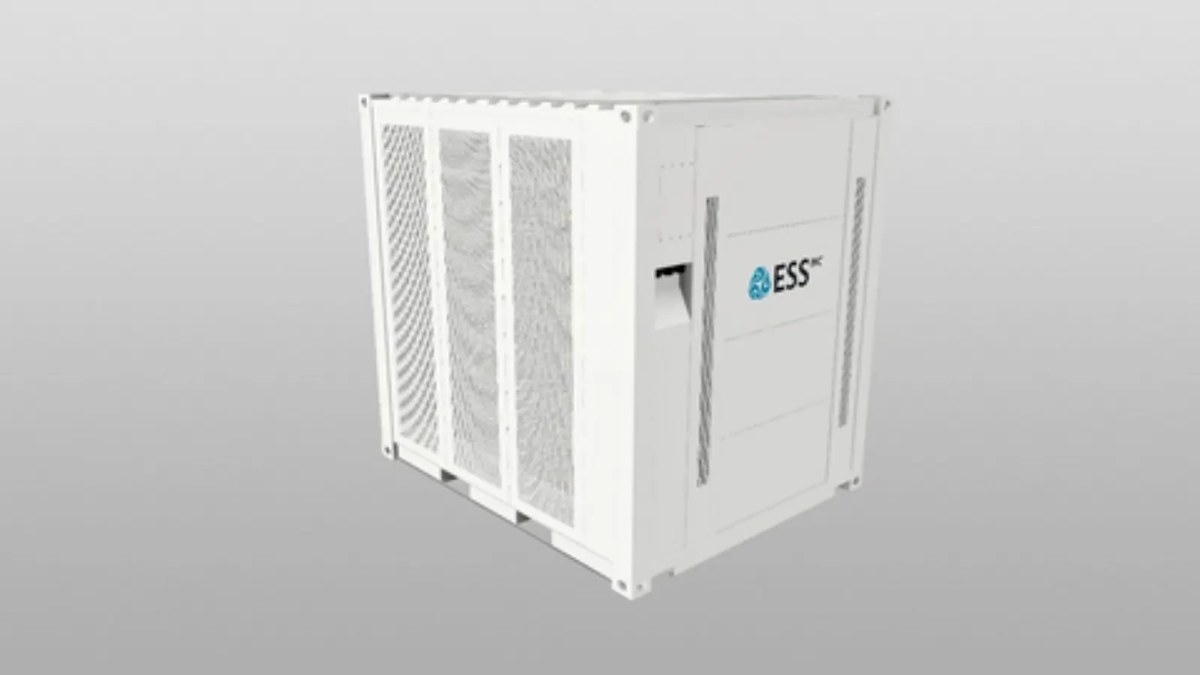
- Key facts & numbers: ESS Tech launched ESS Bridge on July 8, a 1.2-MWh sodium-ion battery system that can be stacked to deliver up to 4.8 MWh in a standard 20-foot container—roughly matching the latest Tesla Megapack in capacity. ESS Tech has attracted more than $1 billion in "early-stage customer opportunities" since announcing in late April that it would procure 8.5 GWh of sodium-ion cells and modules from Alsym Energy. ESS Bridge can be configured to deliver "16 hours or more" of continuous discharge, per the company, positioning it for medium- and long-duration storage applications.
- What happens next: ESS Tech pivoted from iron flow to sodium-ion just in time—stock cratered from $300 to under $1 while lithium dominated. Now AI data centers need storage that won't ignite.
- ESS Tech launched ESS Bridge on July 8, a 1.2-MWh sodium-ion battery system that can be stacked to deliver up to 4.8 MWh in a standard 20-foot container—roughly matching the latest Tesla Megapack in capacity.
- ESS Tech has attracted more than $1 billion in "early-stage customer opportunities" since announcing in late April that it would procure 8.5 GWh of sodium-ion cells and modules from Alsym Energy.
- ESS Bridge can be configured to deliver "16 hours or more" of continuous discharge, per the company, positioning it for medium- and long-duration storage applications.
- Sodium-ion chemistry is less prone to thermal runaway than lithium-ion, allowing air-cooling systems that ESS Tech says require less energy and maintenance than the active liquid cooling typical of lithium-based batteries.
Why It Matters
Data centers running AI workloads and utilities facing transmission constraints now have a sodium-ion option that ESS Tech says won't catch fire like the Vistra facility that burned in early 2025. The $1 billion pipeline suggests real commercial pull, but a sub-$1 stock price shows the market still doubts ESS Tech can convert its 15-year battery track record into actual deployed megawatts.
Background & Timeline
- Editor context: Sodium-ion's pitch is less about matching lithium on energy density and more about sidestepping supply-chain constraints and fire-safety regulations, recasting the storage competitive landscape around material sourcing and safety compliance rather than raw performance.
Sources Cited
Related Coverage
Ask SkimNews