Going with the flow: Renewable energy battery breakthrough
The 30-Second Skim
- What happened: A Queen's University Belfast team has 3D-printed an iron-based flow battery cell costing roughly £74 and given the open-source design away free to researchers worldwide, aiming to standardize and accelerate renewable energy storage research.
- Key facts & numbers: Dr Hugh O'Connor at Queen's University Belfast developed a 3D-printed iron-based flow battery cell costing roughly £74 with about ten components, compared to commercial equivalents priced at £2,000-£3,000. Queen's University Belfast chose to give the design to the international research community for free rather than monetize it, with O'Connor citing network growth and field-wide benefit over short-term revenue. The 3D-printed cell replaces vanadium — a metal only produced in a few places globally — with iron, sidestepping the supply concentration and price volatility that have slowed flow battery development.
- What happens next: £74, ten parts, an Ikea manual, and a researcher who almost sold it to his mates. This is open-source science actually working.
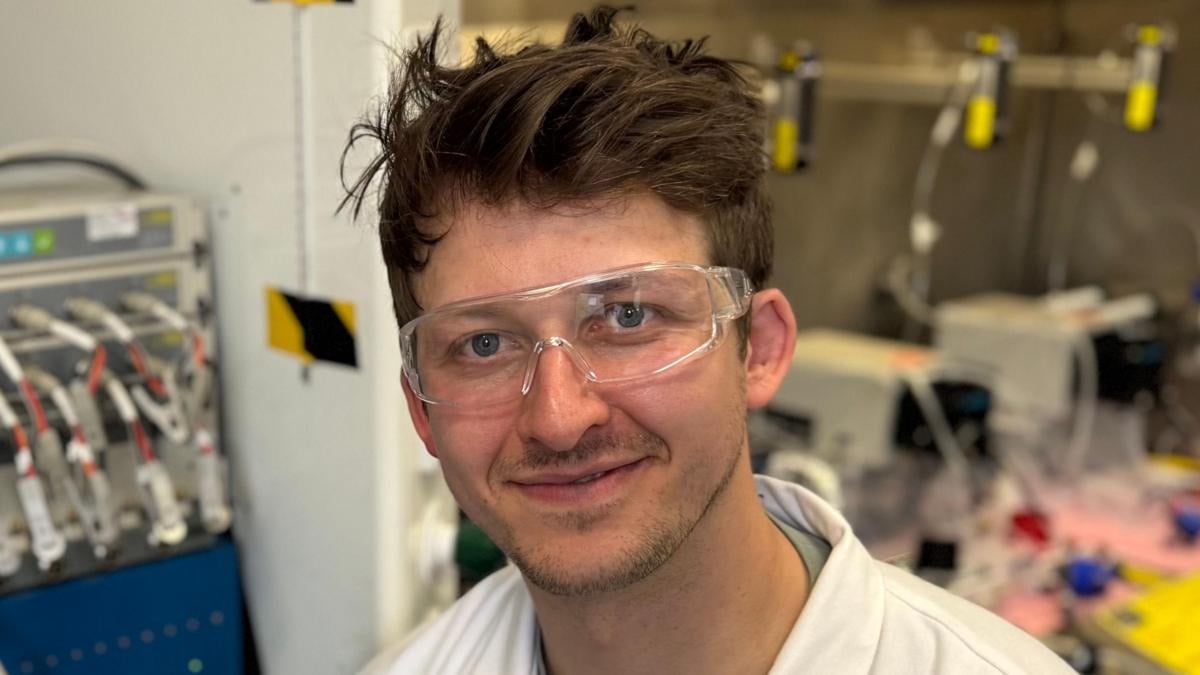
- Dr Hugh O'Connor at Queen's University Belfast developed a 3D-printed iron-based flow battery cell costing roughly £74 with about ten components, compared to commercial equivalents priced at £2,000-£3,000.
- Queen's University Belfast chose to give the design to the international research community for free rather than monetize it, with O'Connor citing network growth and field-wide benefit over short-term revenue.
- The 3D-printed cell replaces vanadium — a metal only produced in a few places globally — with iron, sidestepping the supply concentration and price volatility that have slowed flow battery development.
- QUB's Dr Josh Bailey, an Illuminate Fellow at the School of Chemistry and Chemical Engineering, is co-leading multi-institution reproducibility studies that ship O'Connor's cells to labs worldwide alongside an 'Ikea-style instruction manual.'
Why It Matters
At £74 versus £2,000-£3,000 commercial alternatives, the open-source cell removes a major financial barrier to entry for labs studying vanadium alternatives. For a field where one key metal is geographically concentrated and results have been hard to reproduce across institutions, giving the iron-based design away free could be the standardization push flow battery research has lacked.
Background & Timeline
- Editor context: Standardizing a cheap, printable flow-battery cell lets labs worldwide run identical experiments, turning scattered results into comparable data and potentially compressing years of incremental trial-and-error into faster collective progress.
Sources Cited
Related Coverage
Ask SkimNews