The slow, muddy work of saving ancient bogs
The 30-Second Skim
- What happened: On the Isle of Man, a three-person uplands team is hand-restoring thousands of hectares of damaged peatland — banking carbon, curbing reservoir sedimentation, and rebuilding habitat for ground-nesting birds.
- Key facts & numbers: Sarah Hickey, the Isle of Man's Peatland Officer, leads a three-person Uplands team that manages roughly 8,000 hectares of the island's hills, probing peat depth with a metre-long metal rod to locate the most degraded sites. Peat stores more carbon than any other soil on Earth, and the Isle of Man's uplands were stripped of trees by the 17th century, with islanders cutting peat blocks for fuel until the practice was banned in 2020. Restoration work uses diggers light enough to avoid further damage to regrade bare peat faces to gentler slopes, then protects the exposed ground with bio logs and netting to keep it shaded and damp while new vegetation establishes.
- What happens next: Love that dragonflies colonized new pools before the crew finished their tea. Also: peat in good shape is 90% water — nature's fire break hiding in plain sight.
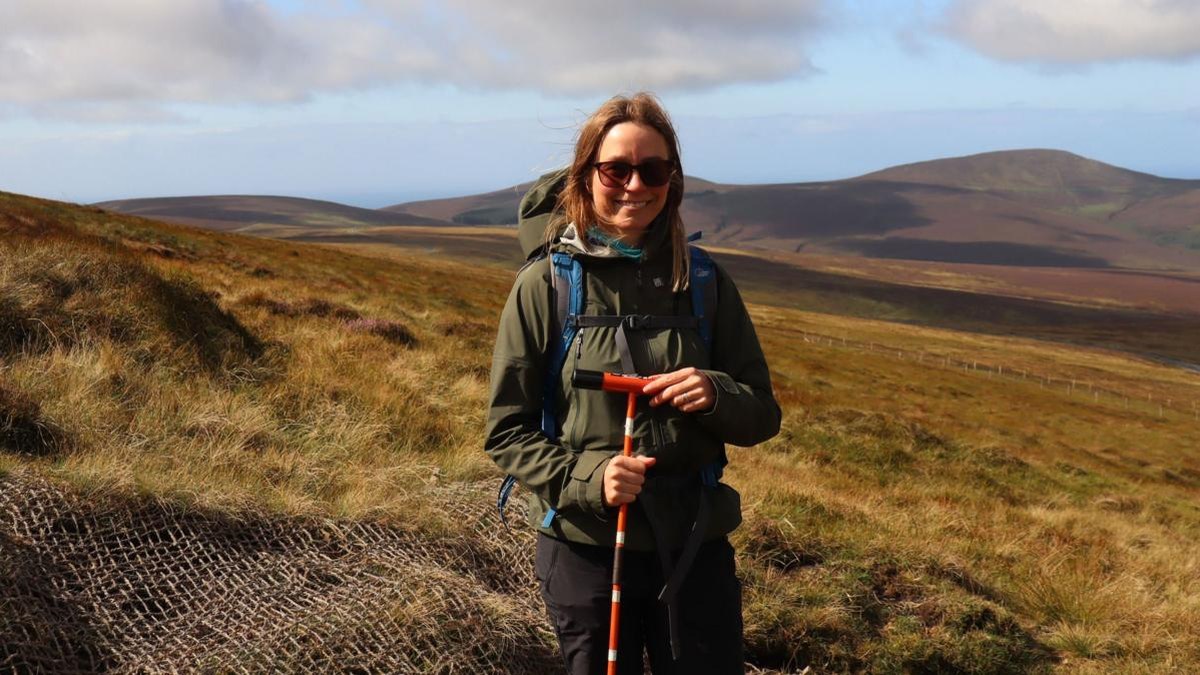
- Sarah Hickey, the Isle of Man's Peatland Officer, leads a three-person Uplands team that manages roughly 8,000 hectares of the island's hills, probing peat depth with a metre-long metal rod to locate the most degraded sites.
- Peat stores more carbon than any other soil on Earth, and the Isle of Man's uplands were stripped of trees by the 17th century, with islanders cutting peat blocks for fuel until the practice was banned in 2020.
- Restoration work uses diggers light enough to avoid further damage to regrade bare peat faces to gentler slopes, then protects the exposed ground with bio logs and netting to keep it shaded and damp while new vegetation establishes.
- Sphagnum moss is described as the real engineer of a healthy bog, holding huge amounts of water, slowing rainfall to reduce flooding, filtering sediment before it reaches reservoirs, and keeping peat up to 90% water — a property that makes it increasingly fire-resistant as summer wildfires grow more common.
Why It Matters
A three-person team is racing to stabilise thousands of hectares of eroding peat that still washes sediment into the island's reservoirs five years after the 2020 cutting ban — and the sphagnum-driven recovery Hickey describes locks in carbon storage, flood buffering, and 90%-water fire resistance on land that was historically strip-mined for household fuel.
Sources Cited
- BBC Environment — The slow, muddy work of saving ancient bogs
Related Coverage
Ask SkimNews