Silicon Solar Modules Triple Power-to-Weight to 23.6 W/kg
The 30-Second Skim
- What happened: An international research team has documented a near-tripling of the specific power of commercial silicon solar modules — from about 8.5 W/kg in the early 2000s to 23.6 W/kg today — with implications for aerospace and portable solar applications.
- Key facts & numbers: International research team found that the specific power of commercial silicon solar modules rose from roughly 8.5 W/kg in the early 2000s to 23.6 W/kg today, a metric crucial for weight-sensitive uses like space and portable panels. Bruno Vicari Stefani, co-author, said the work provides a comprehensive body of evidence underscoring a shift from "one-size-fits-all" module designs toward application-specific configurations. Co-author Matthew Wright said silicon is "no longer seen as a bulky module, confined to a rooftop," pointing to high specific-power designs now used in aerospace.
- What happens next: Buried detail: glass is 54–86% of module weight. The headline-worthy gains came from everything except the cells themselves.
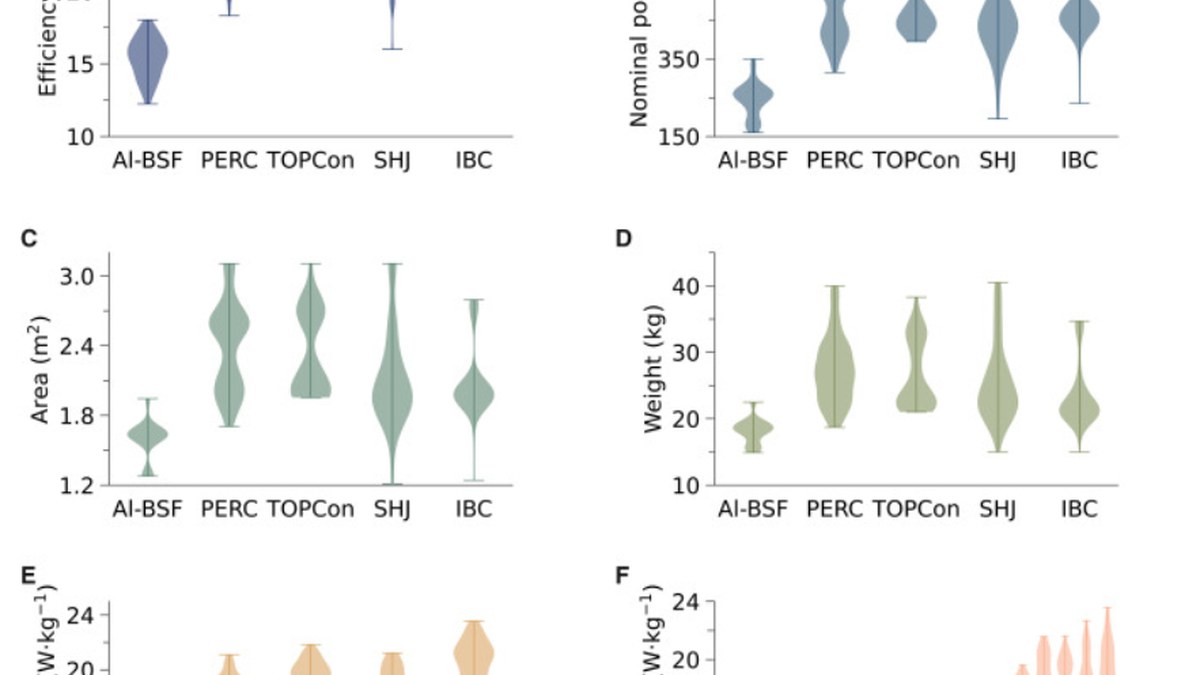
- International research team found that the specific power of commercial silicon solar modules rose from roughly 8.5 W/kg in the early 2000s to 23.6 W/kg today, a metric crucial for weight-sensitive uses like space and portable panels.
- Bruno Vicari Stefani, co-author, said the work provides a comprehensive body of evidence underscoring a shift from "one-size-fits-all" module designs toward application-specific configurations.
- Co-author Matthew Wright said silicon is "no longer seen as a bulky module, confined to a rooftop," pointing to high specific-power designs now used in aerospace.
- Bifacial gains increase the effective specific power of PERC, TOPCon, HJT, and IBC modules, narrowing gaps between top technologies; HJT modules responded best to combined temperature and rear-side illumination.
Why It Matters
For aerospace, portable, and mobile solar markets where every kilogram matters, the 8.5-to-23.6 W/kg jump makes silicon competitive in applications once dominated by thin-film or multi-junction cells. The catch, as the researchers themselves flag, is that glass accounts for 54%–86% of module weight — so further gains require either thinner or lighter glass, which they acknowledge could compromise mechanical reliability and rooftop handling.
Sources Cited
- PV Magazine — Solar keeps slimming down while power rises
Related Coverage
Ask SkimNews