Welsh duo turn cafe scraps into award-winning local compost
The 30-Second Skim
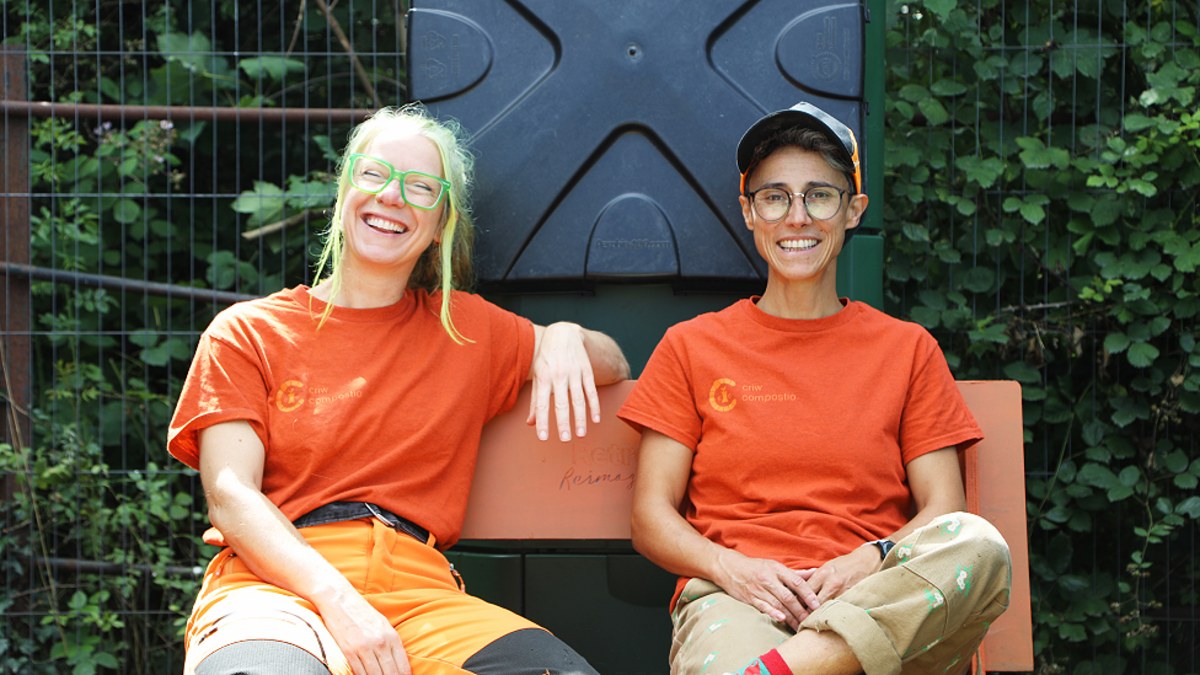
- What happened: Criw Compostio, a community composting venture in Machynlleth, Wales, founded by Steph Robinson and ffin Jordao, collects food waste from local cafes and businesses — plus wood shavings and pet bedding — and converts it into peat-free compost that stays within a 20-mile radius.
- Key facts & numbers: Criw Compostio collects food waste from cafes and businesses twice a week in Machynlleth, converting it into peat-free compost that stays within a strict 20-mile radius and is sold on a 'pay what you feel' basis. Founders Steph Robinson and ffin Jordao met at the Centre for Alternative Technology near Machynlleth and launched the business with a Shared Prosperity Fund grant in 2022, later expanding into a composting school for other communities. Beyond food scraps, the operation takes in wood shavings from a carpentry business and used rabbit and guinea pig bedding from pet owners, processed in 'hot, rat-proof hyper composters' over roughly a year.
- What happens next: Love that the 'waste' ends up feeding volunteers who are literally paid in compost. The circular loop — cafe scraps → compost → grower → cafe menu — is the whole pitch.
- Criw Compostio collects food waste from cafes and businesses twice a week in Machynlleth, converting it into peat-free compost that stays within a strict 20-mile radius and is sold on a 'pay what you feel' basis.
- Founders Steph Robinson and ffin Jordao met at the Centre for Alternative Technology near Machynlleth and launched the business with a Shared Prosperity Fund grant in 2022, later expanding into a composting school for other communities.
- Beyond food scraps, the operation takes in wood shavings from a carpentry business and used rabbit and guinea pig bedding from pet owners, processed in 'hot, rat-proof hyper composters' over roughly a year.
- The compost recently won an award for quality, and is used by local growers who sell produce back to the same cafes that supplied the original waste — closing a resource loop.
Why It Matters
By keeping compost and the food grown from it within a 20-mile radius, Criw Compostio offers a working model for small-town circular economies — one where cafes, growers, and residents share resources rather than exporting waste. With cost-of-living pressures driving interest in growing food and allotments locally, the venture demonstrates how a two-person operation plus volunteers can produce award-quality compost and measurable social benefits without scaling beyond its community.
Sources Cited
Related Coverage
- Powys Farm Supplies Veg to 1,000 Birmingham ChildrenThe Guardian Environment
- Castlemaine composters push back on Fogo bin rolloutThe Guardian Environment
- Scientist dubbed The Bogfather is restoring peatland to fight climate changeBBC Environment
- Couple turning inherited farm into nature siteBBC Environment
Ask SkimNews