CDX Spreads Hit 9‑Month High, S&P Near Peak
The 30-Second Skim7 points
- What happenedThe CDX credit‑default‑swap index surged to a nine‑month high as the S&P 500 lingered within 5% of its record, a rare divergence that has preceded every bear market, though the spreads remain far from historic panic levels.
- Key facts & numbersCDX Index has climbed to a nine‑month high while the S&P 500 is within 5% of its all‑time peak, a combination that historically preceded a bear market in every instance over the past 20 years. Sentiment Trader notes that the CDX spread’s current range‑rank reading is near the upper end of its recent historical range, indicating genuine credit stress rather than statistical noise. Moody's Baa corporate bond index spread versus the 10‑year US Treasury yield has risen, and the chart shows rising yield spreads consistently coincide with lower annual returns for the S&P 500.
- What happens nextCDX spreads at 9‑month high while stocks near record — a pattern that’s preceded every bear market, yet spreads aren’t at panic levels yet.
- CDX Index has climbed to a nine‑month high while the S&P 500 is within 5% of its all‑time peak, a combination that historically preceded a bear market in every instance over the past 20 years.
- Sentiment Trader notes that the CDX spread’s current range‑rank reading is near the upper end of its recent historical range, indicating genuine credit stress rather than statistical noise.
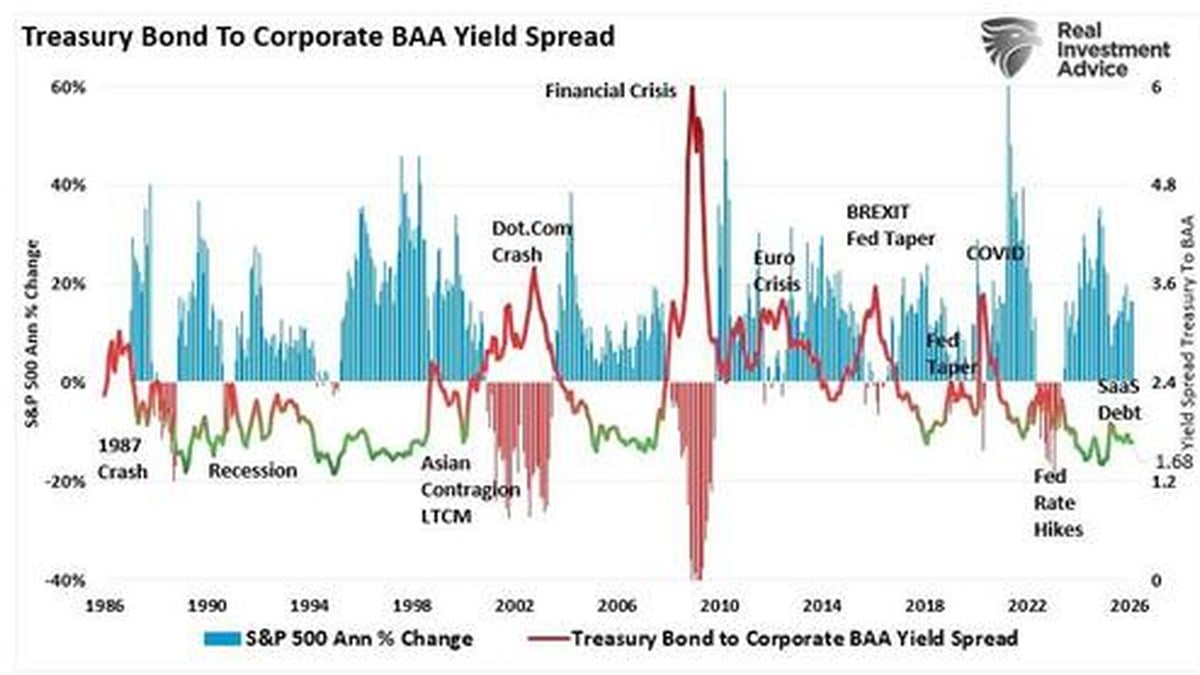
- Moody's Baa corporate bond index spread versus the 10‑year US Treasury yield has risen, and the chart shows rising yield spreads consistently coincide with lower annual returns for the S&P 500.
- Federal Reserve is slated to have its March 18 FOMC decision and updated dot plot digested by markets, influencing risk sentiment as credit spreads widen.
Why It Matters
Investors in equities and corporate bonds face heightened risk as widening CDX spreads signal tightening credit conditions that historically trigger lower earnings and equity drawdowns; risk‑averse investors shift to Treasury assets, while borrowers encounter higher financing costs and tighter loan terms.
Sources Cited
- The New York TimesThe Markets Are Temperamental. Understand Your Risks.
- Goldman Sachs Asset ManagementMarket Know-How 1Q 2026
Related Coverage
Ask SkimNews
The day’s news in one short email, every morning.
Free. One email a day. Unsubscribe in one click.