Coldcard Flaw Steals $38M in Bitcoin, Fuels ETF Shift
The 30-Second Skim7 points
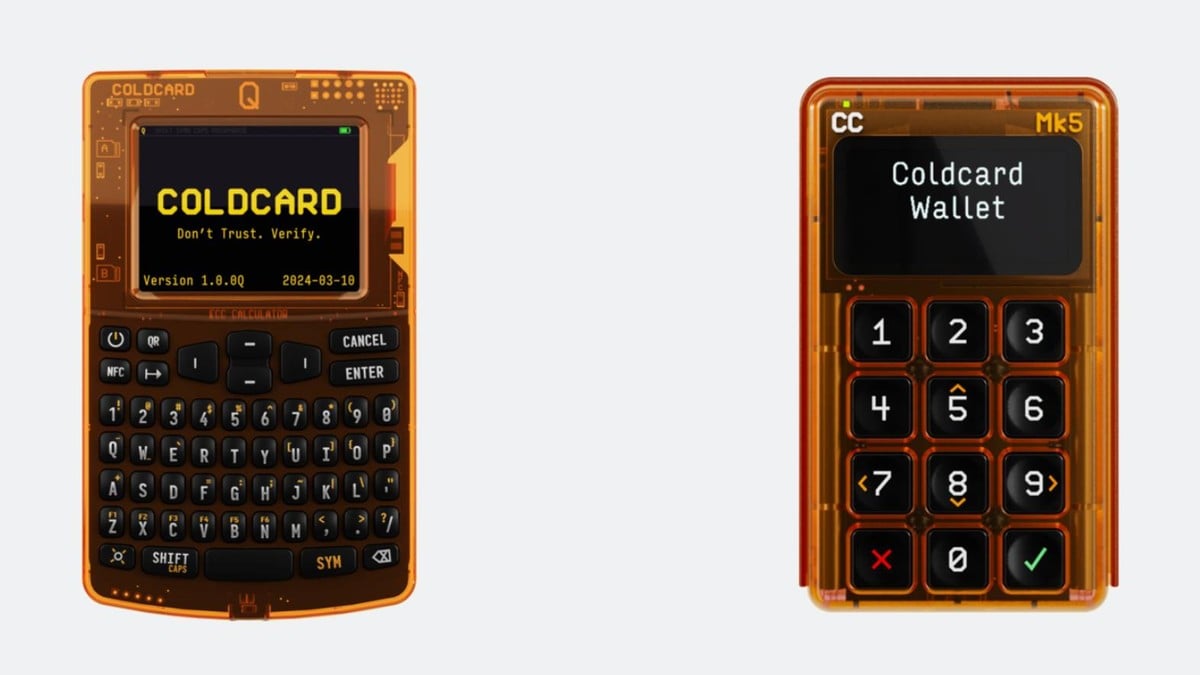
- What happenedA firmware vulnerability in Coldcard hardware wallets enabled attackers to steal roughly $38 million in bitcoin, prompting Coinkite's CEO to urge users to move funds immediately and reviving debate over whether self-custody remains viable for ordinary investors.
- Key facts & numbersCoinkite disclosed a firmware flaw in its Coldcard hardware wallet that allowed attackers to recreate wallet recovery seeds, leading to the theft of roughly 600 bitcoin (~$38 million) — one of the largest self-custody failures on record. Coinkite CEO NVK issued an open letter instructing affected users to generate entirely new wallets and move funds, warning that patching the firmware does not protect seeds already generated on vulnerable versions. ARK Invest's Lorenzo Valente called the self-custodial hardware space 'a disaster,' arguing consumers have traded counterparty risk for software, hardware, supply-chain, and phishing risk and are better off holding funds across public exchanges or ETFs.
- What happens nextThe nightmare scenario for maximalists: the wallet you trusted BECAUSE it was the most paranoid one got popped at the seed-generation layer. Even the fix is 'roll physical dice.'
- Coinkite disclosed a firmware flaw in its Coldcard hardware wallet that allowed attackers to recreate wallet recovery seeds, leading to the theft of roughly 600 bitcoin (~$38 million) — one of the largest self-custody failures on record.
- Coinkite CEO NVK issued an open letter instructing affected users to generate entirely new wallets and move funds, warning that patching the firmware does not protect seeds already generated on vulnerable versions.
- ARK Invest's Lorenzo Valente called the self-custodial hardware space 'a disaster,' arguing consumers have traded counterparty risk for software, hardware, supply-chain, and phishing risk and are better off holding funds across public exchanges or ETFs.
- Casa CEO Nick Neuman criticized Coinkite's recommended workaround — supplementing wallet randomness with physical dice rolls — saying 'you just can't ask people to roll dice to be secure with your self custody' and calling it 'a non-starter for 99% of people.'
Why It Matters
Roughly $38 million in bitcoin was drained through a firmware-level vulnerability that bypassed the core promise of hardware wallets, and the remediation — dice-roll entropy plus full wallet migration — is impractical enough that industry voices from ARK Invest, Casa, and Amicus are openly steering retail users toward ETFs and regulated custodians instead. The shift matters because Coldcard was long treated as the gold standard for 'properly secured' self-custody, and its compromise undermines the ideological foundation that has sustained Bitcoin's not-your-keys-not-your-coins ethos for over a decade.
Sources Cited
Related Coverage
Ask SkimNews
The day’s news in one short email, every morning.
Free. One email a day. Unsubscribe in one click.