U.S. Lost 23,000 Jobs in July, Far Below 80,000 Expected
The 30-Second Skim7 points
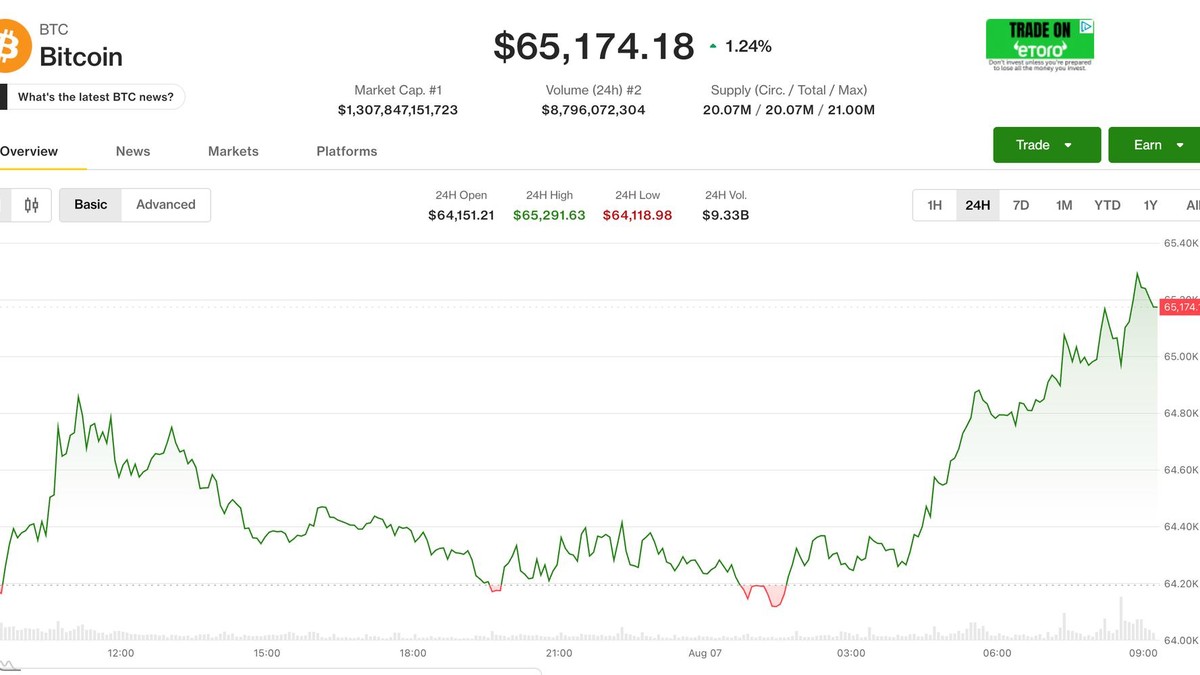
- What happenedThe U.S. economy unexpectedly shed 23,000 jobs in July — far below the 80,000 gain analysts expected — sending CME FedWatch odds of a September rate hike from 55% to 46% while bitcoin barely budged near $65,000 even as stocks, gold, and silver rallied.
- Key facts & numbersU.S. labor market lost 23,000 jobs in July per the Nonfarm Payrolls Report, far below the 80,000 gain consensus expected and the worst print since February's 156,000-job loss Prior months were revised sharply lower, with June cut to 20,000 from 57,000 and May cut to 63,000 from 129,000, signaling the slowdown isn't isolated to July Average hourly earnings rose just 0.1% month-over-month in July versus 0.3% expected, and 3.2% year-over-year versus 3.5% expected, the second consecutive wage-growth miss
- What happens nextThe headline wants you to think this is about bitcoin being boring. It's actually about 23K jobs vanishing and the Fed suddenly getting permission to hit pause.
- U.S. labor market lost 23,000 jobs in July per the Nonfarm Payrolls Report, far below the 80,000 gain consensus expected and the worst print since February's 156,000-job loss
- Prior months were revised sharply lower, with June cut to 20,000 from 57,000 and May cut to 63,000 from 129,000, signaling the slowdown isn't isolated to July
- Average hourly earnings rose just 0.1% month-over-month in July versus 0.3% expected, and 3.2% year-over-year versus 3.5% expected, the second consecutive wage-growth miss
- Unemployment rate dipped to 4.1% despite the job losses, beating the 4.2% consensus as the labor force participation dynamics shifted
Why It Matters
Two straight months of weak hiring — plus sharp downward revisions to May and June — gives the Federal Reserve explicit cover to skip a September rate hike despite still-elevated inflation, with CME FedWatch already pricing that shift at 46% probability. The wage-growth miss (0.1% vs 0.3% expected) weakens the case that the labor market is fueling persistent price pressures, weakening the Fed's tightening justification.
Sources Cited
Related Coverage
Ask SkimNews
The day’s news in one short email, every morning.
Free. One email a day. Unsubscribe in one click.