BRICS Ministers Fail to Agree on Iran Conflict
The 30-Second Skim7 points
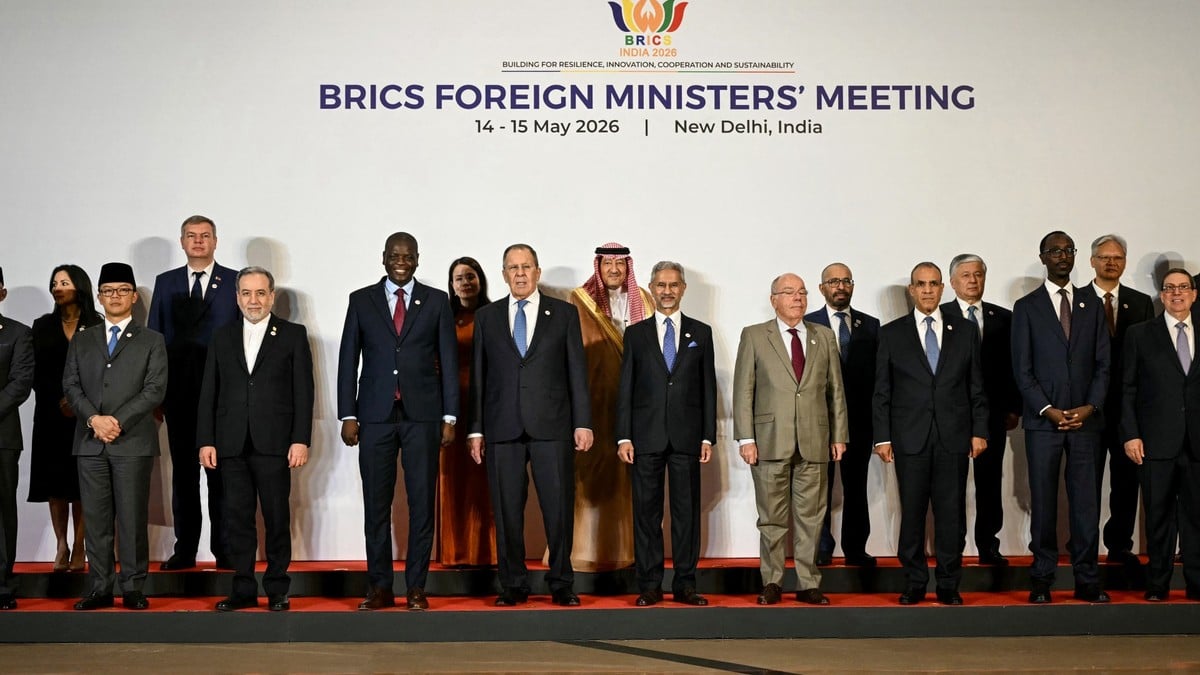
- What happenedThe BRICS foreign ministers’ two‑day summit in New Delhi ended in a stalemate, with members unable to agree on a joint stance toward the US‑Israel war on Iran. The deadlock—amid Iran’s closure of the Strait of Hormuz, a US naval blockade, and divergent diplomatic priorities—underscores fissures within the bloc as India prepares for a September leaders’ summit.
- Key facts & numbersBRICS foreign ministers met in New Delhi for two days and ended without a joint position on the US‑Israel war on Iran, noting only “differing views” in the outcome document. India chaired the meeting under External Affairs Minister Subrahmanyam Jaishankar, marking the first major ministerial engagement under its 2026 BRICS presidency and ahead of a leaders’ summit scheduled for September. Iran has closed the Strait of Hormuz to commercial shipping and the United States imposed a naval blockade on Iranian ports, while Pakistan‑mediated diplomatic talks have stalled.
- What happens nextBRICS can’t even agree on Iran, so India’s big September summit might end up a lot quieter than promised.
- BRICS foreign ministers met in New Delhi for two days and ended without a joint position on the US‑Israel war on Iran, noting only “differing views” in the outcome document.
- India chaired the meeting under External Affairs Minister Subrahmanyam Jaishankar, marking the first major ministerial engagement under its 2026 BRICS presidency and ahead of a leaders’ summit scheduled for September.
- Iran has closed the Strait of Hormuz to commercial shipping and the United States imposed a naval blockade on Iranian ports, while Pakistan‑mediated diplomatic talks have stalled.
- China was represented by its ambassador to India, Xu Feihong, because Foreign Minister Wang Yi attended President Donald Trump’s state visit to Beijing.
Why It Matters
Background & Timeline
- ContextThe inability of BRICS nations to forge a unified response to the Iran conflict highlights how external geopolitical pressures can expose and exacerbate pre-existing internal divisions within a bloc.
Sources Cited
- Chicago Council on Global AffairsTrump's Shifting Objectives in Iran and How the War Could End
- Council on Foreign RelationsThe U.S. Economy Was Shaky Before the Iran War. Now It’s in Real Trouble.
Related Coverage
Ask SkimNews
The day’s news in one short email, every morning.
Free. One email a day. Unsubscribe in one click.