China-North Korea border bridge may do little to spur trade, experts say
The 30-Second Skim
- What happened: China and North Korea opened the long-delayed New Yalu River Bridge this week with grand rhetoric about boosting trade, but analysts warn that sanctions and Pyongyang's security-first politics — not infrastructure shortages — are what truly constrain cross-border commerce.
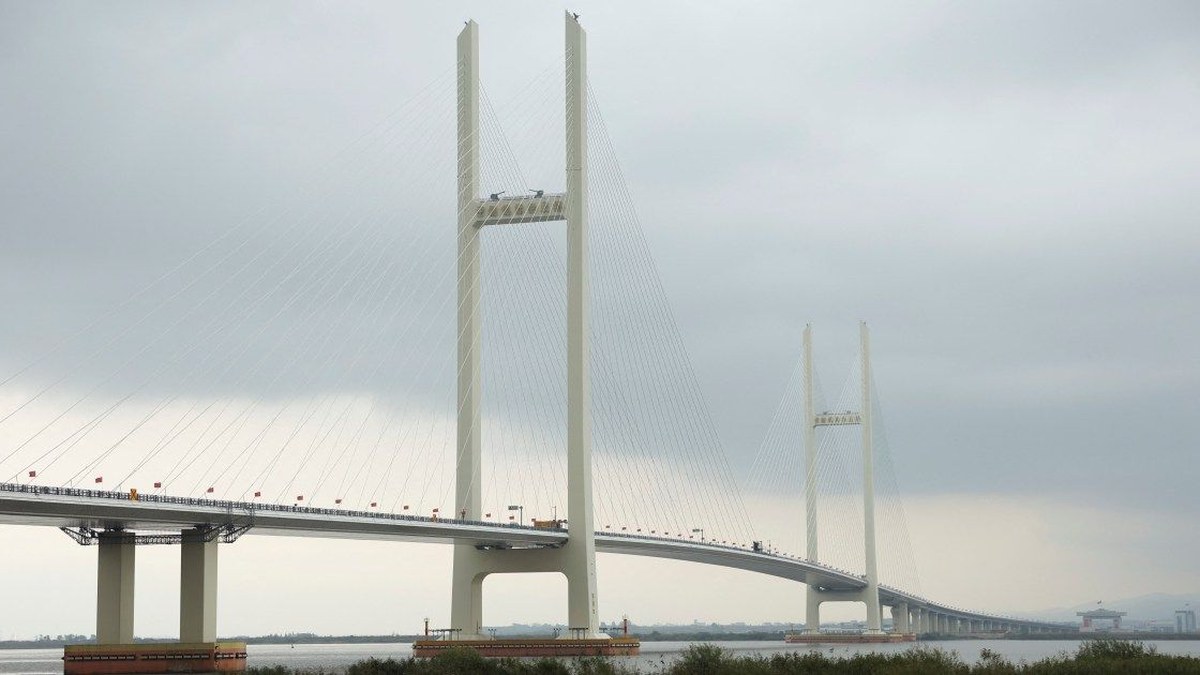
- Key facts & numbers: The New Yalu River Bridge, a 3km four-lane crossing linking China's Dandong and North Korea's Sinuiju, officially opened Thursday after a 12-year construction saga — the Chinese side finished in 2014 but the North Korean side only wrapped roads and customs facilities this year. Chinese Premier Li Qiang and North Korean Premier Pak Thae-song both hailed the bridge as transformative, but experts including International Crisis Group's Christopher Green said 'the key is the politics of national security, not economics' and that 'lack of cross-border transit routes is not the main obstacle.' Bilateral trade grew 25% in 2025 to $2.74bn and jumped nearly 20% in the first half of 2026 to $1.5bn, yet remains a microscopic 0.04% of China's $6.36 trillion total trade and well below the $6.45bn peak reached in 2013.
- What happens next: Twelve years to finish a 3km bridge — and the bottleneck was never engineering, it was Pyongyang deciding whether it actually wanted the traffic.
- The New Yalu River Bridge, a 3km four-lane crossing linking China's Dandong and North Korea's Sinuiju, officially opened Thursday after a 12-year construction saga — the Chinese side finished in 2014 but the North Korean side only wrapped roads and customs facilities this year.
- Chinese Premier Li Qiang and North Korean Premier Pak Thae-song both hailed the bridge as transformative, but experts including International Crisis Group's Christopher Green said 'the key is the politics of national security, not economics' and that 'lack of cross-border transit routes is not the main obstacle.'
- Bilateral trade grew 25% in 2025 to $2.74bn and jumped nearly 20% in the first half of 2026 to $1.5bn, yet remains a microscopic 0.04% of China's $6.36 trillion total trade and well below the $6.45bn peak reached in 2013.
- China accounts for as much as 95% of North Korea's official trade, and analysts cast Beijing's renewed courtship of Pyongyang partly as a response to North Korea's deepening ties with Moscow — including the deployment of North Korean troops to Russia's front lines in Ukraine and last month's opening of their first road bridge across the Tumen River.
Why It Matters
The bridge swaps out a 1943 single-lane crossing with a 20-tonne weight cap for modern four-lane infrastructure, so if volumes do rise it will be a political decision, not a logistical breakthrough. With North Korea's trade share of 0.04% of Chinese commerce and Russia now offering Pyongyang an alternative patron, Beijing's leverage to extract economic reform from Kim Jong Un is arguably diminishing even as Xi Jinping and Kim meet for their seventh summit since 2018.
Sources Cited
- Al Jazeera — China-North Korea border bridge may do little to spur trade, experts say
- The New York Times — North Korea and China Open Their Biggest Border Bridge
- WPLG Local 10 — New China-North Korea bridge opens after more than a decade of delay
- NewsCord — China And North Korea Open New Yalu River Bridge Linking Dandong And Sinuiju After 12-Year Delay
- 데일리NK — New Yalu River Bridge appears set to open as signs emerge on both sides of border
Related Coverage
- What the New China-North Korea Bridge Really MeansThe Diplomat
- China and North Korea to open New Yalu River Bridge, state media reportsAl Jazeera
- China border town can’t shake the blues despite promise of bridge to North KoreaStraits Times Asia
- New Yalu River Bridge officially opens after decade-long delayStraits Times Asia
Ask SkimNews