China Pivots Strategy to Manage Nuclear North Korea
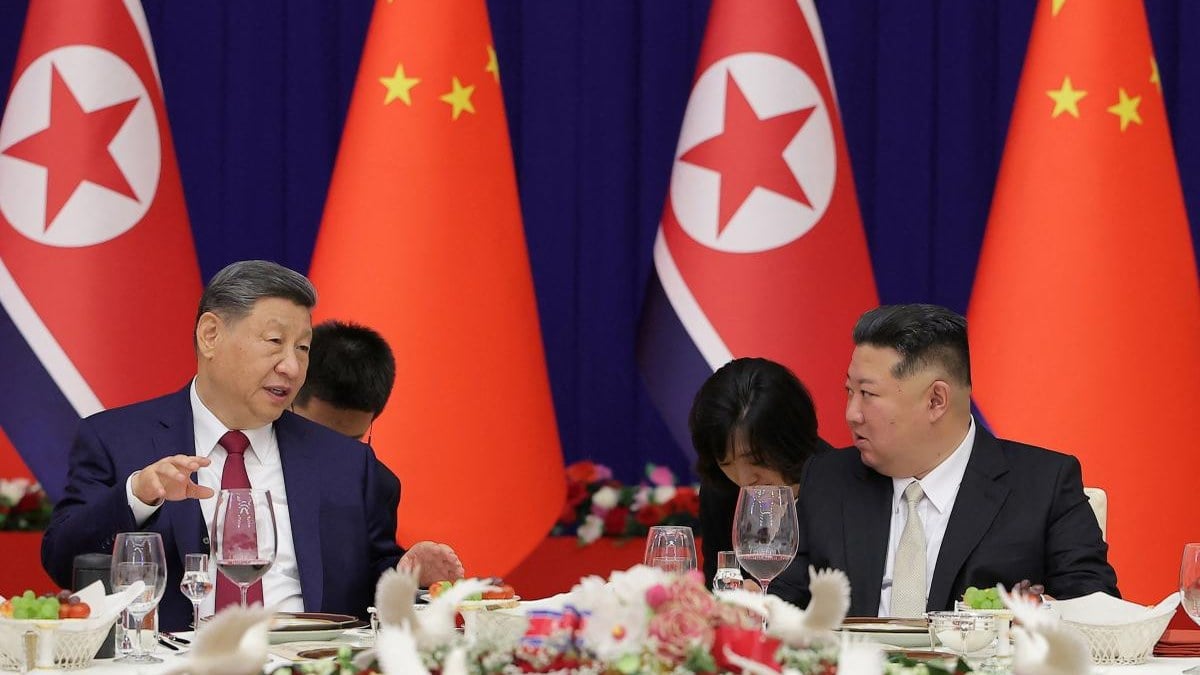
The 30-Second Skim7 points
- What happenedChina is overhauling its approach to North Korea, replacing decades of informal coordination with a more institutionally driven strategy as Pyongyang grows bolder, nuclear-armed, and increasingly courted by Russia.
- Key facts & numbersChina supplies over 70% of North Korea's foreign trade, roughly 60% of its food, and 75% of its consumer goods, and annually provides about 520,000 tons of petroleum and 500,000–800,000 tons of grain and fertilizer within UN exemption limits. North Korea and Russia signed a Comprehensive Strategic Partnership Treaty in June 2024; Moscow then provided security guarantees, military technology, energy, labor markets, and sanctions evasion support, while Pyongyang sent ammunition and soldiers to fight in Ukraine. China voted for five UN Security Council sanctions resolutions on North Korea in 2017 after Pyongyang's hydrogen bomb test, which occurred while Beijing was hosting a BRICS summit—an act the source calls politically embarrassing for Beijing.
- What happens nextBeijing is accepting a nuclear neighbor it can't control—pivoting strategy because Russia broke its monopoly on Pyongyang.
- China supplies over 70% of North Korea's foreign trade, roughly 60% of its food, and 75% of its consumer goods, and annually provides about 520,000 tons of petroleum and 500,000–800,000 tons of grain and fertilizer within UN exemption limits.
- North Korea and Russia signed a Comprehensive Strategic Partnership Treaty in June 2024; Moscow then provided security guarantees, military technology, energy, labor markets, and sanctions evasion support, while Pyongyang sent ammunition and soldiers to fight in Ukraine.
- China voted for five UN Security Council sanctions resolutions on North Korea in 2017 after Pyongyang's hydrogen bomb test, which occurred while Beijing was hosting a BRICS summit—an act the source calls politically embarrassing for Beijing.
- North Korea now pursues a three-pronged external strategy—using China to stabilize its economy, Russia to supplement its security, and US pressure to justify its nuclear program—replicating Cold War–era Beijing-Moscow triangulation to maximize leverage.
Why It Matters
North Korea's pivot toward Moscow and its three-pronged external strategy erode Beijing's leverage, raising the prospect of a more institutionalized US-Japan-South Korea military bloc aimed at both Pyongyang and China. With China providing over 70% of North Korea's trade and dropping denuclearization as a precondition, Beijing is settling for managed coexistence with a nuclear neighbor rather than risking instability on its northeastern border.
Sources Cited
- Foreign AffairsWhy China Worries About North Korea
Related Coverage
Ask SkimNews
The day’s news in one short email, every morning.
Free. One email a day. Unsubscribe in one click.