Chinese Destroyer Fires Inside Japan's EEZ Near Okinotorishima
The 30-Second Skim7 points
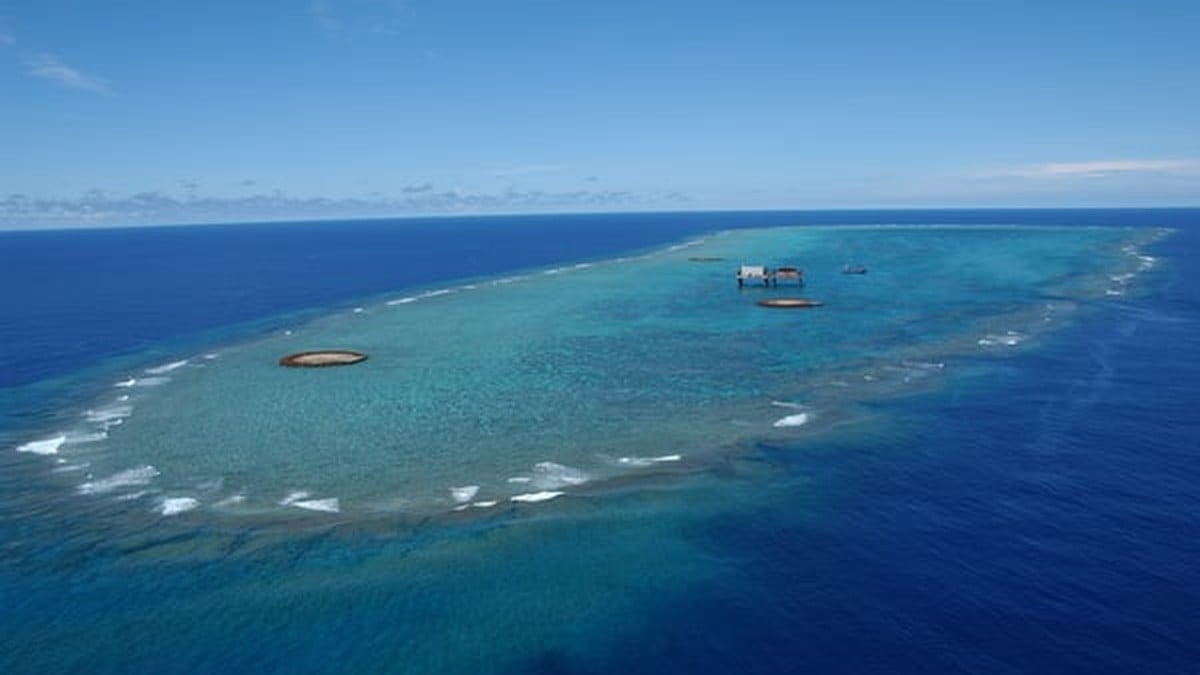
- What happenedOn July 19, a Chinese destroyer fired its machine gun inside Japan's claimed EEZ near Okinotorishima during a patrol with a Russian frigate — the first such incident Japan has publicly disclosed. Tokyo lodged a protest but stopped short of calling the drill unlawful.
- Key facts & numbersJapan's Ministry of Defense announced on July 21 that the Type 052D (Luyang III-class) destroyer Kaifeng conducted a machine-gun firing exercise two days earlier roughly 180 km southwest of Okinotorishima, inside Japan's claimed EEZ — the first time Tokyo has publicly disclosed such an incident involving a foreign warship. Japan's Joint Staff had detected four ships sailing northeast about 330 km southwest of Okinotorishima — the Type 055 destroyer Anshan, Kaifeng, replenishment ship Kekexilihu, and Russian Navy Steregushchiy-class frigate Rezkiy — the same group that transited southward between Okinawa and Miyako on July 16. Japan deliberately did not allege a violation of international law, since UNCLOS preserves foreign military freedom of navigation in EEZs beyond the 12-nautical-mile territorial sea, a principle the US and its allies rely on elsewhere.
- What happens nextChina calls Japan's island a 'rock' to kill its EEZ — the same logic it rejects elsewhere. Bonus signal: Russia showed up alongside.
- Japan's Ministry of Defense announced on July 21 that the Type 052D (Luyang III-class) destroyer Kaifeng conducted a machine-gun firing exercise two days earlier roughly 180 km southwest of Okinotorishima, inside Japan's claimed EEZ — the first time Tokyo has publicly disclosed such an incident involving a foreign warship.
- Japan's Joint Staff had detected four ships sailing northeast about 330 km southwest of Okinotorishima — the Type 055 destroyer Anshan, Kaifeng, replenishment ship Kekexilihu, and Russian Navy Steregushchiy-class frigate Rezkiy — the same group that transited southward between Okinawa and Miyako on July 16.
- Japan deliberately did not allege a violation of international law, since UNCLOS preserves foreign military freedom of navigation in EEZs beyond the 12-nautical-mile territorial sea, a principle the US and its allies rely on elsewhere.
- Chinese Foreign Ministry spokesperson Lin Jian rejected Japan's protest as groundless and revived Beijing's long-standing argument that Okinotorishima is a rock, not an island entitled to an EEZ under UNCLOS Article 121 — the same legal posture China resists when applied to its own South China Sea claims.
Why It Matters
The Kaifeng's live fire near Okinotorishima exposes Beijing's legal contradiction — invoking permissive freedom-of-navigation principles against Japan while resisting similar US operations in the South China Sea. It also marks a milestone in China-Russia naval evolution: 'Joint Sea 2026' drills are now extending into coordinated Western Pacific patrols around Japan, narrowing warning time for commercial shipping.
Sources Cited
Related Coverage
Ask SkimNews
The day’s news in one short email, every morning.
Free. One email a day. Unsubscribe in one click.