Both Koreas Build Armed Drones, Learning From Ukraine
The 30-Second Skim
- What happened: The wars in Ukraine and Iran are accelerating both Koreas' development of cheap, long-range attack drones, with North Korea pushing mass production and South Korea racing to close ISR gaps before assuming wartime operational control from the United States.
- Key facts & numbers: Both Koreas are developing low-cost, long-range armed attack drones, catalyzed by the wars in Ukraine and Iran, with some systems slated to be operational in the near term and integrated into deep-strike strategies alongside ballistic and cruise missiles. Kim Jong Un ordered officials in 2024 to "establish a mass-production system and begin full-scale operation" of suicide attack drones, and thousands of North Korean laborers — possibly including engineers — have been sent to Russia's Yelabuga factory producing copies of Iran's Shahed one-way attack drone. South Korea's Agency for Defense Development is developing the KUS-LM, dubbed "K-LUCAS," a one-way attack drone with range and payload figures comparable to the American LUCAS, with deployment planned before 2030 and trials already underway on land and sea.
- What happens next: Drone incursions between the Koreas have happened for 15 years, but the cheap-armed-drone era is brand new — and South Korea's ISR bottleneck is the story buried in paragraph 14.
- Both Koreas are developing low-cost, long-range armed attack drones, catalyzed by the wars in Ukraine and Iran, with some systems slated to be operational in the near term and integrated into deep-strike strategies alongside ballistic and cruise missiles.
- Kim Jong Un ordered officials in 2024 to "establish a mass-production system and begin full-scale operation" of suicide attack drones, and thousands of North Korean laborers — possibly including engineers — have been sent to Russia's Yelabuga factory producing copies of Iran's Shahed one-way attack drone.
- South Korea's Agency for Defense Development is developing the KUS-LM, dubbed "K-LUCAS," a one-way attack drone with range and payload figures comparable to the American LUCAS, with deployment planned before 2030 and trials already underway on land and sea.
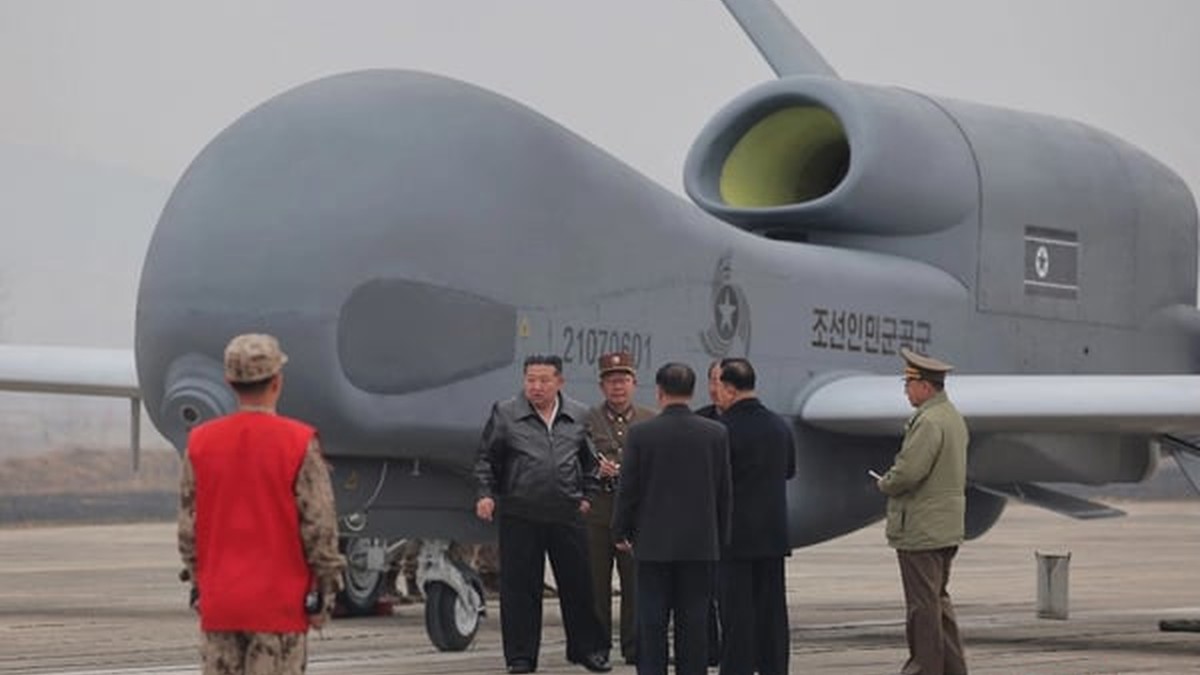
- North Korea unveiled high-altitude and medium-altitude long-endurance reconnaissance drones in 2023 — the MALE variant is capable of firing a missile — though limited numbers are currently in the inventory.
Why It Matters
The Lee administration's push to assume wartime operational control from the United States now collides directly with South Korea's unresolved ISR gap: even with new satellites and drones expected online within five years, mobile North Korean launchers will remain difficult to find and track, and roughly 2-hour observation windows over launch sites leave the Three Axis strategy's preemptive-strike logic under-resourced. The capability mismatch widens as North Korea pairs cheap Shahed-copy drone salvos with a growing nuclear-missile arsenal, potentially forcing Seoul to either delay OPCON transfer or accept greater alliance dependence on US intelligence assets.
Sources Cited
- The Diplomat — Drones and Missiles Are Rewriting the Military Balance on the Korean Peninsula
- The Diplomat – Asia-Pacific Current Affairs Magazine — Drones and Missiles Are Rewriting the Military Balance on the Korean Peninsula
- Defence Security Asia — China’s J-36 Laser Could Rewrite Stealth-Aircraft Missile Defence
- The Week — OPINION | The $50,000 drone vs $5 million missile: How West Asia War is rewriting rules of military power
Related Coverage
Ask SkimNews