Two Koreas Ramp Up Hypersonic Missile Programs
The 30-Second Skim
- What happened: North and South Korea are accelerating competing hypersonic missile programs, with Pyongyang announcing fresh submarine-launched cruise missile tests and Kim Jong Un inspecting a new ICBM display, just days after Seoul demonstrated its first domestically built hypersonic weapon.
- Key facts & numbers: North Korea announced it tested two types of submarine-launched cruise missiles off its east coast on Wednesday (Oct. 15, 2026), a day after state-run KCNA reported Kim Jong Un visited a new defense industry museum and admired an ICBM reportedly capable of reaching the continental United States. South Korean President Lee Jae-myung observed the test launch of his country's first domestically developed hypersonic missile five days earlier, capping Seoul's own rapid push into the technology. North Korea's Oct. 3 test of what it described as a hypersonic intermediate-range missile saw the weapon travel 350 kilometers before striking its target, according to state media.
- What happens next: Two Koreas, one arms race, and the only thing experts agree on is nobody has a good answer yet.
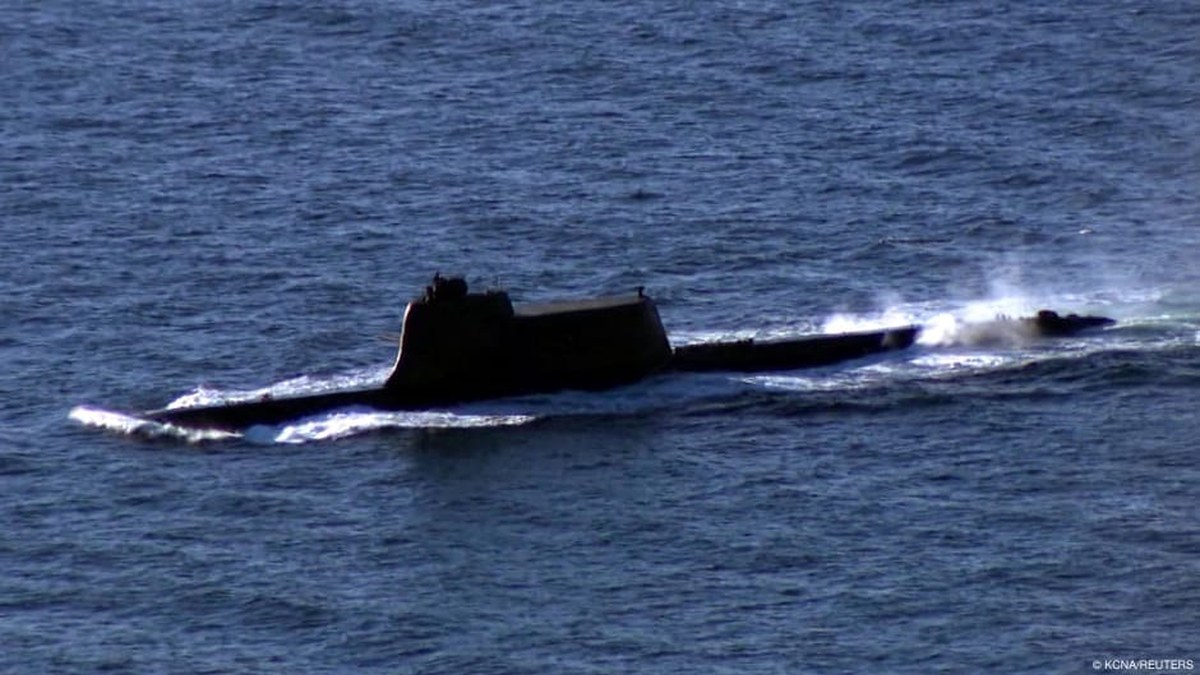
- North Korea announced it tested two types of submarine-launched cruise missiles off its east coast on Wednesday (Oct. 15, 2026), a day after state-run KCNA reported Kim Jong Un visited a new defense industry museum and admired an ICBM reportedly capable of reaching the continental United States.
- South Korean President Lee Jae-myung observed the test launch of his country's first domestically developed hypersonic missile five days earlier, capping Seoul's own rapid push into the technology.
- North Korea's Oct. 3 test of what it described as a hypersonic intermediate-range missile saw the weapon travel 350 kilometers before striking its target, according to state media.
- Hypersonic missiles travel at Mach 5 or faster (over 6,100 km/h) and can change course, dip, or weave in flight — making them significantly harder to track and intercept than previous-generation weapons, per the article.
Why It Matters
Both Koreas are fielding weapons that are harder to track and intercept, and the article quotes experts saying North Korea likely obtained the technology through espionage against US, South Korean, and Japanese firms. Green warns that mass deployment would force Japan and South Korea into a costly conversation about expanded missile defense — raising alliance friction in the Indo-Pacific at a moment when Pyongyang is already deepening military ties with Russia.
Sources Cited
Related Coverage
Ask SkimNews